

VMware Certified Professional 6.5 - Data Center Virtualization Free Sample Questions

Description

Covers vSphere role-based access and security, standard and distributed switch networking, storage technologies, upgrades, resource pools and clusters, backup and recovery, and VM management.

20 free sample questions235 in the full practice test Other versions: 2V0-21.23(277),2V0-21.19(131),2V0-21.19D(104),2V0-21.20(78)

Try simulator

2V0-622 Sample Questions

  1. Question 1

    Multiple answers

    What are two reasons why a datastore in a Storage DRS cluster cannot enter maintenance mode? (Choose two.)

    Answer and explanation

    Correct answers: C, D

    C, D -- Explanation: Problem
    A datastore in a datastore cluster cannot either maintenance mode. The Entering Maintenance Mode status remains at 1%.
    Cause
    One or more disks on the datastore cannot be migrated with Storage vMotion. This condition can occur in the following instances.
    Storage DRS is disabled on the disk Storage DRS rules prevent Storage DRS from making migration recommendations for the disk.
    Reference:
    https://pubs.vmware.com/vsphere-51/index.jsp?topic=%2Fcom.vmware.vsphere.troubleshooting.doc%2FGUID-91 D4FBBC-0677-44DA-B0F2-43A3504F8CA0.html
  2. Question 3

    Multiple answers

    When enabling Storage DRS on a datastore cluster, which three components are enabled as a result? (Choose three.)

    Answer and explanation

    Correct answers: A, B, C

    A, B, C -- Explanation:
    When you enable Storage DRS, you enable these functions: Space load balancing among datastores within a datastore cluster I/O load balancing among datastores within a datastore cluster Initial placement for virtual disks based on space and I/O workload Reference:
    https://kb.vmware.com/selfservice/microsites/search.do?language=en US&cmd=displayKC&externalld::::2032910

  3. Question 4

    Multiple answers

    An administrator wants to enable proactive HA by moving virtual machines automatically if a hardware alert is triggered.
    What are the three required settings? (Choose three.)

    Answer and explanation

    Correct answers: B, D, E

    B, D, E

  4. Question 5

    Multiple answers

    Which two statements correctly describe VM-Host affinity rules? (Choose two.)

    Answer and explanation

    Correct answers: A, D

    A, D -- Explanation:
    If you create more than one VM-Host affinity rule, the rules are not ranked, but are applied equally. Be aware that this has implications for how the rules interact. For example, a virtual machine that belongs to two DRS groups, each of which belongs to a different required rule, can run only on hosts that belong to both of the host DRS groups represented in the rules.
    When you create a VM-Host affinity rule, its ability to function in relation to other rules is not checked. So it is possible for you to create a rule that contacts with the other rules you are using. When two VM-Host affinity rules conflict, the older one takes precedence and the newer rule is disabled. DRS only tries to satisfy enabled rules and disabled rules are ignored.
    Reference: https://docs.vmware.eom/enA/Mware-vSphere/6.5/com.vmware.vsphere.resmgmt.doc/GUID-793013E2-0976-43B7-9A00-340FA76859D0.html

  5. Question 7

    Multiple answers

    What two enhancements are in VMFS6 but not in VMFS5? (Choose two.)

    Answer and explanation

    Correct answers: B, D

    B, D

  6. Question 8

    Multiple answers

    vSphere 6.5 introduced MACIearning capabilities for VMware’s virtual switches. What three benefits will it provide? (Choose three.)

    Answer and explanation

    Correct answers: A, B, D

  7. Question 9

    Multiple answers

    Which are two supported storage primitives for VAAI NAS? (Choose two.)

    Answer and explanation

    Correct answers: A, B

    A, B

  8. Question 10

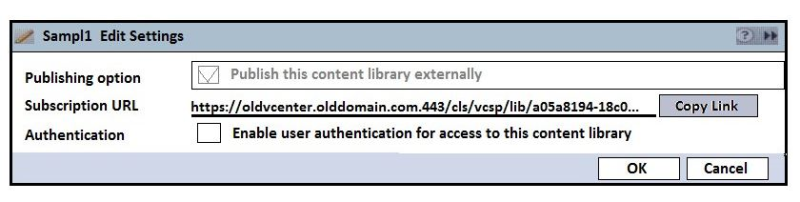
    A vSphere content library administrator is attempting to unpublish the content library, but the option is grayed out as shown in the Figure.

    Which statement identifies the reason for not being able to unpublish?

    Question 10 image
    Answer and explanation

    Correct answer: A

    Explanation:
    This optimization option comes with limitations:- Once a library is published as optimized for syncing over HTTP (streaming optimized), you cannot revert it back (unpublish) to a local library-A streaming optimized published library cannot be used to deploy VMs. Reference: http://docs.hol.vmware.com/HQL-2017/hol-1710-sdc-6 html en/

Register free for 10 more questions

Or unlock all 235 2V0-622 questions with explanations, timed mode and flashcards.