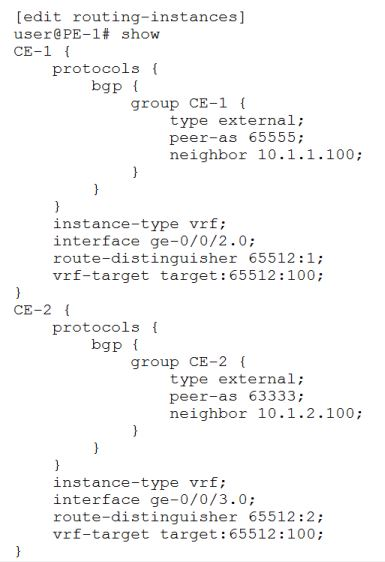
Two CE devices (CE-1 and CE-2) belong to the same customer and connect into a single PE device (PE-1). However, the CE devices cannot communicate with each other. You want to allow the CE devices to communicate with each other. Referring to the exhibit, which action would solve the problem?
Q2Multiple answers
You are establishing a Layer 3 VPN between two PE devices. Currently you have a single internal IPv4 BGP peering between the PE devices. You must ensure that the IPv4 and IPv6 routes from both CE devices are exchanged between these sites. Which two statements are correct in this scenario? (Choose two.)
Q3Multiple answers
Which two statements are correct about Opaque LSAs in OSPF? (Choose two.)
Q4
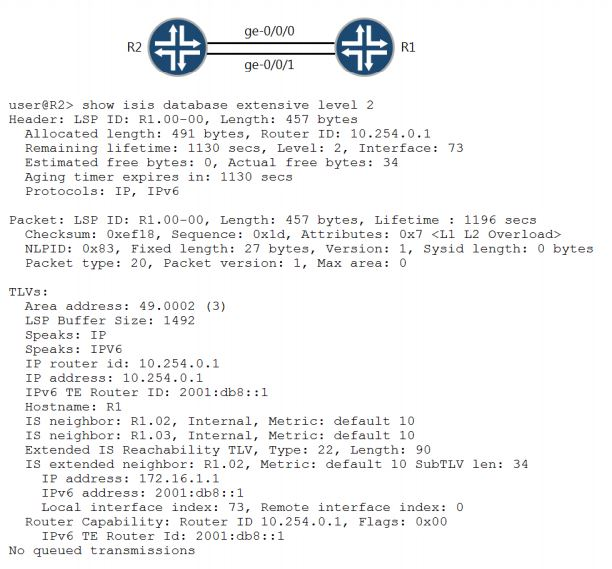
A network administrator is investigating why traffic from R2 is not being forwarded to R1. Referring to the show isis database command output shown in the exhibit, what is causing this problem on the network?
Q5
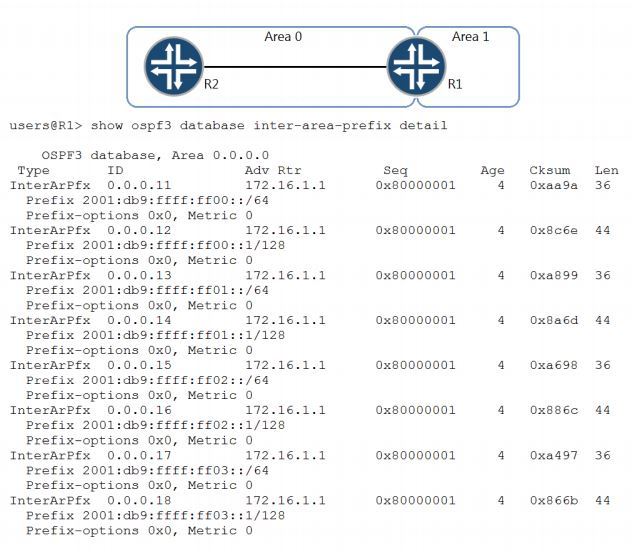
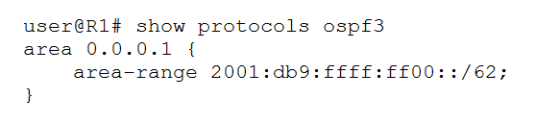
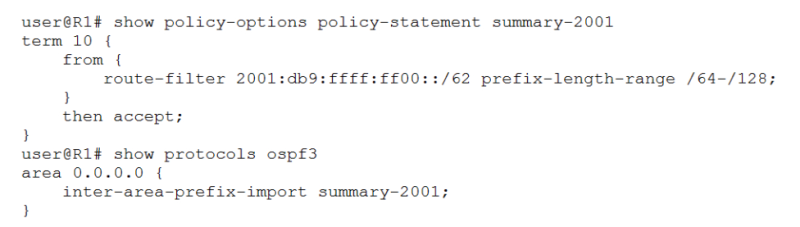
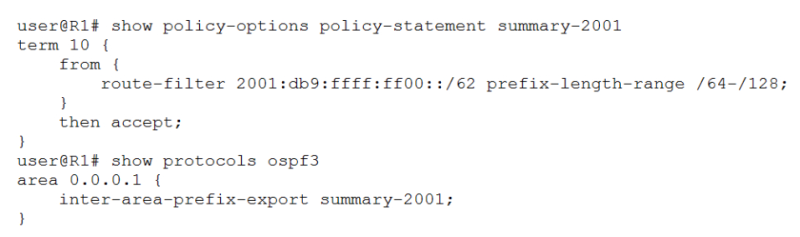
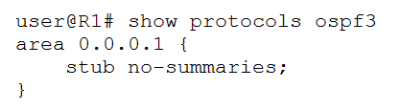
Referring to the exhibit, which command would reduce the size of the OSPF database and corresponding routes?
Q6
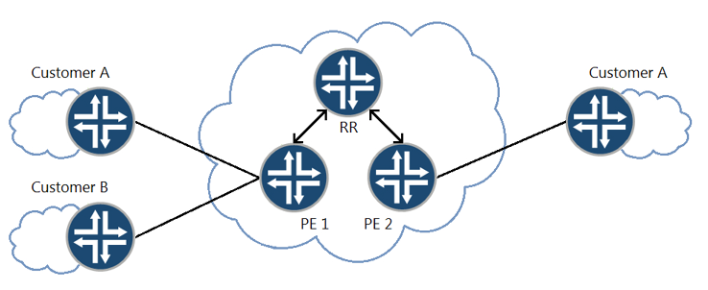
Referring to the exhibit, you want to reduce the CPU processing load on PE 2 by preventing the receipt of routes belonging to Customer B. In this scenario, which layer 3 VPN scaling mechanism provides this functionality?