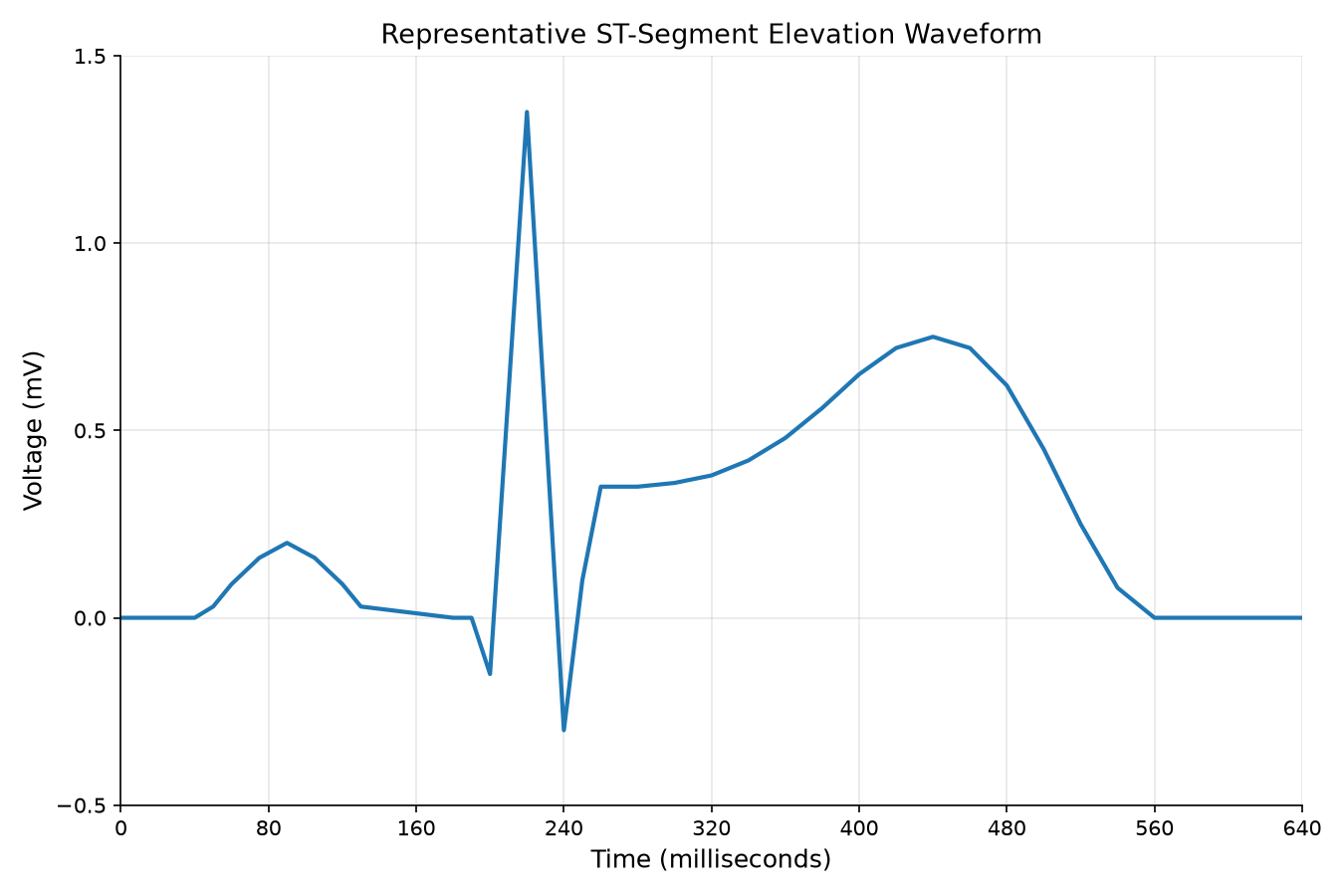
A 58-year-old male arrives at the emergency department triage desk reporting a 45-minute history of retrosternal crushing chest pain radiating to his left jaw and diaphoresis. According to emergency cardiovascular care guidelines, what is the maximum recommended time window from initial patient presentation to the completion and interpretation of a diagnostic 12-lead electrocardiogram (ECG)?
Answer and explanation
Correct answer: D
Guidelines require an initial 12-lead ECG within 10 minutes of arrival for patients with potential ACS to rapidly identify STEMI and expedite reperfusion.
A 64-year-old female presents to the emergency department with a 3-hour history of severe retrosternal pressure, diaphoresis, and nausea. Her medical history includes type 2 diabetes mellitus, hyperlipidemia, and hypertension.
Upon arrival, initial vital signs are blood pressure 138/84 mm Hg, heart rate 88 beats/min, respiratory rate 18 breaths/min, and oxygen saturation 98% on ambient air. A 12-lead ECG completed within 8 minutes of arrival demonstrates horizontal ST-segment depression of 1.5 mm in leads V4 through V6 and inverted T waves in leads I and aVL, without ST-segment elevation.
Serial high-sensitivity cardiac troponin (hs-cTn) assays reveal a baseline level significantly above the 99th percentile upper reference limit, with a subsequent 3-hour delta increase confirming acute myocardial injury. Which fundamental pathophysiologic and biomarker difference distinguishes this patient's NSTEMI from unstable angina?
Answer and explanation
Correct answer: A
Both NSTEMI and unstable angina produce clinical ischemia, but NSTEMI causes myocardial cell death evidenced by elevated cardiac troponins.
During resuscitation of an adult patient in cardiac arrest, the emergency care team successfully places an endotracheal tube with bilateral breath sounds and positive capnography confirmed. Which compression-to-ventilation guideline should the resuscitation team follow once this advanced airway is secured?
With an advanced airway in place, compressions continue uninterrupted at 100-120/min while ventilations are delivered at 1 breath every 6 seconds (10 breaths/min).
An emergency nurse is caring for an adult patient in refractory ventricular fibrillation cardiac arrest who has failed two consecutive biphasic defibrillation attempts and high-quality CPR. Which TWO pharmacological interventions are indicated during continued resuscitation? (Select TWO)
Answer and explanation
Correct answers: B, C
Amiodarone 300 mg bolus is indicated for shock-refractory VF/pVT after the third defibrillation attempt.
Epinephrine 1 mg IV/IO every 3 to 5 minutes is standard during persistent pulseless cardiac arrest.
Q5Question 5
Intermediate
Respiratory Emergencies · Asthma
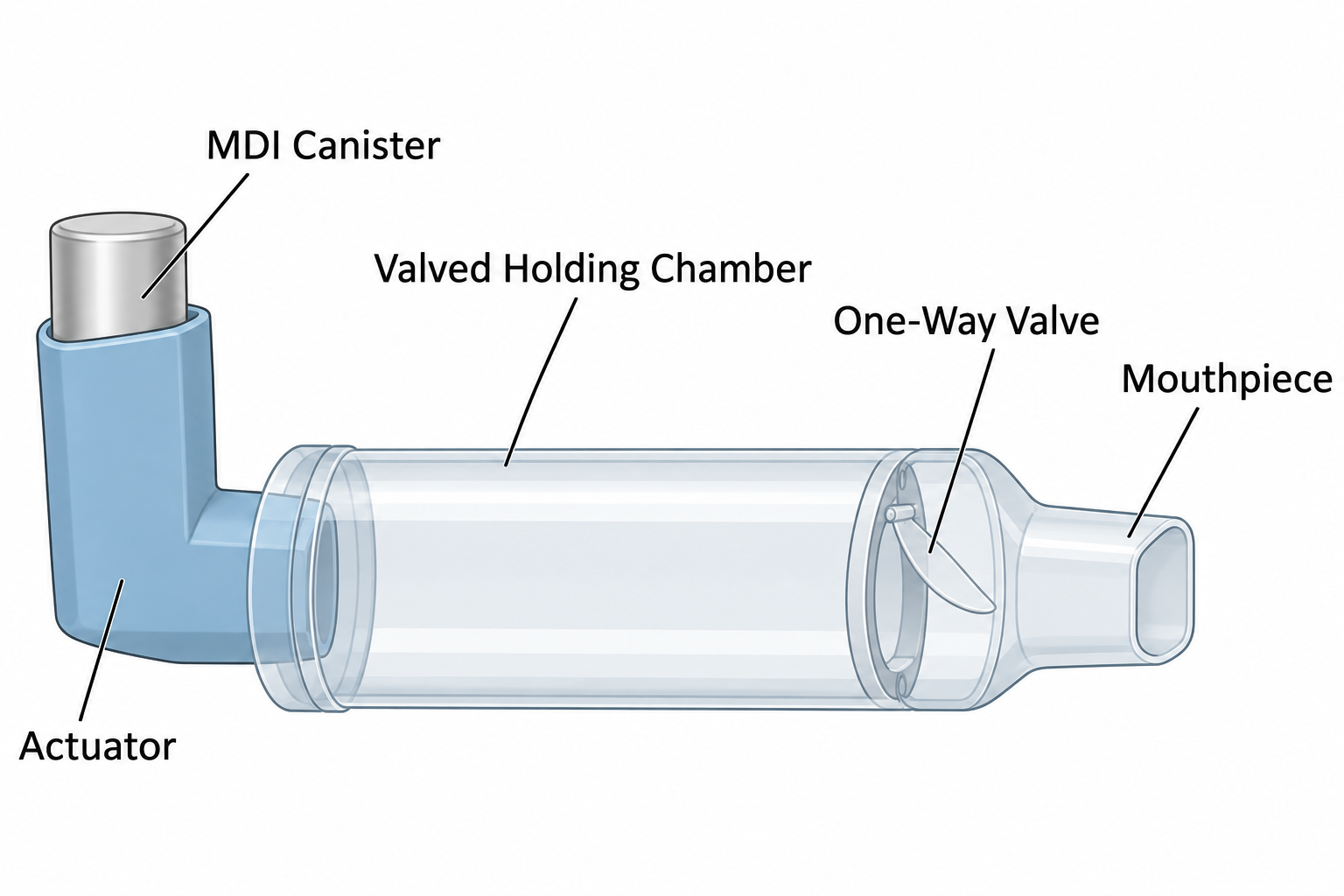
A 24-year-old patient with an acute moderate asthma exacerbation is prescribed inhaled albuterol via pressurized metered-dose inhaler (pMDI) with a valved holding chamber. Based on standard clinical guidelines, what is the recommended administration regimen for albuterol during the initial hour of emergency department treatment?
Answer and explanation
Correct answer: C
Guidelines recommend 4 to 10 puffs of albuterol via pMDI with spacer every 20 minutes for the first hour of acute exacerbation therapy.
Q6Question 6
Intermediate
Respiratory Emergencies · Asthma
A 32-year-old patient with severe acute asthma remains dyspneic with widespread expiratory wheezing, tachypnea, and an FEV1 of 40% predicted after completing three consecutive nebulized bronchodilator treatments and receiving oral systemic corticosteroids. Which intravenous medication is indicated as a second-line bronchodilator to reduce hospital admission risk?
Answer and explanation
Correct answer: A
IV magnesium sulfate is indicated as a second-line bronchodilator for severe acute asthma exacerbations unresponsive to initial inhaled SABA and corticosteroids.
Register free for 6 more questions
Or unlock all 156 CEN questions with explanations, timed mode and flashcards.