

CCNA Exam Structure Explained: Path to Certification
Feeling overwhelmed by the complexity of the CCNA exam is a common challenge for many aspiring IT professionals. Understanding the CCNA exam structure helps demystify what lies ahead, setting realistic expectations for exam day. The CCNA certification assesses not just theoretical knowledge, but practical networking skills across essential domains such as IP connectivity and security fundamentals. This article empowers you to break down the exam’s modules, question types, and scoring methods for targeted, effective preparation.
Key Takeaways
| Point | Details |
|---|---|
| CCNA Exam Structure | The CCNA certification requires passing a single 120-minute exam that evaluates foundational networking knowledge across multiple domains. |
| Exam Modules | The exam consists of six primary modules, each weighted approximately 20%, testing a comprehensive understanding of networking technologies. |
| Question Formats | The exam features various question types, including multiple-choice and performance-based questions, to assess both theoretical knowledge and practical skills. |
| Registration Process | Candidates can easily register for the exam without formal prerequisites, making the CCNA an accessible entry point for aspiring IT professionals. |
CCNA Certification: Defining the Exam Structure
The CCNA certification represents a critical milestone for networking professionals seeking to validate their technical skills and advance their careers in information technology. Cisco’s networking certification provides a comprehensive evaluation of foundational networking knowledge through a single, rigorous examination.
The CCNA exam structure is designed to test candidates across multiple critical networking domains. The current certification requires passing a single 120-minute exam known as the Implementing and Administering Cisco Solutions (200-301 CCNA). This comprehensive test encompasses several key networking competencies:
- Network fundamentals
- Network access technologies
- IP connectivity principles
- IP services and configuration
- Security fundamentals
- Network automation and programmability
Understanding the exam’s structure is crucial for effective preparation. Exam preparation resources typically recommend candidates thoroughly cover these domains, with approximately 100-120 questions testing both theoretical understanding and practical networking skills.
The CCNA exam consolidates multiple networking specializations into one holistic assessment, making it more accessible while maintaining rigorous professional standards.
Successful candidates must demonstrate a robust understanding of networking technologies, protocols, and practical implementation strategies. The exam goes beyond simple memorization, requiring critical thinking and problem-solving skills applicable to real-world networking scenarios.
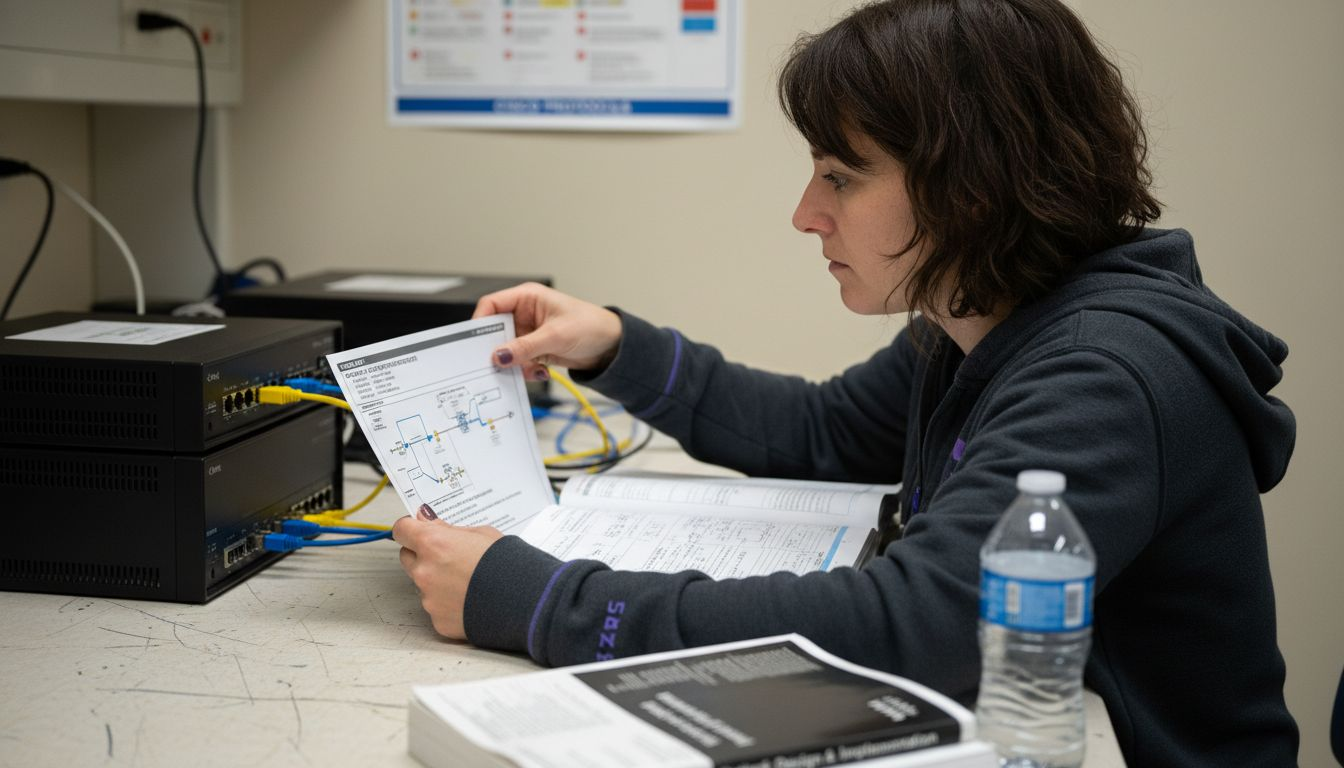
Pro tip: Develop a comprehensive study strategy that balances theoretical knowledge with hands-on practical experience to maximize your chances of passing the CCNA certification exam.
Exam Modules and Their Focus Areas
The CCNA certification exam is meticulously structured to evaluate a candidate’s comprehensive networking skills through carefully defined exam modules. Each module represents a critical component of modern network infrastructure and professional technical competence.
The exam covers six primary networking domain modules, each weighted approximately 20% of the total examination content:
- Network Fundamentals: Covering basic networking concepts, topologies, and infrastructure
- Network Access: Exploring switching, VLANs, and wireless technologies
- IP Connectivity: Examining routing protocols and IP addressing strategies
- IP Services: Analyzing network services and advanced IP configurations
- Security Fundamentals: Investigating network security principles and practices
- Automation and Programmability: Understanding network programmability and automation concepts
The modular approach ensures candidates demonstrate a holistic understanding of enterprise networking technologies and implementation strategies.
Each module tests specific technical competencies that reflect real-world networking challenges. Candidates must demonstrate not just theoretical knowledge, but practical skills in configuring, troubleshooting, and managing network infrastructures across different technological scenarios.
Here is a summary of the six main modules of the CCNA exam and their real-world relevance:
| Module | Real-World Impact | Example Tasks |
|---|---|---|
| Network Fundamentals | Foundation for all network operations | Designing network layouts |
| Network Access | Enables device connectivity and mobility | Configuring switches |
| IP Connectivity | Supports inter-network communications | Setting up routing |
| IP Services | Enhances network capabilities | Implementing DHCP/DNS |
| Security Fundamentals | Protects network resources and users | Applying device security |
| Automation & Programmability | Streamlines and future-proofs operations | Using scripts and APIs |
Pro tip: Develop a study strategy that allocates preparation time proportionally to each module’s complexity and your current skill level, ensuring balanced and comprehensive exam readiness.
Types of Questions and Testing Methods
The CCNA certification exam employs a sophisticated testing approach designed to comprehensively evaluate a candidate’s networking knowledge and practical skills through multiple question formats. This strategic methodology ensures a thorough assessment of technical competence beyond simple memorization.
The exam incorporates several distinct question types to test candidates’ networking expertise:
- Multiple-Choice Questions: Standard format testing theoretical knowledge
- Drag-and-Drop Scenarios: Assessing conceptual understanding and configuration skills
- Performance-Based Questions: Simulating real-world networking challenges
- Simulation Questions: Requiring hands-on problem-solving and technical reasoning
- Scenario-Based Multiple Response Questions: Testing complex decision-making skills
Performance-based questions represent the most critical evaluation method, directly mimicking actual network professional responsibilities.
Each question type serves a unique purpose in measuring different aspects of networking proficiency. Multiple-choice questions test foundational knowledge, while performance-based questions require candidates to demonstrate practical configuration and troubleshooting skills in simulated network environments.
Below is a comparison of CCNA question types and the candidate skills each type assesses:
| Question Type | Skill Evaluated | Example Challenge |
|---|---|---|
| Multiple-Choice | Theoretical knowledge | Identify protocol usage |
| Drag-and-Drop | Conceptual understanding | Network topology mapping |
| Performance-Based | Configuration and troubleshooting | Fix routing errors |
| Simulation | Hands-on technical execution | Configure real network gear |
| Scenario-Based Multiple Response | Decision-making and prioritization | Choose best solutions |
Pro tip: Practice with diverse question formats during your study preparation to build confidence and familiarity with the various testing methods used in the CCNA examination.
Prerequisites and Exam Registration Process
The CCNA certification offers an inclusive pathway for networking professionals, with straightforward registration requirements. Unlike many advanced certifications, the CCNA exam welcomes candidates from diverse backgrounds without imposing strict formal prerequisites.
To begin the registration process, candidates must complete several key steps:
- Create an account on the official Cisco or Pearson VUE website
- Select the CCNA exam (200-301)
- Choose a convenient testing location or online proctoring option
- Pay the examination fee of $300
- Schedule the exam at a time that suits your preparation
No prior networking certification is required, making the CCNA an excellent entry point for aspiring IT professionals.
The exam is available in multiple languages, including English and Japanese, and can be taken at authorized testing centers worldwide. Candidates have the flexibility to use various payment methods, including Cisco Learning Credits, which can help offset examination costs.
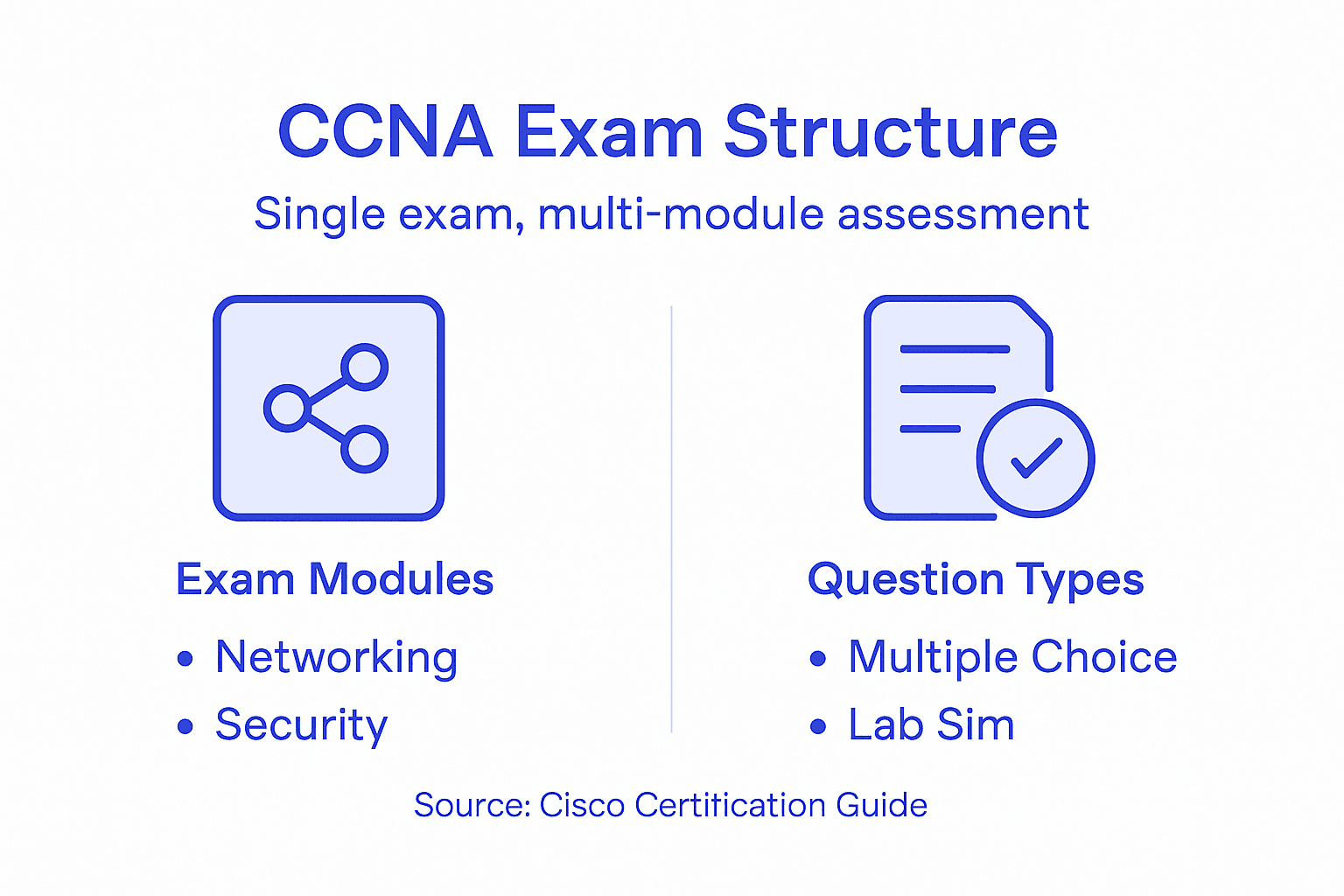
Pro tip: Schedule your exam date in advance and allocate sufficient time for comprehensive preparation, using this commitment as motivation to maintain a consistent study routine.
Scoring, Passing Criteria, and Common Pitfalls
The CCNA certification exam employs a sophisticated scaled scoring system that challenges candidates across multiple networking domains. Candidates must demonstrate comprehensive understanding to successfully pass the examination.
Key aspects of exam scoring and performance include:
- Total Possible Score: 1000 points
- Passing Threshold: Approximately 825 out of 1000
- Exam Duration: 120 minutes
- Result Notification: Within 48 hours of exam completion
- Scoring Method: Pass/Fail with scaled scoring
Performance-based questions carry significant weight and require practical demonstration of networking skills.
Candidates frequently encounter several common pitfalls that can compromise their exam performance. These challenges include insufficient hands-on practice, inadequate time management during the exam, and underestimating the breadth of technical knowledge required across networking domains.
Pro tip: Develop a comprehensive study strategy that balances theoretical knowledge with practical skill development, focusing on hands-on lab experience and simulated networking scenarios.
Master the CCNA Exam Structure with PlanetCert’s Proven Resources
Understanding the detailed structure of the CCNA exam is key to overcoming challenges such as managing diverse question types and balancing multiple networking domains like Network Fundamentals, Security Fundamentals, and Automation. If you are looking to build confidence in handling performance-based questions or need real-world practice simulations, PlanetCert.com offers tailored solutions designed to address these critical pain points. Our extensive library of up-to-date practice tests and exam simulators reflect the exact format and difficulty of the CCNA 200-301 exam helping you avoid common pitfalls and score above the 825 passing threshold.

Take control of your CCNA preparation journey today by leveraging verified real exam questions and comprehensive study guides at PlanetCert.com. Stop guessing and start practicing with resources trusted by thousands of aspiring networking professionals worldwide. Visit PlanetCert now to access expert-curated CCNA exam materials and schedule your path to success with our money-back guarantee.
Frequently Asked Questions
What does the CCNA exam structure involve?
The CCNA exam structure includes a single 120-minute exam known as the Implementing and Administering Cisco Solutions (200-301 CCNA), which tests candidates across six key networking domains: Network Fundamentals, Network Access, IP Connectivity, IP Services, Security Fundamentals, and Automation & Programmability.
How is the CCNA exam scored, and what is the passing criteria?
The CCNA certification exam employs a scaled scoring system with a total possible score of 1000 points. The passing threshold is approximately 825 out of 1000, and results are typically notified within 48 hours of completion.
What types of questions can I expect on the CCNA exam?
The CCNA exam features multiple question formats, including multiple-choice questions, drag-and-drop scenarios, performance-based questions, simulation questions, and scenario-based multiple response questions, each assessing different aspects of networking knowledge and skills.
Are there any prerequisites for taking the CCNA exam?
No formal prerequisites are required to take the CCNA exam, making it an accessible entry point for aspiring IT professionals. Candidates can register directly without needing prior certifications.
Recommended

Discussion
Question Comments
0 comments·0 participantsSign in to leave a comment and access more free questions.