

Construction Health and Safety Technician® (CHST®) Free Sample Questions

12 free sample questions162 in the full practice test

Try simulator

CHST Sample Questions

  1. Question 1

    Intermediate

    Hazard and Risk Identification and Control · Common hazards and controls associated with excavations

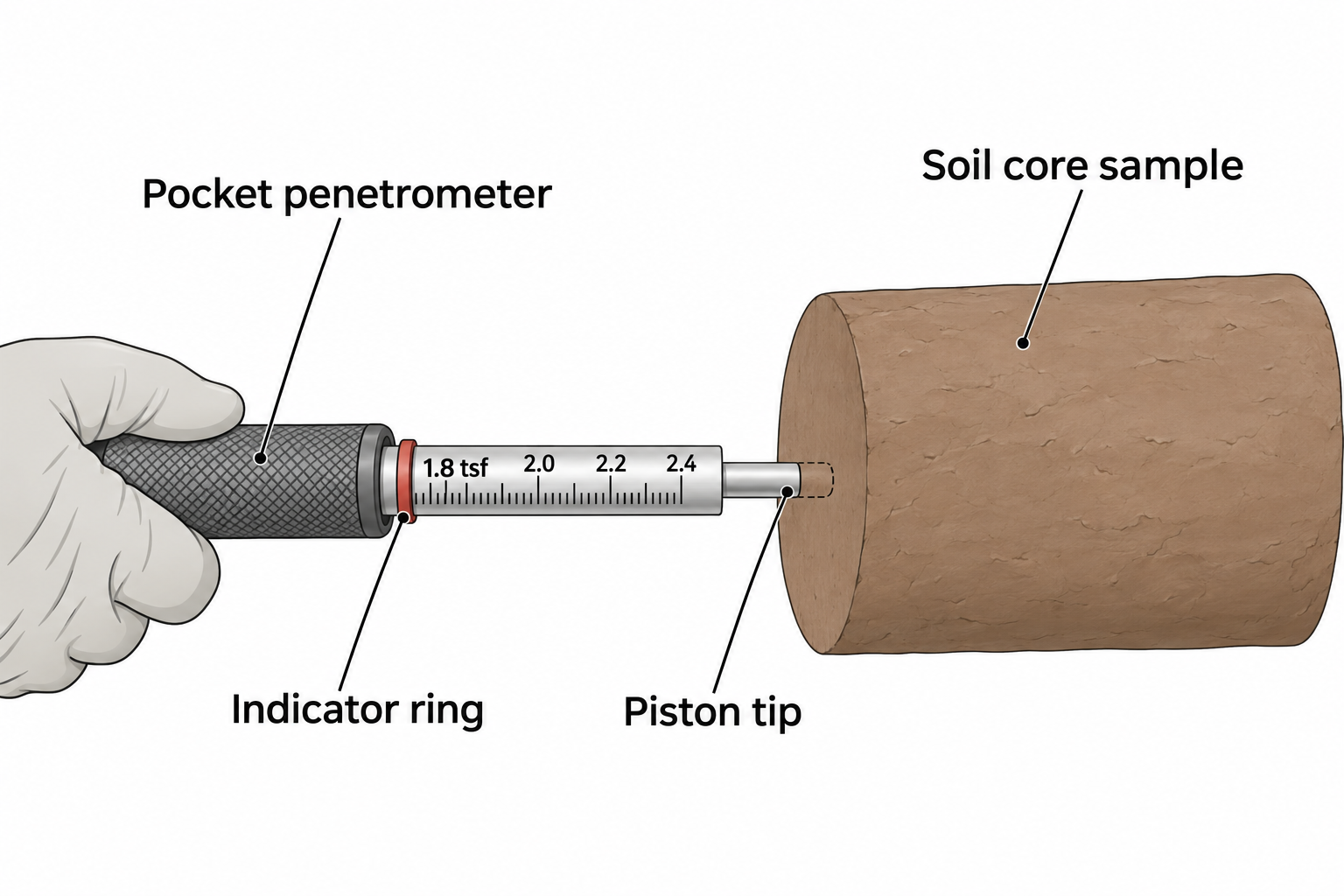
    A soil sample taken from an excavation sidewall has an unconfined compressive strength of 1.8 tons per square foot (tsf) as determined by a calibrated pocket penetrometer. However, historical utility records confirm that the ground was previously excavated and backfilled during a storm sewer installation three years ago. According to 29 CFR 1926 Subpart P, how must this cohesive soil be classified?
    Question 1 image
    Answer and explanation

    Correct answer: D

    Type A soil cannot be previously disturbed. Cohesive soil with UCS >= 1.5 tsf that has been previously disturbed is classified as Type B soil under 29 CFR 1926 Subpart P App A.
  2. Question 2

    Advanced

    Hazard and Risk Identification and Control · Common hazards and controls associated with excavations

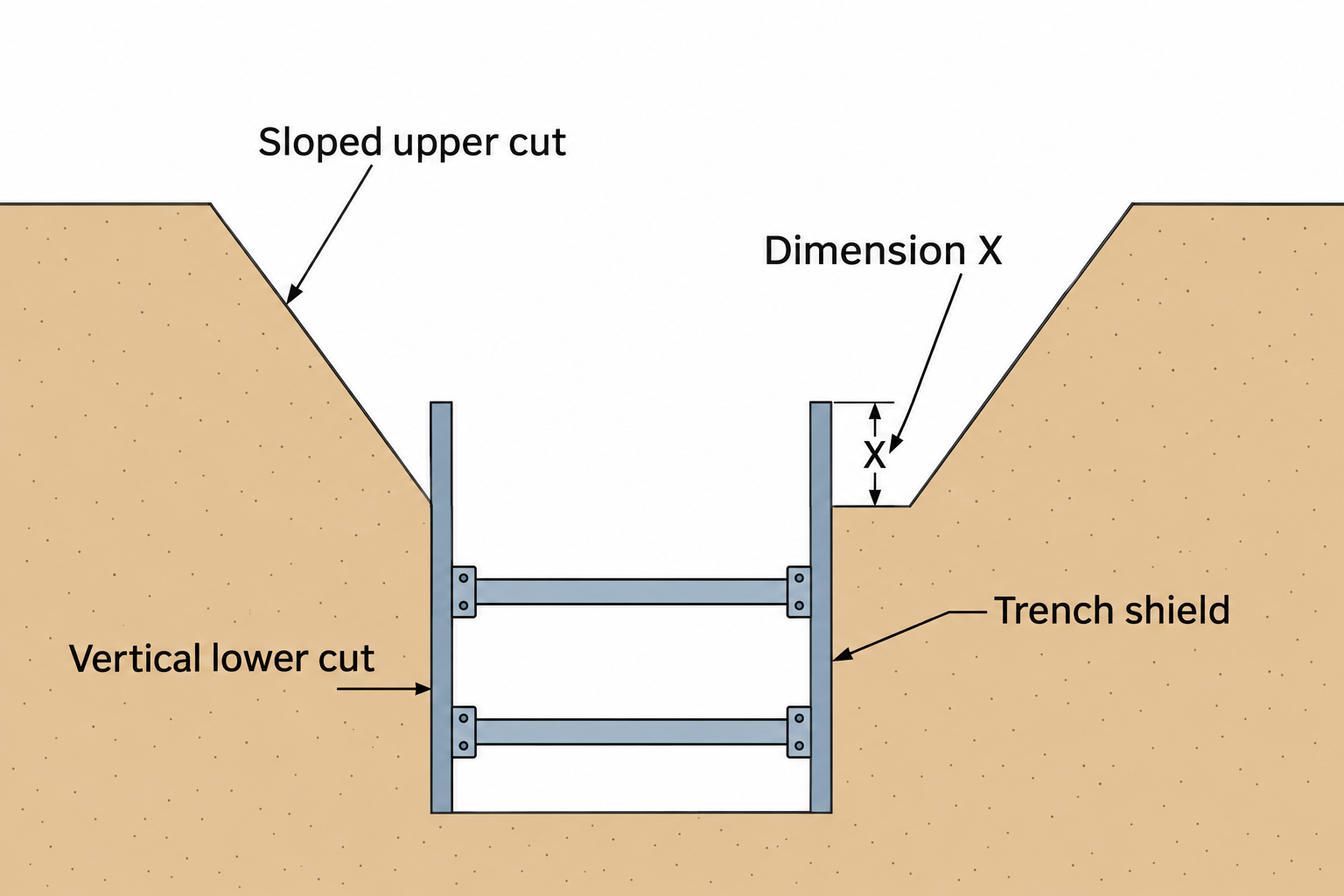
    In an excavation where the lower vertical portion is supported by a trench shield system and the upper portion is sloped in accordance with 29 CFR 1926 Subpart P, what is the minimum distance that the shield must extend above the top of the vertical cut, indicated by dimension X in the figure?

    Question 2 image
    Answer and explanation

    Correct answer: A

    Under 29 CFR 1926.652(g)(1)(iii), trench shields must extend at least 18 inches above the vertical side when an excavation is sloped above the shield to prevent sloughing into the trench.

  3. Question 3

    Beginner

    Hazard and Risk Identification and Control · Common hazards and controls associated with excavations

    For an excavation 14 feet deep dug entirely in Type C soil that remains open for three days, 29 CFR 1926 Subpart P Appendix B mandates that the maximum allowable slope angle must not exceed _____.

    Answer and explanation

    Correct answer: A

    Under 29 CFR 1926 Subpart P App B, simple slope excavations 20 feet or less in Type C soil require a maximum allowable slope of 1.5 horizontal to 1 vertical (34 degrees).

  4. Question 4

    Intermediate

    Hazard and Risk Identification and Control · Common hazards and controls associated with fall protection, arrest, and restraint equipment

    When selecting and rigging a personal fall arrest system (PFAS) utilizing a full-body harness under 29 CFR 1926.502, what is the maximum arresting force that may be imposed on an employee during fall arrest?

    Answer and explanation

    Correct answer: B

    29 CFR 1926.502(d)(16) limits the maximum arresting force on an employee using a full-body harness to 1,800 pounds. The 900-pound limit previously applied only to body belts, which are banned in PFAS.

  5. Question 5

    Intermediate

    Hazard and Risk Identification and Control · Common hazards and controls associated with fall protection, arrest, and restraint equipment

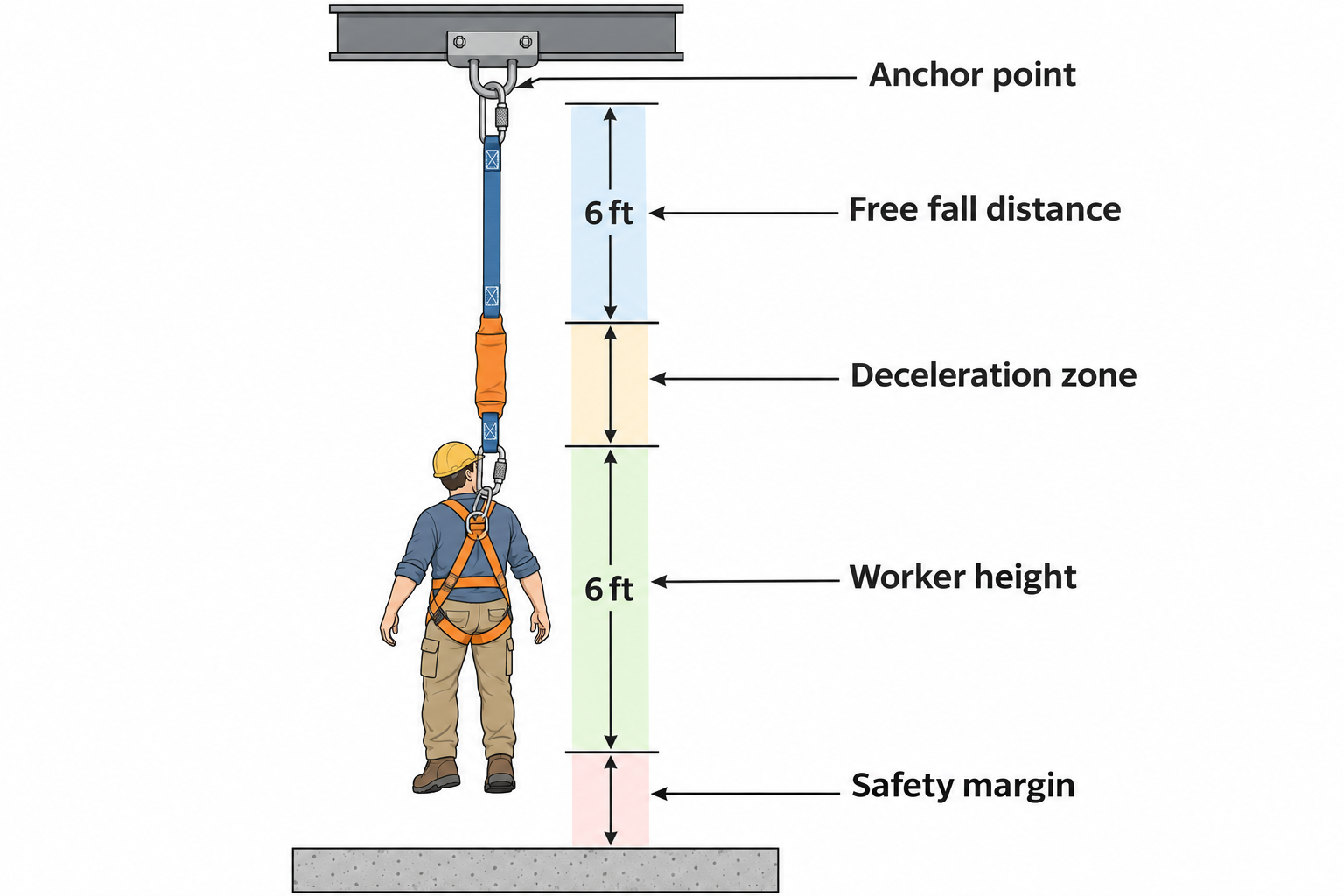
    A structural ironworker is evaluating total fall clearance requirements before attaching a standard 6-foot shock-absorbing lanyard to an overhead I-beam anchorage. What is the maximum deceleration distance that the shock-absorbing mechanism is legally permitted to deploy under 29 CFR 1926.502?

    Question 5 image
    Answer and explanation

    Correct answer: B

    Under 29 CFR 1926.502(d)(16), personal fall arrest systems must bring an employee to a complete stop and limit total deceleration distance to no more than 3.5 feet.

  6. Question 6

    AdvancedMultiple answers

    Hazard and Risk Identification and Control · Common hazards and controls associated with fall protection, arrest, and restraint equipment

    Under 29 CFR 1926.502, which TWO criteria meet OSHA requirements for an anchorage used to support a personal fall arrest system? (Select TWO)

    Answer and explanation

    Correct answers: C, E

    Anchorages must support at least 5,000 lbs per worker, or be engineered by a qualified person with a safety factor of 2 (29 CFR 1926.502(d)(15)). Scaffold rails rated at 200 lbs are inadequate.

Register free for 6 more questions

Or unlock all 162 CHST questions with explanations, timed mode and flashcards.