


AI Certifications: Key Choices Driving Tech Careers
Interest in AI certifications is exploding as more American and international employers demand validated skills in artificial intelligence. For IT professionals and career switchers, a single advanced certificate can drive a salary increase of over 20 percent. This surge reflects how critical AI expertise has become for anyone aiming to stand out in global, technology-driven industries. Discover which certification paths actually deliver new opportunities and real-world impact.
Key Takeaways
| Point | Details |
|---|---|
| Importance of AI Certifications | AI certifications validate expertise in artificial intelligence and are crucial for career advancement in technology fields. |
| Specializations Matter | Focus on certifications relevant to your career goals, such as Machine Learning or Generative AI, to enhance marketability. |
| Exam Formats and Prerequisites | Understanding exam structures, including live assessments and portfolio requirements, is essential to demonstrate practical skills. |
| Avoid Common Pitfalls | Choose certifications that offer hands-on experience and align with current industry needs to maximize career progression. |
AI Certifications Defined and Their Importance
AI certifications represent formal credentials that validate a professional’s expertise in artificial intelligence technologies, machine learning algorithms, and advanced computational skills. These specialized credentials demonstrate a systematic understanding of complex AI frameworks and verify an individual’s ability to design, implement, and manage intelligent systems across various technology domains.
Professionals pursuing AWS certification pathways gain critical validation of their skills in developing cutting-edge AI solutions. These certifications go beyond traditional technical training by providing comprehensive recognition of practical competencies in emerging technological landscapes. They cover critical areas including machine learning model development, neural network architecture, data preprocessing techniques, and advanced algorithmic implementations.
The rapidly evolving AI certification ecosystem encompasses multiple levels of professional development. Entry-level certifications introduce foundational concepts, while advanced credentials validate expertise in specialized domains like generative AI, large language models, and autonomous systems engineering. Professionals can strategically select certifications that align with their career goals, whether targeting machine learning engineering roles, data science positions, or AI research and development tracks.
Pro tip: Research multiple certification paths and align your selection with specific industry sector requirements to maximize your professional marketability.
Major AI Certification Types and Specializations
AI certifications represent a complex ecosystem of specialized credentials categorized across multiple professional development levels. Academic institutions and industry platforms offer comprehensive certification programs that validate technical skills ranging from foundational knowledge to advanced specialized expertise in artificial intelligence technologies.
The certification landscape encompasses several critical specialization tracks, including machine learning engineering, generative AI, computer vision, and natural language processing. These specialized paths allow professionals to target specific technological domains, with each certification requiring unique skill sets and demonstrating proficiency in particular AI application areas. Some certifications focus on platform-specific technologies like AWS or Google Cloud, while others provide broader theoretical frameworks applicable across multiple technological environments.
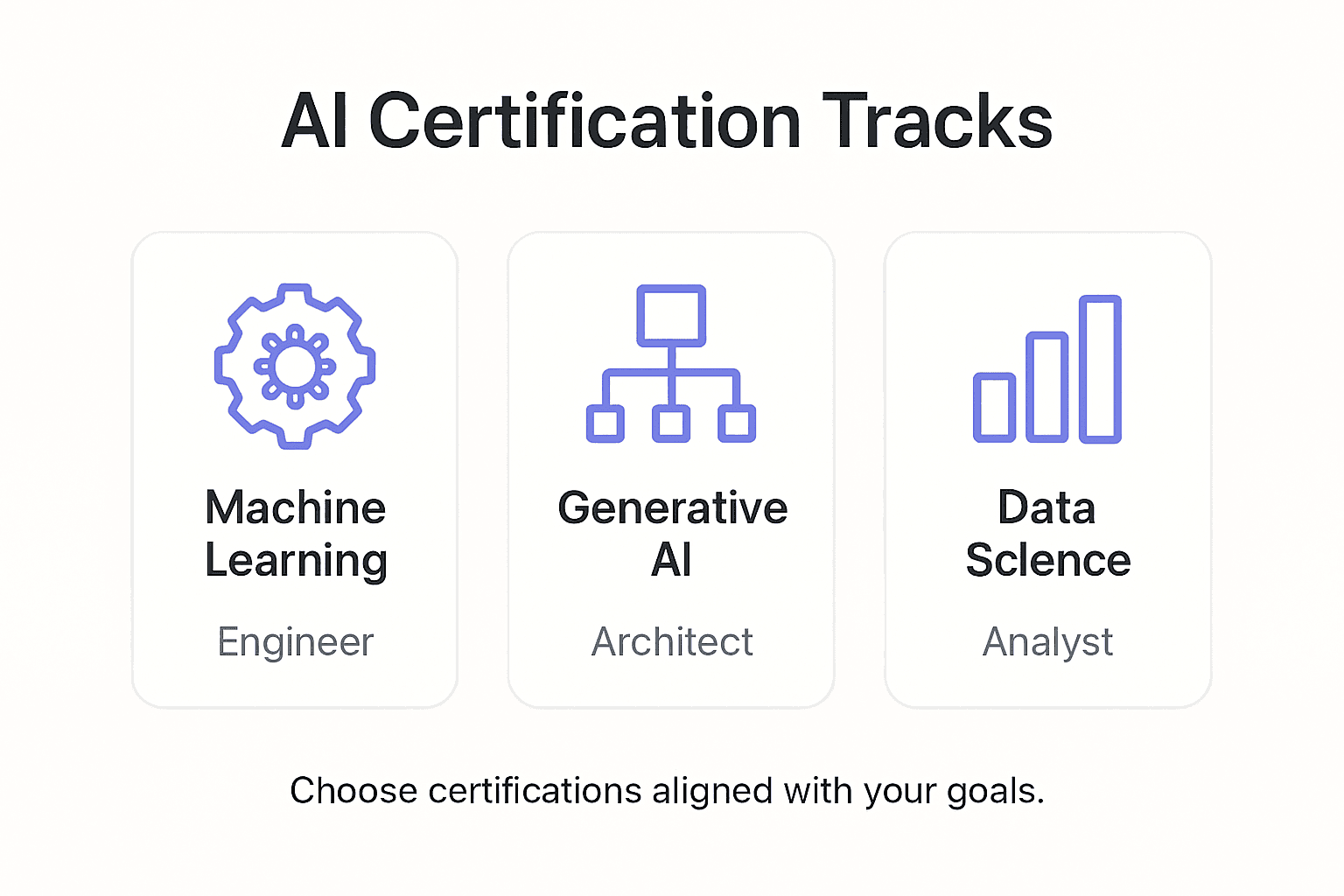
Professionals can strategically select certifications based on their career objectives and technological interests. Entry-level credentials typically introduce fundamental concepts and programming techniques, while advanced certifications validate complex skills such as designing neural network architectures, developing autonomous systems, and implementing sophisticated machine learning algorithms. Industry certifications also address critical areas like AI ethics and governance, ensuring professionals understand the broader implications of AI technology deployment.
Pro tip: Systematically map your current technological skills against certification requirements and choose programs that offer the most significant skill gap bridging and career advancement potential.
Here’s a comparative overview of major AI certification specializations and their relevance to industry roles:
| Specialization Track | Core Skills Developed | Typical Industry Role |
|---|---|---|
| Machine Learning | Model building, data preprocessing | ML Engineer, Data Scientist |
| Generative AI | Prompt design, model fine-tuning | LLM Engineer, AI Researcher |
| Computer Vision | Image analysis, visual recognition | Vision Specialist, Robotics |
| Natural Language Processing | Text analytics, language modeling | NLP Engineer, Chatbot Developer |
| Autonomous Systems | System design, real-time decisioning | Autonomous Systems Architect |
Deep Dive: Hot AI Certifications for 2026
The artificial intelligence certification landscape is experiencing unprecedented transformation, with emerging credentials targeting the most cutting-edge technological domains. Specialized AI certification sample resources reveal a significant shift towards advanced generative AI, large language model engineering, and autonomous systems development credentials for 2026.
Top-tier AI certifications for the upcoming year are categorized across multiple specialized tracks. Generative AI Engineer credentials from vendors like AWS, Databricks, and Google are experiencing massive demand, reflecting the industry’s intense focus on large language models and generative technology platforms. These certifications validate complex skills including prompt engineering, model fine-tuning, ethical AI development, and advanced neural network architecture design.
The most competitive AI certifications in 2026 emphasize practical implementation over theoretical knowledge. Advanced credentials now require hands-on project portfolios, live coding assessments, and demonstrated expertise in real-world AI solution development. Professionals targeting roles in machine learning engineering, AI research, and autonomous systems architecture must demonstrate not just theoretical understanding, but proven capability to design, implement, and optimize sophisticated AI technologies across multiple computational environments.
Pro tip: Prioritize certifications offering practical assessment components and those aligned with emerging technological domains like generative AI, autonomous systems, and ethical AI governance.
Exam Formats, Prerequisites, and Study Prep
AI certification exams represent complex assessments designed to validate advanced technological skills across multiple domains. Microsoft’s detailed AI certification exam structure reveals a sophisticated approach to evaluating professional competencies, incorporating multiple question formats that test practical and theoretical knowledge of artificial intelligence technologies.
Exam formats typically involve a comprehensive assessment strategy combining multiple-choice questions, scenario-based challenges, and practical implementation demonstrations. Standardized exam components generally include structured sections testing theoretical knowledge, hands-on problem-solving skills, and advanced technical comprehension. Most professional-level AI certification exams require candidates to demonstrate proficiency in critical areas such as machine learning model design, algorithmic implementation, ethical AI considerations, and complex system architecture development.
Prerequisite requirements for advanced AI certifications are increasingly rigorous, demanding a robust technical background. Professionals seeking these credentials must typically possess strong programming skills in languages like Python and JavaScript, comprehensive understanding of machine learning principles, and practical experience in developing AI solutions. Many certifications now require documented project portfolios, live coding assessments, and proven expertise in implementing real-world artificial intelligence technologies across various computational environments.
Pro tip: Develop a structured study strategy that combines theoretical learning, hands-on coding practice, and systematic review of practical AI implementation scenarios.
Compare essential features found in top AI certification exams and their impact on career success:
| Exam Feature | Business Impact | Career Advancement Benefit |
|---|---|---|
| Live Coding Assessment | Demonstrates real-world problem-solving | Improves job market competitiveness |
| Project Portfolio | Validates hands-on implementation expertise | Attracts advanced technical roles |
| Ethics & Governance | Ensures responsible AI deployment | Enhances leadership opportunities |
Career Advancement, Costs, and Pitfalls to Avoid
The landscape of AI certification investment requires strategic navigation, with professionals needing to carefully evaluate the potential returns against associated expenses. Understanding the comprehensive costs of AI certification programs reveals a complex ecosystem ranging from affordable entry-level credentials to intensive advanced programs costing several thousand dollars.
Career advancement through AI certifications demands more than simply acquiring credentials. Strategic certification selection involves identifying programs that offer tangible skill development, industry recognition, and alignment with emerging technological trends. Professionals must critically assess each certification’s practical value, examining factors such as curriculum depth, hands-on training components, and demonstrated relevance to current AI technological landscapes.
Most critically, successful career progression requires avoiding common pitfalls in certification pursuits. Navigating the AI job market demands more than collecting certifications, with employers increasingly prioritizing practical experience, demonstrable problem-solving skills, and continuous technological adaptation. Candidates should focus on certifications that provide real-world project experience, offer cutting-edge curriculum, and demonstrate clear pathways to practical implementation across diverse technological environments.
Pro tip: Prioritize AI certification programs that offer comprehensive project portfolios, live coding assessments, and direct industry connections over purely theoretical credentials.
Master Your AI Certification Journey with PlanetCert
The article highlights the challenge of navigating complex AI certification landscapes and overcoming the common hurdles of exam preparation such as mastering practical skills, understanding cutting-edge technologies like generative AI, and meeting rigorous exam requirements. If you are striving to advance your tech career by earning critical credentials, you need trusted resources that deliver verified real questions, comprehensive study guides, and realistic online exam simulators to boost your confidence and pass your exams on the first try.
Don’t leave your AI certification success to chance. Discover how PlanetCert.com supports your journey with expertly crafted practice tests tailored to in-demand certificates including AWS AI offerings and other leading tech domains. Prepare efficiently, sharpen your live coding and project skills, and avoid costly pitfalls by leveraging our regularly updated materials. Take the confident next step in your AI and cloud career today by visiting PlanetCert and exploring our trusted study solutions designed to elevate your expertise and accelerate your success.
Frequently Asked Questions
What are AI certifications?
AI certifications are formal credentials that validate an individual’s expertise in artificial intelligence technologies and machine learning. They demonstrate a comprehensive understanding of AI frameworks and the ability to implement intelligent systems in various tech domains.
Why are AI certifications important for tech careers?
AI certifications are essential as they provide validation of skills and knowledge in a rapidly evolving field. They help professionals stand out in the job market, showcasing their proficiency in emerging technologies like machine learning, generative AI, and more.
What types of AI certifications are available?
AI certifications are categorized across various specialization tracks, including machine learning engineering, generative AI, computer vision, natural language processing, and autonomous systems, addressing diverse skill sets and application areas.
What should I consider when selecting an AI certification?
When selecting an AI certification, consider factors such as alignment with your career goals, the skills you currently possess, the credibility of the issuing body, practical assessment components, and the certification’s relevance to industry demands.
Discussion
Community Discussion
Sign in to leave a comment and access more free questions.