

CompTIA Network+ Certification: SD-WAN Skills for Modern Careers
Most American and international IT professionals underestimate how deeply the CompTIA Network+ certification covers modern networking concepts. With over 45 percent of exam takers admitting they were surprised by the practical troubleshooting focus, choosing the right study resources becomes essential. If you are making a career switch or just starting out, this guide uncovers proven ways to build real-world skills and avoid the common misconceptions that keep beginners from exam success.
Key Takeaways
| Point | Details |
|---|---|
| CompTIA Network+ Certification Importance | The certification serves as a foundational skill set for IT professionals, covering extensive networking domains beyond mere technical configuration. |
| Understanding SD-WAN Significance | SD-WAN is a crucial technology in modern networking, emphasizing dynamic routing and centralized management for efficient enterprise connectivity. |
| MPLS to SD-WAN Migration | Businesses benefit from migrating to SD-WAN due to cost optimization, flexible routing, and improved traffic management strategies. |
| Career Opportunities in SD-WAN | There is a growing demand for professionals skilled in SD-WAN, with various roles available in diverse sectors such as telecommunications and cybersecurity. |
CompTIA Network+ Core Concepts and Misconceptions
The CompTIA Network+ certification represents a critical entry point for IT professionals seeking to establish foundational networking skills. Understanding network technologies requires more than memorizing technical specifications; it demands comprehensive comprehension of interconnected systems and their underlying principles.
Many aspiring network professionals misunderstand the certification’s scope, believing it focuses exclusively on technical configuration. In reality, the Network+ curriculum covers a broad spectrum of networking domains, including wired and wireless technologies, network installation, management, security protocols, and complex troubleshooting methodologies. The certification emphasizes practical skills that translate directly into real-world networking challenges, preparing candidates to handle diverse technological environments.
Key misconceptions about the Network+ certification often revolve around its depth and industry relevance. Contrary to some beliefs, this certification is not merely an entry-level credential but a comprehensive validation of networking expertise. Professionals pursuing this certification learn critical skills in network documentation, services, datacenter configurations, cloud infrastructures, and virtual networking architectures. These competencies are essential for building robust, secure, and efficient network systems across various organizational contexts.
Pro Tip: When preparing for the Network+ exam, focus on understanding core networking principles rather than memorizing isolated technical details, as the certification values conceptual comprehension over rote learning.
SD-WAN Fundamentals in Network+ N10-009
Software-Defined Wide Area Network (SD-WAN) technologies represent a critical evolution in modern networking infrastructure. Transformative WAN technologies are fundamentally changing how organizations approach network management, offering unprecedented flexibility and efficiency in connecting distributed enterprise environments.

The Network+ N10-009 exam recognizes SD-WAN as a pivotal networking concept, emphasizing its core architectural principles. Unlike traditional wide area networks, SD-WAN decouples network control mechanisms from physical hardware, enabling more dynamic and intelligent routing strategies. This approach allows businesses to optimize network performance, reduce operational costs, and enhance security by intelligently managing traffic across multiple connection types, including broadband internet, cellular, and private links.
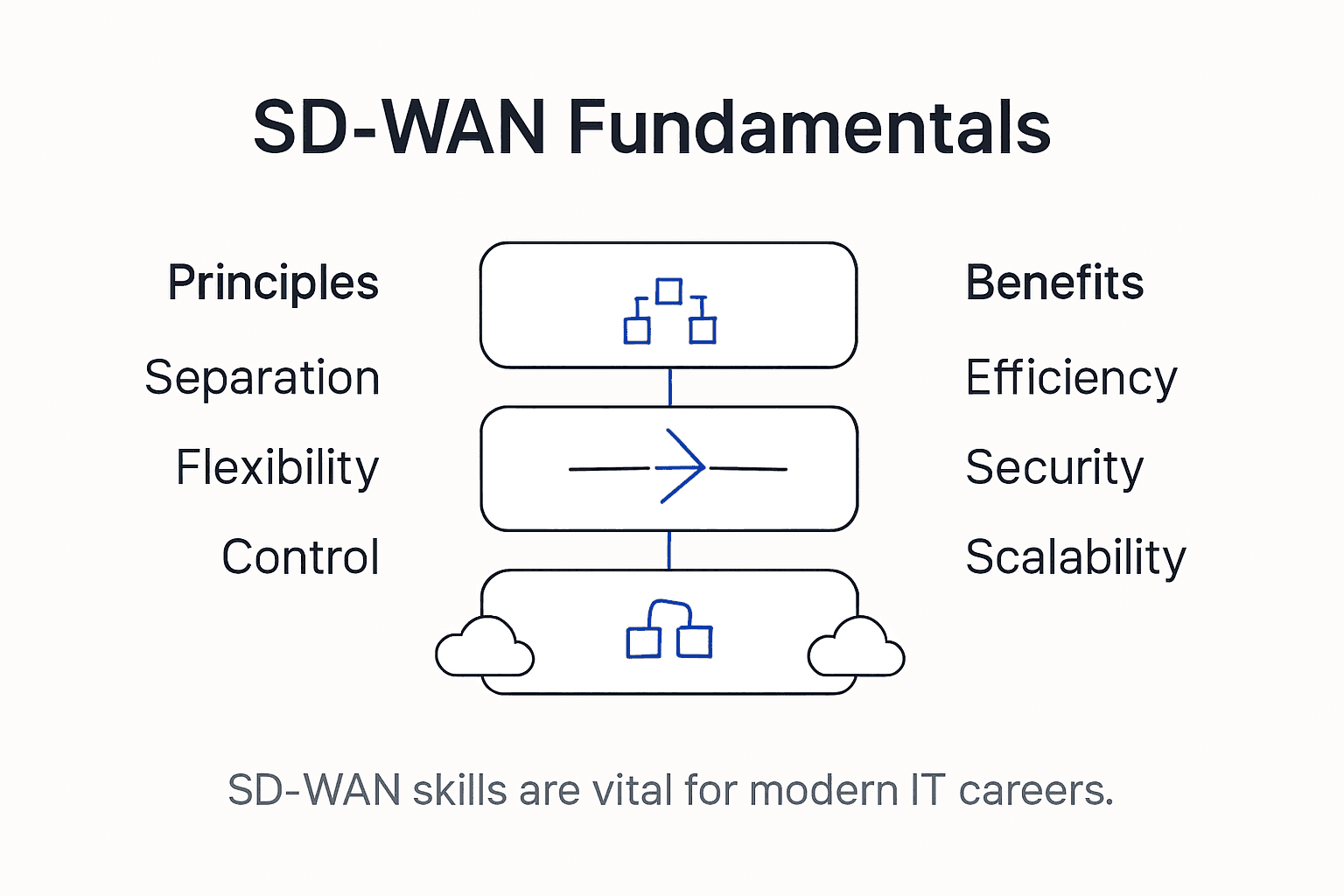
Key SD-WAN fundamentals covered in the Network+ N10-009 exam include understanding the separation of control and data planes, cloud integration strategies, and software-defined networking principles. Professionals must comprehend how SD-WAN solutions enable centralized management, provide real-time path selection, and implement sophisticated security protocols across geographically dispersed network infrastructures. These skills are crucial for IT professionals seeking to design, implement, and troubleshoot modern enterprise network architectures that demand high performance and reliability.
Pro Tip: When studying SD-WAN for the Network+ exam, focus on understanding the architectural concepts and decision-making logic behind software-defined networking rather than memorizing specific vendor configurations.
Enterprise Migration: MPLS to SD-WAN Explained
Enterprise network transformations represent complex strategic challenges, and the shift from traditional Multiprotocol Label Switching (MPLS) to Software-Defined Wide Area Networks (SD-WAN) is a critical technological evolution. Comprehensive migration strategies involve carefully analyzing existing network infrastructures and designing nuanced transition approaches that minimize operational disruptions.
The migration process typically involves multiple strategic phases that address technical and operational considerations. Enterprises must conduct thorough infrastructure assessments, identifying current network dependencies, bandwidth requirements, and performance bottlenecks. Unlike traditional MPLS networks with rigid routing protocols, SD-WAN offers dynamic traffic management, enabling organizations to intelligently route network traffic across multiple connection types, including broadband internet, cellular networks, and private links. This approach provides unprecedented flexibility in managing network resources while potentially reducing overall telecommunications expenses.
Key considerations during MPLS to SD-WAN migration include maintaining secure connectivity, ensuring consistent network performance, and implementing robust traffic management mechanisms. Many organizations adopt a hybrid approach, strategically maintaining critical MPLS connections at central hub locations while progressively transitioning branch offices to SD-WAN architectures. This phased migration allows for gradual technology adoption, risk mitigation, and seamless integration of new networking capabilities without compromising existing operational stability.
Here’s a concise overview of how MPLS and SD-WAN compare for enterprise network migration:
| Aspect | MPLS | SD-WAN | Migration Benefit |
|---|---|---|---|
| Routing Flexibility | Rigid, static routes | Dynamic, adaptive routing | Better traffic management |
| Cost Structure | High recurring expenses | Lower, scalable costs | Cost optimization |
| Security Approach | Built-in, closed network | Software-based, customizable | Enhanced security options |
| Management | Provider-managed, complex | Centralized, user-friendly | Easier administration |
Pro Tip: During MPLS to SD-WAN migration, document every network configuration change meticulously and maintain comprehensive rollback procedures to ensure minimal service interruption.
Current Job Roles Requiring SD-WAN Expertise
The expanding landscape of network technologies has created diverse career opportunities for professionals with SD-WAN expertise. Government cybersecurity and infrastructure roles increasingly demand specialized skills in managing complex, geographically distributed network environments, highlighting the strategic importance of SD-WAN knowledge in critical technological sectors.
Multiple professional domains now actively seek SD-WAN proficient candidates across various job roles. Network engineers are particularly positioned to leverage these skills, with responsibilities that include designing, implementing, and maintaining sophisticated SD-WAN architectures. Typical positions include enterprise network architects, cloud network specialists, cybersecurity professionals, and infrastructure support technicians. These roles require comprehensive understanding of software-defined networking principles, traffic management strategies, and the ability to integrate multiple connection types seamlessly.
International organizations and global enterprises are expanding their recruitment of SD-WAN experts to support increasingly complex technological infrastructures. Career paths range from technical implementation roles to strategic network planning positions. Professionals with SD-WAN certifications can explore opportunities in sectors like telecommunications, government agencies, healthcare, financial services, and multinational corporations. The skills learned through CompTIA Network+ and advanced SD-WAN certifications provide a robust foundation for navigating these dynamic and evolving career landscapes.
Below is a summary of common job roles that benefit from SD-WAN expertise and the key competencies they require:
| Job Role | Main Responsibilities | Required SD-WAN Competencies |
|---|---|---|
| Network Engineer | Design and deploy WANs | Centralized control, path selection |
| Cloud Network Specialist | Integrate cloud networks | Cloud connectivity, scalability |
| Cybersecurity Analyst | Secure enterprise systems | Policy enforcement, traffic monitoring |
| Infrastructure Technician | Maintain network hardware | Software-defined troubleshooting |
Pro Tip: Continuously update your SD-WAN skills by participating in hands-on lab environments and staying current with emerging networking technologies to remain competitive in the job market.
Network+ as Launchpad for Advanced SD-WAN Certifications
The CompTIA Network+ certification serves as a foundational stepping stone for professionals aiming to specialize in advanced software-defined networking technologies. Specialized SD-WAN certification pathways provide structured progression from basic networking knowledge to advanced enterprise networking solutions, enabling IT professionals to build comprehensive skill sets demanded by modern technological environments.
Professionals who complete the Network+ certification gain critical foundational skills that directly translate to more advanced SD-WAN certification tracks. The core competencies developed in Network+ include understanding network architectures, routing protocols, network security principles, and troubleshooting methodologies. These fundamental skills create a solid platform for pursuing specialized certifications from vendors like Cisco, which offer advanced SD-WAN solutions and enterprise networking credentials. By mastering the fundamental concepts in Network+, professionals can more effectively comprehend and implement complex software-defined networking strategies.
The progression from Network+ to advanced SD-WAN certifications typically involves strategic skill development across multiple domains. Candidates can explore specialized certification tracks such as Cisco’s SD-WAN Solutions (ENSDWI) and CCNP Enterprise SD-WAN programs, which build upon the networking, routing, and security knowledge established in the Network+ certification. These advanced certifications focus on deploying, managing, and troubleshooting sophisticated SD-WAN solutions in enterprise and cloud environments, providing professionals with in-depth, vendor-specific expertise.
Pro Tip: Create a structured learning roadmap that identifies specific advanced SD-WAN certifications aligned with your career goals, and consistently practice hands-on networking skills to bridge theoretical knowledge with practical implementation.
Study Resources That Improve Exam Success
Successful preparation for the CompTIA Network+ certification requires a strategic approach to selecting study resources that comprehensively cover exam objectives. Comprehensive multi-course preparation programs offer structured learning pathways that blend video lectures, interactive labs, and practice examinations to enhance candidates’ understanding of complex networking concepts.
Effective study resources should provide a balanced mix of theoretical knowledge and practical application. Top-tier preparation materials typically include video training modules, detailed textbooks, practice question banks, virtual lab environments, and simulated exam scenarios. The most successful candidates utilize resources that not only cover the official exam objectives but also provide real-world context for networking technologies, including emerging topics like SD-WAN, infrastructure as code, and zero-trust security architectures. Interactive learning platforms that allow hands-on experience with network configurations and troubleshooting scenarios can significantly improve retention and practical skill development.
Professional certification preparation requires a multifaceted approach to learning. Candidates should consider combining official CompTIA study guides, online training platforms, practice exam repositories, and hands-on lab experiences. Specialized training courses offered by authorized CompTIA training partners provide structured curriculums that systematically cover all exam domains, ensuring comprehensive preparation. Additionally, leveraging community forums, study groups, and networking professional discussion boards can provide valuable insights and supplementary learning resources.
Pro Tip: Create a personalized study schedule that allocates specific time for different learning modalities, including video lectures, practice questions, hands-on labs, and focused review sessions to maximize exam preparation effectiveness.
Master SD-WAN Skills for a Future-Ready Networking Career
The transition from traditional MPLS networks to SD-WAN technologies creates both challenges and exciting opportunities for IT professionals aiming to advance their careers. If you are preparing for the CompTIA Network+ certification and want to build strong expertise in SD-WAN concepts like dynamic routing, centralized management, and cloud integration, it is essential to have access to trusted study resources that make complex topics easy to understand and practice. Many candidates struggle with gaining practical knowledge and retaining these critical skills before the exam.
At PlanetCert.com, we recognize the pressure to excel on your first attempt while mastering SD-WAN fundamentals for real-world application. Our comprehensive platform offers up-to-date practice tests, verified real exam questions, and expertly crafted study guides that cover key areas such as software-defined networking principles and WAN migration strategies. Whether you are a network engineer, cloud specialist, or cybersecurity analyst looking to validate your abilities, our online exam simulators provide immersive, hands-on preparation closely aligned with CompTIA Network+ objectives.
Unlock your potential today with resources designed to boost confidence and sharpen your understanding of modern enterprise networking. Experience the difference that focused learning and practice can make as you take control of your certification journey at PlanetCert.com.

Begin your path toward mastering SD-WAN skills and advance your IT career with confidence. Visit PlanetCert.com now to access exam-focused tools and ensure you are fully prepared for success on the CompTIA Network+ certification and beyond.
Frequently Asked Questions
What is the CompTIA Network+ certification?
The CompTIA Network+ certification is a foundational credential for IT professionals that validates networking skills across various domains, including installation, management, and troubleshooting of network technologies.
Why is SD-WAN important in networking?
SD-WAN is essential because it decouples network control from hardware, allowing for dynamic traffic management, improved performance, and reduced operational costs in modern enterprise environments.
How does the CompTIA Network+ certification prepare me for SD-WAN roles?
The Network+ certification provides critical foundational skills in networking principles, architectures, and security, which are crucial for specializing in advanced SD-WAN technologies and certifications.
What job roles require SD-WAN skills?
Job roles that require SD-WAN skills include network engineers, cloud network specialists, cybersecurity analysts, and infrastructure technicians, as these positions increasingly involve managing complex, distributed networks.
Recommended

Discussion
Question Comments
0 comments·0 participantsSign in to leave a comment and access more free questions.