


CompTIA Network+ Impact on SD-WAN Careers
Most American IT job postings now list CompTIA Network+ as a key hiring requirement, reflecting how crucial validated networking skills have become in this field. For career switchers and busy professionals, the right study materials can make the difference between a passing score and starting over. By focusing on practical topics like SD-WAN and cloud technologies, this guide helps you target the knowledge employers and certification exams demand most.
Table of Contents
- CompTIA Network+ At A Glance
- SD-WAN Technology In N10-009 Exam
- Migrating From MPLS To SD-WAN Networks
- Job Roles Requiring SD-WAN Expertise
- Network+ Pathway To Advanced SD-WAN Certifications
Key Takeaways
| Point | Details |
|---|---|
| CompTIA Network+ Certification | It validates foundational networking skills and is suitable for entry-level professionals with about 9-12 months of experience. |
| Important Technologies in the Exam | The N10-009 exam emphasizes SD-WAN and requires candidates to understand complex network infrastructures and practical applications. |
| Migration from MPLS to SD-WAN | Organizations are shifting to SD-WAN for better scalability and cost efficiency, necessitating strategic migration plans to ensure seamless transitions. |
| Career Advancement | Network+ serves as a stepping stone to advanced SD-WAN certifications, creating pathways for professionals to enhance their skill set and career opportunities. |
CompTIA Network+ at a Glance
The CompTIA Network+ certification represents a critical milestone for IT professionals seeking to establish foundational networking skills. Designed to validate comprehensive networking knowledge, this certification covers essential technical competencies required in modern enterprise environments. From network infrastructure to cloud technologies, the Network+ credential demonstrates a professional’s ability to configure, manage, and troubleshoot network systems.
The certification specifically targets professionals with approximately 9-12 months of hands-on networking experience, making it an ideal credential for entry-level and emerging network technicians. Key knowledge domains include network architecture, operations, security protocols, troubleshooting techniques, and emerging technologies like virtualized and cloud networking. Candidates must demonstrate proficiency across multiple critical areas, ensuring they possess practical skills employers actively seek.
The latest version, Network+ N10-009, expands on previous iterations by incorporating more advanced networking concepts. It requires candidates to understand complex network infrastructures, including software-defined networking (SD-WAN), wireless technologies, and security principles. The exam tests not just theoretical knowledge but practical application of networking skills across various technological environments.
Pro tip: Start preparing for the Network+ exam by building a home lab environment where you can practice configuring network devices and troubleshooting real-world scenarios.
SD-WAN Technology in N10-009 Exam
The SD-WAN (Software-Defined Wide Area Network) technology has become a critical component of the CompTIA Network+ N10-009 exam, reflecting the rapid transformation of enterprise networking infrastructures. Comprehensive exam content now emphasizes understanding hybrid cloud environments and software-defined network architectures, signaling the industry’s shift from traditional networking approaches.
In the N10-009 exam, candidates must demonstrate deep knowledge of SD-WAN’s core principles, including its ability to intelligently route network traffic across multiple connection types. The technology represents a significant leap from traditional MPLS networks, offering organizations greater flexibility, improved performance, and enhanced cost-effectiveness. Exam questions will likely test understanding of key SD-WAN concepts such as dynamic path selection, real-time traffic management, and seamless integration with cloud services.
The exam’s focus on SD-WAN technology underscores the growing importance of software-defined networking in modern enterprise environments. Candidates will need to showcase skills in analyzing network requirements, designing SD-WAN solutions, and understanding the technical nuances of implementing these advanced networking architectures. This includes knowledge of configuration strategies, security considerations, and the ability to troubleshoot complex network scenarios involving SD-WAN technologies.
Pro tip: Practice configuring virtual network scenarios and study real-world SD-WAN deployment case studies to build practical understanding beyond theoretical knowledge.
Migrating from MPLS to SD-WAN Networks
Enterprise network migration represents a critical technological transformation, with organizations increasingly moving from traditional Multiprotocol Label Switching (MPLS) to more flexible Software-Defined Wide Area Network (SD-WAN) architectures. Comprehensive migration strategies now emphasize evaluating applications and determining deployment approaches that leverage cloud and SaaS models, reflecting the evolving demands of modern digital infrastructure.
The transition involves strategic considerations beyond simple network replacement. Traditional MPLS networks, while reliable, have significant limitations in terms of scalability and cost-effectiveness. SD-WAN offers intelligent routing, enhanced performance, and dramatically improved cloud integration. Organizations must carefully analyze their existing network architecture, application dependencies, and performance requirements to ensure a smooth migration process. This typically involves creating a detailed application roadmap that identifies critical systems, potential integration challenges, and performance benchmarks.
Migration challenges extend beyond technical implementation, encompassing security, compliance, and operational continuity. Network architects must design hybrid transition models that maintain existing MPLS reliability while gradually introducing SD-WAN capabilities. Enterprise connectivity strategies now prioritize dynamic, application-aware routing that supports global network requirements, enabling more responsive and cost-efficient networking infrastructures. Success requires a methodical approach that balances technical innovation with operational stability.
Here’s a concise comparison of MPLS and SD-WAN for enterprise networking:
| Attribute | MPLS | SD-WAN |
|---|---|---|
| Scalability | Limited, complex to expand | Highly scalable, easy to add sites |
| Cost Efficiency | Higher ongoing costs | Lower costs, flexible subscriptions |
| Cloud Integration | Difficult and limited | Seamless, optimized for cloud apps |
| Traffic Management | Static path selection | Dynamic, intelligent routing |
| Security Features | Hardware-centric, dedicated circuits | Software-based, integrates advanced encryption |
Pro tip: Conduct thorough network assessments and pilot testing before full-scale SD-WAN implementation to identify potential performance bottlenecks and ensure seamless organizational transition.
Job Roles Requiring SD-WAN Expertise
SD-WAN technologies have revolutionized network infrastructure, creating specialized job roles across multiple sectors. Government technology positions increasingly demand professionals capable of managing complex network architectures and secure connectivity, highlighting the critical importance of SD-WAN expertise in modern technological ecosystems.
Network engineering roles have transformed dramatically, requiring professionals with advanced skills in software-defined networking. Key positions now include Network Engineers, Systems Architects, and Cloud Connectivity Specialists who can design, implement, and maintain sophisticated SD-WAN infrastructures. These roles demand comprehensive understanding of network optimization, security protocols, and cloud integration strategies. Professionals must demonstrate ability to analyze complex network requirements, troubleshoot dynamic routing challenges, and implement scalable solutions that support enterprise digital transformation initiatives.
Technical roles within specialized sectors like intelligence and defense increasingly prioritize SD-WAN knowledge, creating unique opportunities for skilled network professionals. Cybersecurity analysts, systems administrators, and network security engineers now require deep expertise in software-defined networking technologies. These roles extend beyond traditional network management, encompassing strategic planning, risk mitigation, and implementing secure, resilient network architectures that can adapt to rapidly changing technological landscapes.
Pro tip: Develop hands-on experience with multiple SD-WAN platforms and obtain vendor-specific certifications to differentiate yourself in a competitive job market.
Network+ Pathway to Advanced SD-WAN Certifications
The CompTIA Network+ certification serves as a critical springboard for professionals seeking to advance their careers in network technologies, particularly in the rapidly evolving SD-WAN landscape. This foundational certification provides essential networking knowledge crucial for progressing to specialized SD-WAN solution certifications, establishing a robust technical foundation for career growth.
Advanced certification pathways typically require professionals to build upon Network+ credentials by pursuing vendor-specific SD-WAN certifications. These advanced credentials include specialized programs like Cisco’s Implementing Cisco SD-WAN Solutions (ENSDWI), which demands comprehensive understanding of network architectures, routing protocols, and software-defined networking principles. Network+ equips professionals with fundamental skills in network infrastructure, security protocols, and troubleshooting techniques that directly translate to more advanced SD-WAN certification requirements.
The progression from Network+ to advanced SD-WAN certifications represents a strategic career development approach. Professionals who successfully complete Network+ gain critical skills in network configuration, cloud integration, and infrastructure management. These competencies become increasingly valuable as organizations accelerate their digital transformation initiatives, creating significant demand for skilled network professionals who understand complex, software-defined networking environments. Candidates can leverage Network+ as a springboard to specialized certifications from vendors like Cisco, VMware, and Juniper, each offering unique SD-WAN certification tracks.
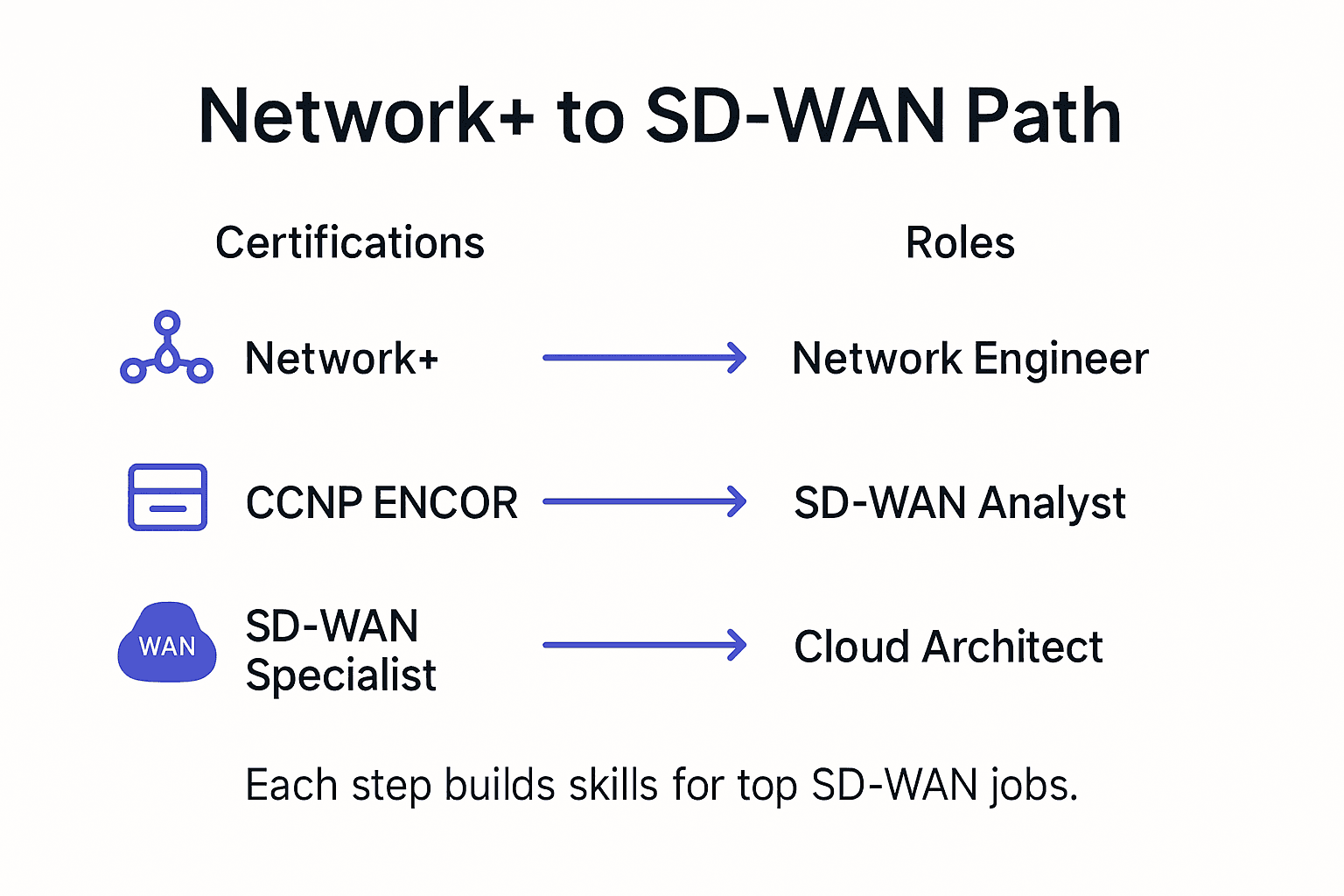
Below is a summary of popular advanced SD-WAN certifications for network professionals:
| Certification | Issuing Organization | Focus Area | Recommended Prerequisite |
|---|---|---|---|
| ENSDWI | Cisco | Cisco SD-WAN solutions | Network+ or equivalent |
| VCP-NV | VMware | VMware network virtualization | Basic networking certification |
| JNCIS-ENT | Juniper | Enterprise routing and switching | Network+ helps foundation |
Pro tip: Develop a systematic study plan that combines theoretical learning with hands-on lab experience to maximize your chances of successfully transitioning from Network+ to advanced SD-WAN certifications.
Advance Your SD-WAN Career with Trusted Certification Preparation
The journey from CompTIA Network+ to mastering SD-WAN technologies is a significant challenge that many IT professionals face today. This article highlights key hurdles such as understanding complex software-defined networking principles, migrating from MPLS to SD-WAN, and securing roles that require deep SD-WAN expertise. If you are aiming to overcome these challenges and take control of your network career path, solid exam preparation is essential to mastering these concepts and validating your skills.
PlanetCert.com specializes in providing verified real exam questions, practice tests, and study guides tailored to certifications like Network+ and advanced networking credentials. Our resources help reduce exam anxiety and boost your confidence so you can pass on your first attempt. Whether you are preparing for foundational networking knowledge or planning to specialize in SD-WAN certifications, start building your expertise now.
Step up your career with proven study tools and be ready to meet the demands of modern network roles.

Explore our comprehensive certification resources and take control of your future. Visit PlanetCert.com and access exclusive practice exams designed to help you master Network+, SD-WAN concepts, and beyond. Get started now to unlock new professional opportunities and stay ahead in the rapidly evolving networking landscape.
Frequently Asked Questions
What is the importance of the CompTIA Network+ certification for SD-WAN careers?
The CompTIA Network+ certification provides foundational networking knowledge, which is essential for understanding advanced technologies like SD-WAN. It equips professionals with skills required for configuration, management, and troubleshooting, making it a valuable credential for careers focused on SD-WAN technologies.
How does the Network+ certification help in advancing to specialized SD-WAN certifications?
The Network+ certification lays the groundwork for advanced SD-WAN certifications by offering critical understanding of network infrastructure, security protocols, and troubleshooting techniques. Professionals can leverage this foundational knowledge when pursuing vendor-specific SD-WAN certifications from companies like Cisco and VMware.
What job roles can benefit from knowledge of SD-WAN technologies?
Job roles such as Network Engineers, Systems Architects, and Cloud Connectivity Specialists greatly benefit from SD-WAN knowledge. Additionally, positions in cybersecurity and network security engineering increasingly require expertise in software-defined networking technologies.
Why is SD-WAN becoming a focus in the CompTIA Network+ N10-009 exam?
SD-WAN is becoming a focal point in the N10-009 exam due to its relevance in modern enterprise networking. It reflects industry trends towards agile, cloud-integrated networking solutions, requiring candidates to understand dynamic routing, real-time traffic management, and software-defined networking principles.
Discussion
Community Discussion
Sign in to leave a comment and access more free questions.