

Importance of Real Exam Questions for Certification Success
Most American IT professionals and students discover that true success on certification exams depends on far more than memorizing lists or flashcards. As the demand for certified skills grows worldwide, the real challenge lies in recognizing the myths and realities of exam questions. Learning how these questions test actual problem-solving and technical reasoning can make the difference between passing and failing. With over 50 percent of first-time candidates struggling to adapt, access to genuine, scenario-based practice questions is crucial for confident exam-day performance.
Key Takeaways
| Point | Details |
|---|---|
| Real Exam Questions Assess Practical Skills | Certification exams measure candidates’ abilities to apply knowledge in real-world scenarios, rather than just memorizing facts. |
| Common Myths Misrepresent Exam Difficulty | Many believe certification exams are easy; however, they require advanced problem-solving and critical thinking skills. |
| Diverse Question Types Enhance Evaluation | Tech certification exams utilize various formats, including scenario-based and performance-based questions to test comprehensive understanding. |
| Authentic Resources are Essential for Success | Candidates should leverage verified materials and diverse resources to ensure thorough preparation and alignment with current industry standards. |
Defining Real Exam Questions and Common Myths
Certification exam questions represent far more than simple memorization tests. Unlike traditional academic assessments, real exam questions focus on evaluating practical skills, problem-solving capabilities, and critical thinking relevant to professional environments. These questions are meticulously designed by subject matter experts to assess a candidate’s ability to apply knowledge in complex, real-world scenarios.
Contrary to popular misconceptions, certification exams are not easy achievements or mere formalities. Rigorous certification development processes involve extensive research, validation, and continuous refinement to ensure questions genuinely reflect industry standards and competency requirements. Professional certification bodies invest significant resources in creating questions that test not just theoretical understanding, but practical application of skills.
Common myths surrounding certification exam questions often stem from misunderstandings about their purpose and development. Many professionals mistakenly believe that these exams can be quickly conquered through rote memorization or that all certification questions lack standardized assessment methods. In reality, modern certification questions are sophisticated instruments designed to evaluate a candidate’s comprehensive understanding, analytical reasoning, and technical proficiency. They incorporate scenario-based problems, practical simulations, and complex decision-making challenges that mirror actual workplace environments.
The following table highlights common myths about certification exams versus the reality recognized by industry standards:
| Myth | Reality | Industry Perspective |
|---|---|---|
| Exams are easy to pass | Exams require advanced skills | Rigorous validation by experts |
| Memorization is enough | Application of knowledge is key | Emphasis on real-world scenarios |
| Questions lack standardization | Questions are meticulously designed | Compliance with industry standards |
Pro Tip: When preparing for certification exams, focus on understanding underlying concepts and practical applications rather than simply memorizing potential answers.
Types of Real Exam Questions in Tech Certifications
Tech certification exams employ multiple sophisticated question types designed to comprehensively evaluate a candidate’s technical knowledge and problem-solving capabilities. These questions go far beyond simple multiple-choice formats, incorporating advanced assessment techniques that simulate real-world professional challenges. Comprehensive certification practice tests typically include several strategic question categories that test different aspects of technical expertise.
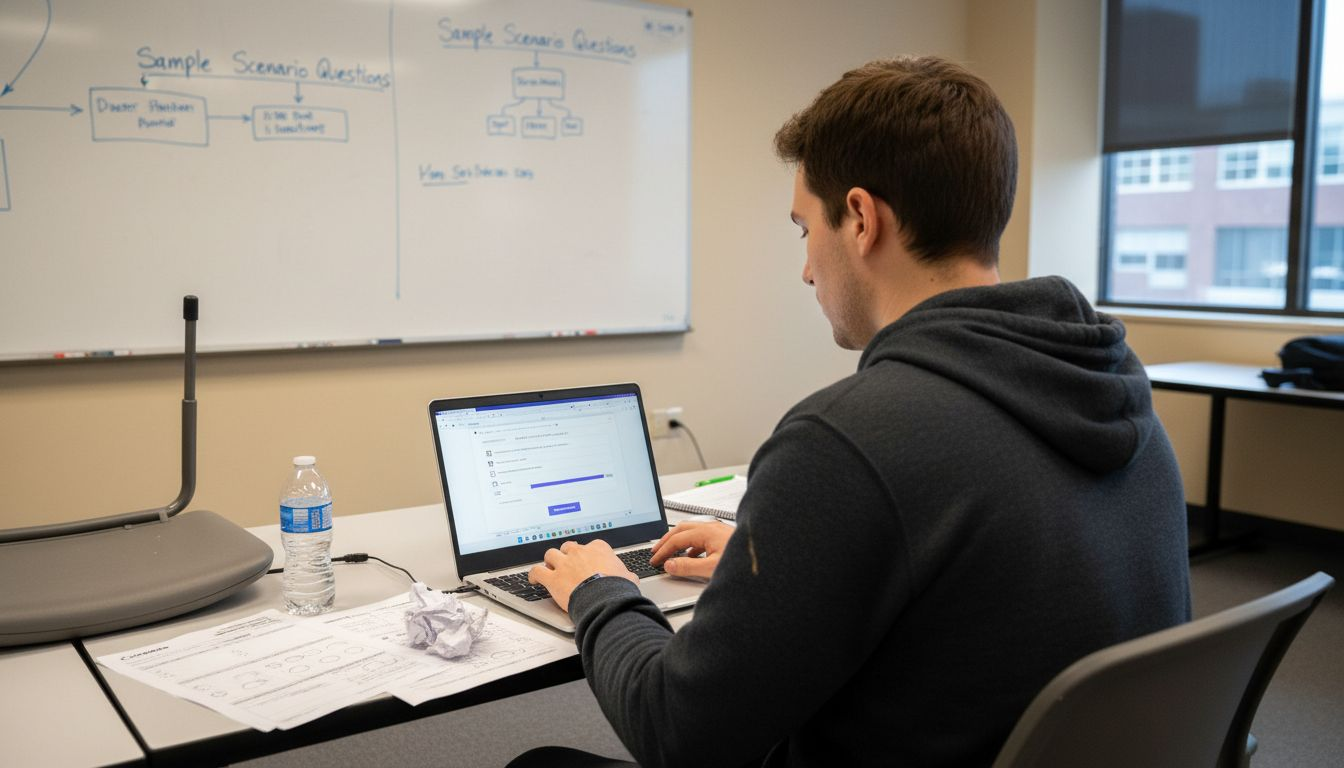
The primary types of real exam questions in tech certifications include scenario-based questions, multiple-choice questions with complex decision trees, performance-based simulations, drag-and-drop configuration challenges, and interactive problem-solving scenarios. Scenario-based questions present realistic technical situations where candidates must analyze complex environments and select the most appropriate solutions. Multiple-choice questions often include nuanced options that require deep understanding of technical concepts, testing not just memorization but critical reasoning skills.
Performance-based questions represent the most advanced assessment method in tech certifications. These questions require candidates to actively demonstrate skills by completing practical tasks within a simulated technical environment. For instance, a network certification exam might ask candidates to configure a router, troubleshoot a network connectivity issue, or design a secure network infrastructure. Such questions mirror actual workplace challenges, ensuring that certification holders possess genuine, actionable technical competencies that employers value.
Here is a summary of major tech exam question types and their key features:
| Question Type | Assessment Focus | Example Task |
|---|---|---|
| Scenario-Based | Analytical reasoning | Troubleshoot complex systems |
| Multiple Choice (Advanced) | Deep technical understanding | Choose best configuration |
| Performance-Based | Hands-on skills demonstration | Configure network devices |
| Drag-and-Drop | Process visualization | Organize workflow steps |
Pro Tip: Practice with diverse question formats and focus on understanding underlying technical principles rather than memorizing specific answers.
Key Benefits: Exam Readiness and Confidence
Real exam questions play a transformative role in building candidate confidence and ensuring comprehensive exam readiness. Practice exams that simulate actual testing conditions provide critical psychological and technical preparation, helping professionals systematically overcome test anxiety and develop robust test-taking strategies. By exposing candidates to authentic question formats and challenging scenarios, these practice resources create a mental blueprint of what to expect during the actual certification examination.
The strategic benefits of practicing with real exam questions extend far beyond simple familiarity. These practice resources enable candidates to identify and address knowledge gaps with precision, allowing targeted study that focuses on areas requiring improvement. Professional certifications often include complex, multi-step questions that test not just memorization but critical thinking and analytical skills. By repeatedly engaging with these sophisticated question types, candidates develop the mental agility and confidence needed to navigate challenging exam environments effectively.
Technical professionals preparing for certification exams can leverage practice questions to develop critical time management and decision-making skills. These resources provide a realistic assessment of one’s current knowledge level, helping candidates calibrate their preparation strategy. Performance tracking through practice exams allows learners to monitor progress, understand their strengths and weaknesses, and adjust their study approach accordingly. The incremental exposure to challenging questions progressively builds mental resilience and reduces the psychological pressure associated with high-stakes professional certification examinations.
Pro Tip: Create a structured practice routine that simulates actual exam conditions, including timed sessions and minimal distractions to maximize learning effectiveness.
Risks of Unverified or Outdated Questions
Professionals preparing for technical certification exams face significant risks when relying on unverified or outdated practice questions. Certification practice resources that lack rigorous verification can create dangerous knowledge gaps, potentially leading to incorrect study strategies and reduced exam performance. Unvalidated questions often fail to reflect the current exam standards, technological advancements, and specific skill requirements that certification bodies continuously update.
The primary dangers of using unverified exam questions include exposure to inaccurate information, misalignment with current industry standards, and development of incorrect problem-solving approaches. Outdated practice materials may cover obsolete technologies, deprecated network configurations, or security protocols that no longer represent current professional practices. This can create a false sense of preparedness while simultaneously preventing candidates from developing the precise skills and knowledge required for modern certification examinations.
Technical certification exams are dynamic environments that evolve rapidly with technological innovations. Unverified questions can introduce several critical risks, such as learning incorrect troubleshooting methodologies, misunderstanding current best practices, and developing ineffective test-taking strategies. Certification candidates must recognize that reputable practice resources undergo continuous validation, incorporating the latest industry standards, emerging technologies, and specific exam content updates. Professional certifications demand precise, current knowledge that reflects the most recent technological landscapes and professional expectations.
Pro Tip: Always verify the currency and authenticity of practice exam questions by cross-referencing with official certification body guidelines and recent industry publications.
Maximizing Success with Authentic Resources
Authentic learning resources are critical for professionals pursuing technical certification success. Effective certification preparation strategies demand a comprehensive approach that goes beyond traditional study methods, integrating real-world scenarios and industry-specific challenges. These resources create a robust learning environment that mirrors actual professional experiences, enabling candidates to develop not just theoretical knowledge, but practical problem-solving skills directly applicable to their certification exams.
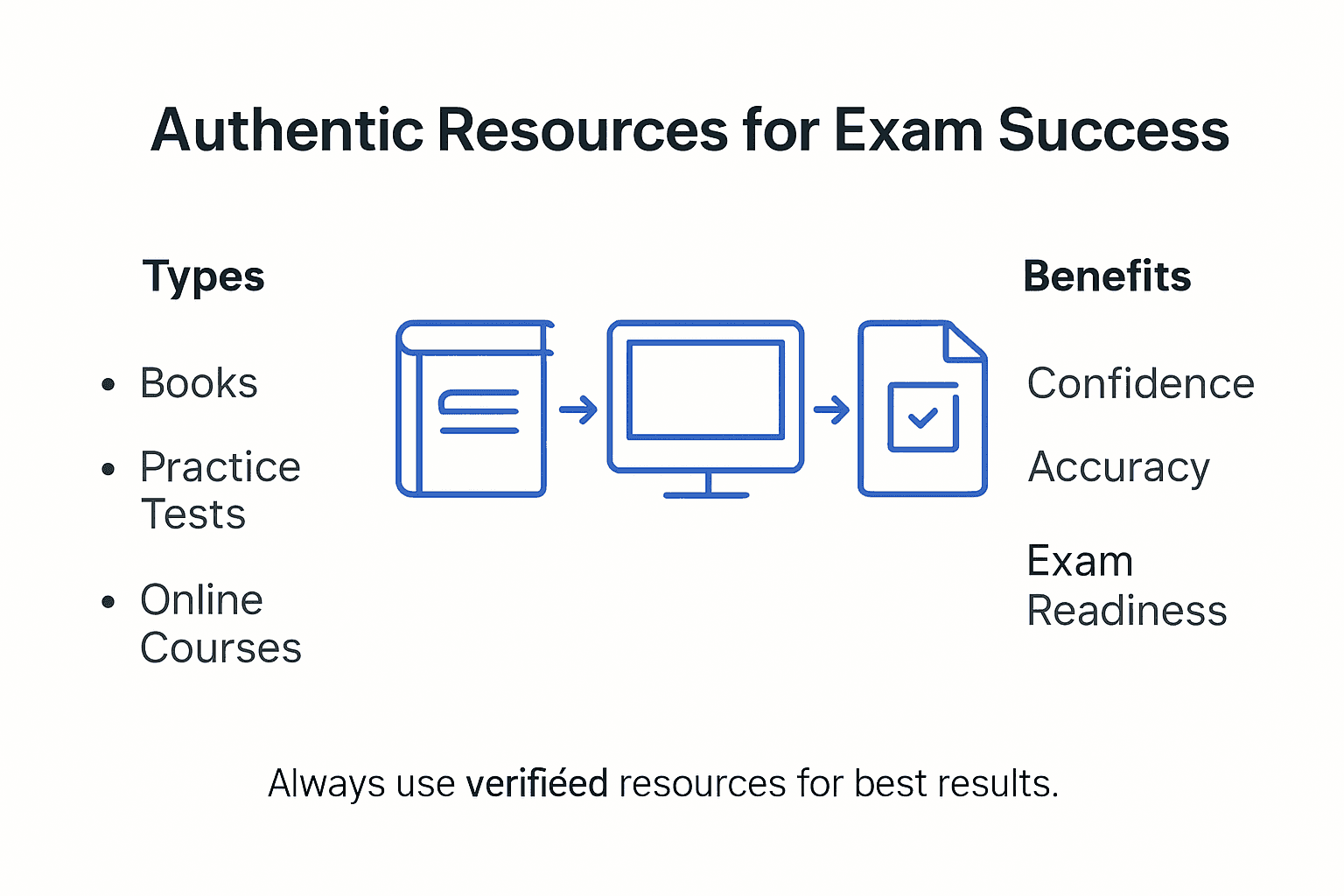
Successful certification candidates leverage multiple authentic resources to create a holistic preparation strategy. This approach typically includes official study guides, verified practice exams, professional forums, hands-on lab simulations, and industry-specific technical documentation. By diversifying learning sources, professionals can cross-reference information, validate their understanding, and expose themselves to multiple perspectives on complex technical concepts. Each resource type contributes unique insights, helping candidates build a comprehensive understanding that extends beyond simple memorization.
The strategic integration of authentic resources requires a disciplined and structured approach. Technical professionals must critically evaluate each learning resource, ensuring alignment with current certification standards, technological advancements, and specific exam objectives. This means regularly updating study materials, participating in professional discussion groups, attending technical webinars, and seeking mentorship from certified professionals who can provide nuanced insights into exam preparation. The goal is not just passing a certification exam, but developing genuine professional competence that translates directly into workplace performance.
Pro Tip: Create a dynamic study plan that rotates through different authentic resources, ensuring comprehensive coverage and maintaining engagement throughout your certification preparation journey.
Boost Your Certification Success with Real Exam Questions
Understanding the critical role of real exam questions is the first step to conquering your certification challenges. The article highlights how authentic, scenario-based, and performance-driven questions help you build confidence, master practical skills, and avoid the pitfalls of outdated or unverified materials. If you want to move beyond memorization and truly develop the critical thinking and technical competence required for certifications like Cisco CCNA, CompTIA Security+, AWS, or PMP, having access to verified real exam questions is essential.
Discover the power of targeted practice with PlanetCert.com. Our platform offers the most up-to-date and industry-validated exam materials tailored to your certification goals. You can practice multiple question formats, simulate real testing conditions, and track your progress with reliable resources designed to eliminate guesswork and maximize your readiness. Don’t risk exam failure by relying on untrusted resources. Take control of your certification journey today by exploring our extensive real exam question library that ensures you build real skills that employers value.
Start preparing smarter and increase your chances for first-time certification success with PlanetCert.com. Your path to professional growth begins with the right practice—take that step now.
Frequently Asked Questions
What are real exam questions?
Real exam questions are carefully designed assessment items that evaluate a candidate’s ability to apply practical knowledge and problem-solving skills in real-world scenarios, rather than simply testing memorization.
Why is memorization not enough for certification exams?
Certification exams focus on assessing a candidate’s understanding and application of concepts in complex situations, which requires critical reasoning and analytical abilities, rather than just memorizing facts.
What types of questions can I expect in tech certification exams?
Tech certification exams typically include scenario-based questions, multiple-choice questions with complex decision trees, performance-based simulations, drag-and-drop challenges, and interactive problem-solving scenarios.
How can I prepare effectively for certification exams using real exam questions?
To prepare effectively, focus on understanding the underlying concepts, practice with diverse question formats, and simulate actual exam conditions to build confidence and improve time management skills.
Recommended
- IT Certification Practice Tests & Real Exam Questions
- IT Certification Practice Tests & Real Exam Questions
- IT Certification Practice Tests & Real Exam Questions
- 7 mejores recursos para Cambridge: guía esencial educativa - Academia Atenea
- 7 step chiave per la checklist esame di maturità vincente - Recupero Anni Scolastici e Diploma Online

Discussion
Question Comments
0 comments·0 participantsSign in to leave a comment and access more free questions.