

Role of Real Exam Questions: Boosting First-Time Success
Most American and international IT professionals are surprised to learn that over 60 percent of certification failures are linked to outdated or low-quality exam prep materials. With career advancement and credibility on the line, choosing validated real exam questions becomes crucial for those pursuing cybersecurity and cloud computing credentials. This guide sheds light on common myths, explains what makes real exam questions effective, and helps you identify trustworthy sources for building true first-attempt success.
Key Takeaways
| Point | Details |
|---|---|
| Understanding Real Exam Questions | Real exam questions assess practical knowledge and problem-solving skills rather than rote memory. Professionals should focus on applying theoretical concepts in real-world contexts during preparation. |
| Variety of Question Types | Certification exams encompass multiple question types, including multiple choice, scenario-based, and essay questions, each serving unique assessment purposes. Practicing with diverse formats is essential for comprehensive preparation. |
| Validity of Preparation Resources | It’s crucial to verify the authenticity of exam preparation materials to avoid unreliable sources that may hinder success. Use materials from reputable providers and check for official endorsements. |
| Benefits of Active Learning | Engaging with practice questions enhances retention and understanding through active studying, which mimics exam conditions. Developing a structured practice routine increases confidence and reduces test anxiety. |
Defining Real Exam Questions and Common Myths
Real exam questions represent more than simple memory tests. They are sophisticated assessment tools designed to evaluate a professional’s practical knowledge and problem-solving capabilities. Unlike traditional examination methods that primarily focus on recall, these questions simulate real-world scenarios by challenging test-takers to apply complex technical skills in context.
Traditionally, many professionals misunderstand the nature of authentic exam questions. Common myths suggest that exam questions are merely rote memory exercises or random knowledge checks. However, modern certification assessments are strategically crafted to measure comprehensive understanding. These questions require test-takers to demonstrate critical thinking, apply theoretical concepts to practical situations, and showcase their ability to solve complex technical challenges across various professional domains.
The key characteristics of real exam questions include precise alignment with industry standards, direct connection to practical work scenarios, and a focus on evaluating problem-solving skills rather than simple memorization. Effective exam questions are rigorously designed to be reliable, unbiased, and directly linked to specific learning objectives. They challenge professionals to think dynamically, interpret scenarios, and select the most appropriate solution from multiple complex options.
Pro tip: When preparing for certification exams, focus on understanding underlying concepts and their practical applications rather than memorizing isolated facts.
Types of Real Exam Questions in Certification Prep
Certification exams utilize a diverse range of question types designed to comprehensively assess professional knowledge and skills. Multiple choice questions remain a fundamental assessment method, enabling rapid evaluation of broad content understanding across technical domains. These structured questions typically present several potential answers, requiring test-takers to demonstrate precise technical comprehension and discriminate between nuanced technical concepts.
Beyond traditional multiple choice formats, modern certification assessments incorporate sophisticated question types that challenge professionals more deeply. Scenario-based questions have emerged as a critical evaluation tool, presenting complex real-world technical situations that require candidates to demonstrate practical problem-solving skills. Open-ended questions simulate professional work environments by asking test-takers to justify their reasoning, articulate detailed technical solutions, and showcase their comprehensive understanding of complex systems and processes.
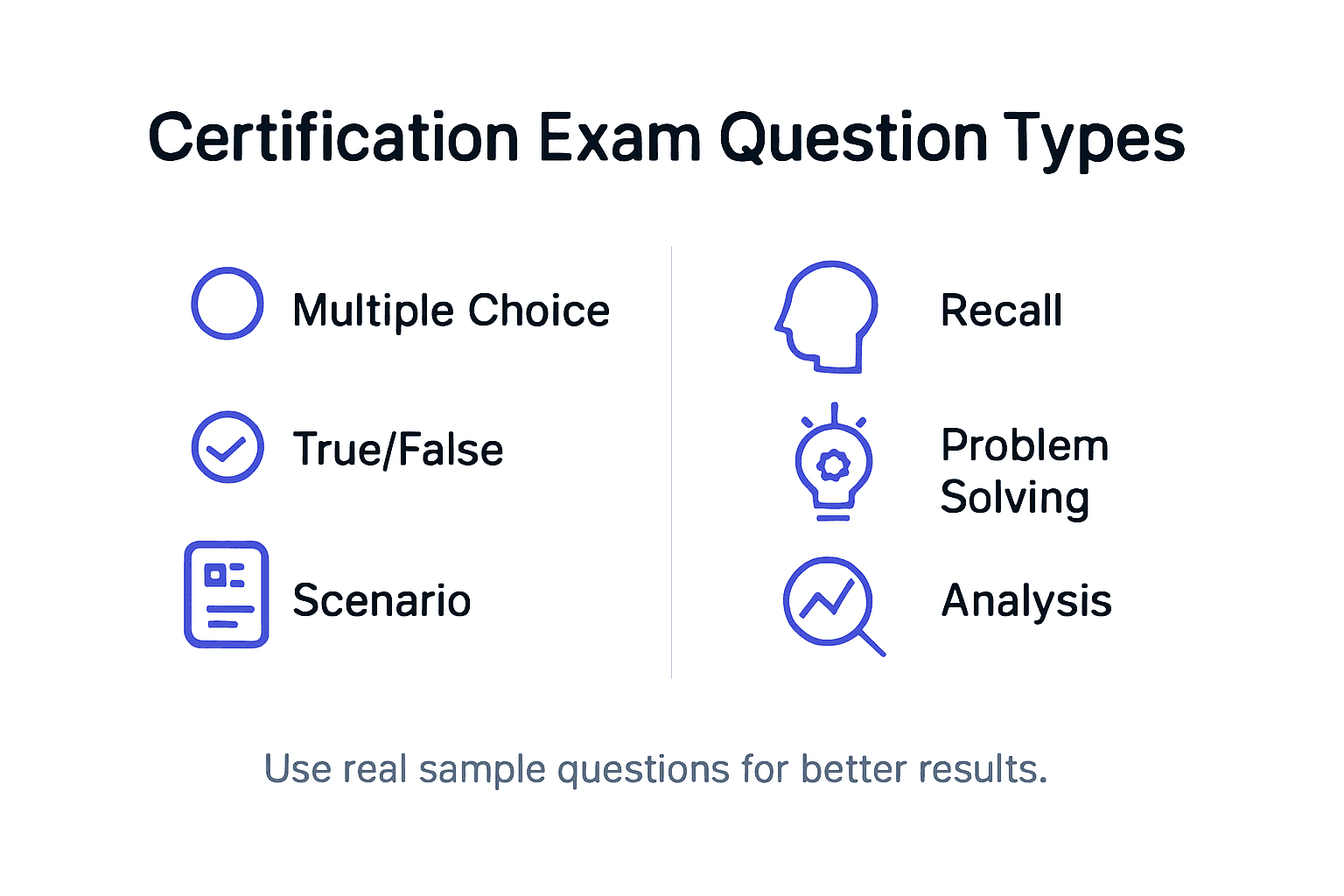
The primary categories of certification exam questions include multiple choice, true/false, matching, scenario-based, short answer, and comprehensive essay questions. Each question type serves a specific assessment purpose: multiple choice tests breadth of knowledge, scenario-based questions evaluate practical application, and essay questions assess deep critical thinking and advanced analytical capabilities. Effective certification exams strategically combine these question types to create a holistic evaluation of a professional’s technical expertise and problem-solving potential.
Pro tip: Practice with diverse question types during exam preparation to build flexibility and develop robust test-taking strategies that address different cognitive challenges.
Here’s how common exam question types compare in terms of skills assessed and preparation strategies:
| Question Type | Skill Evaluated | Effective Prep Strategy |
|---|---|---|
| Multiple Choice | Breadth of technical knowledge | Practice rapid content review |
| Scenario-Based | Practical application skills | Analyze real-world case studies |
| Short Answer | Concept explanation ability | Summarize topics concisely |
| Essay | Critical thinking and analysis | Develop structured arguments |
| Matching | Association and recall | Group related concepts together |
| True/False | Core concept comprehension | Focus on key principles |
How Real Exam Questions Improve Success Rates
Repeated retrieval through practice questions significantly enhances exam performance, creating powerful learning mechanisms that go beyond traditional study methods. When professionals engage with real exam questions, they activate critical cognitive processes that improve knowledge retention, recognition, and recall. This strategic approach transforms passive learning into an active, dynamic preparation experience that closely mimics actual testing environments.

The mechanisms behind improved success rates involve more than simple memorization. Metacognitive development plays a crucial role in exam preparation, with practice questions helping professionals identify knowledge gaps and refine their understanding. By experiencing realistic exam scenarios that encourage active studying, test-takers develop a more nuanced awareness of their strengths and weaknesses. This self-awareness allows for targeted study strategies, enabling more efficient and focused preparation.
Successful exam preparation requires a comprehensive approach that integrates multiple learning techniques. Real exam questions serve as diagnostic tools, providing immediate feedback and helping professionals understand complex concepts from different perspectives. They simulate the cognitive demands of actual certification tests, reducing test anxiety and building confidence through repeated exposure to challenging problem-solving scenarios. The psychological benefit of familiarity cannot be understated, as professionals who regularly practice with authentic exam questions develop a mental framework that supports more effective performance.
Pro tip: Create a structured practice routine that includes timed practice exams and systematic review of incorrect answers to maximize learning potential.
Ethical and Legal Aspects of Using Real Questions
Protecting intellectual property rights and maintaining exam integrity represents a critical responsibility for professionals engaging with certification preparation materials. The use of real exam questions demands a sophisticated understanding of ethical boundaries and legal considerations. Professionals must navigate a complex landscape that balances learning objectives with strict adherence to institutional and certification body guidelines, ensuring they do not compromise the fundamental principles of fair assessment.
Intellectual property protection emerges as a paramount concern in the realm of exam preparation. Certification bodies invest substantial resources in developing comprehensive and rigorous assessment tools, and unauthorized reproduction or widespread distribution of exam questions constitute serious ethical violations. Legal frameworks governing data protection and research integrity require professionals to obtain proper permissions, respect confidentiality agreements, and maintain the highest standards of academic and professional conduct when accessing and utilizing exam-related materials.
The ethical use of real exam questions extends beyond mere compliance with legal requirements. It encompasses a broader commitment to professional integrity, personal development, and respect for the certification process. Professionals must critically distinguish between legitimate study resources and unauthorized materials that could potentially compromise exam security. This involves carefully selecting verified practice materials, understanding the distinction between practice questions and actual exam content, and maintaining transparency about the sources of their preparation materials.
Pro tip: Always verify the authenticity of exam preparation materials through official certification body channels and avoid any resources that seem to provide verbatim exam questions.
Avoiding Low-Quality and Unverified Question Sources
Identifying and eliminating unreliable exam preparation resources represents a critical skill for professionals seeking authentic certification materials. Low-quality sources frequently masquerade as legitimate study resources, presenting significant risks to exam preparation strategies. These questionable materials often originate from personal blogs, unvetted websites, and crowd-sourced platforms that lack professional oversight and rigorous academic standards.
Professionals must develop sophisticated strategies for evaluating source credibility. Source authentication involves multiple verification steps, including examining author credentials, assessing publication reputation, and cross-referencing information with official certification guidelines. Academic research methodologies provide robust frameworks for identifying trustworthy exam preparation materials, such as checking author expertise, reviewing publication venues, and understanding potential conflicts of interest that might compromise content integrity.
The most effective approach to avoiding low-quality sources involves a multi-dimensional evaluation process. Professionals should prioritize materials from certified training providers, official certification bodies, and recognized academic institutions. Red flags include anonymous authors, unsupported claims, outdated content, and materials that promise unrealistic guarantees about exam success. Developing critical thinking skills and maintaining a skeptical approach helps professionals distinguish between legitimate study resources and potentially misleading preparation materials.
Pro tip: Create a systematic checklist for evaluating exam preparation resources, including verifying author credentials, publication date, and official endorsements from certification organizations.
Use this summary to recognize warning signs of unreliable exam prep resources:
| Warning Sign | Why It Matters |
|---|---|
| Anonymous author | Lacks accountability and expertise |
| Outdated publication date | May contain obsolete information |
| No official endorsements | Not reviewed by certification bodies |
| Unrealistic success claims | Indicates possible misinformation |
| Unsupported technical claims | Information may not be trustworthy |
Boost Your First-Time Exam Success with Verified Real Questions
Real exam questions are essential for mastering practical skills and building confidence in certification tests. Many professionals struggle with locating authentic, high-quality practice materials that mirror the complexity and scenario-based nature of actual exams mentioned in the article. At PlanetCert.com, we understand the importance of engaging with questions that challenge your critical thinking, problem-solving, and ability to apply concepts in real-world situations. Our extensive library of verified questions and exam simulators is designed to turn your preparation into an active, focused journey that targets your specific knowledge gaps and ensures you are exam-ready.
Take control of your certification journey today by accessing trusted resources that support your learning ethics and exam readiness. Don’t risk wasting time with low-quality or unreliable sources. Visit PlanetCert.com now to explore tailored practice tests for certifications in networking, cybersecurity, cloud computing, and more. Start practicing with real exam questions that mirror the true test experience and increase your chance to succeed on your first attempt.
Frequently Asked Questions
What are real exam questions?
Real exam questions are sophisticated assessment tools that evaluate a professional’s practical knowledge and problem-solving capabilities, simulating real-world scenarios rather than focusing solely on memory recall.
How do real exam questions improve success rates in certification programs?
Engaging with real exam questions enhances exam performance through repeated retrieval practice and metacognitive development, allowing professionals to identify knowledge gaps and refine their understanding, thereby boosting confidence and capability.
What types of questions are commonly used in certification exams?
Common question types include multiple choice, scenario-based, short answer, essay, matching, and true/false questions. Each serves a specific assessment purpose, evaluating everything from technical breadth to critical thinking skills.
What should I consider when selecting exam preparation resources?
When selecting exam preparation resources, ensure they come from credible sources, prioritize materials from certified training providers or official certification bodies, and avoid low-quality or unverified question sources that may compromise your preparation efforts.
Recommended
- IT Certification Practice Tests & Real Exam Questions
- IT Certification Practice Tests & Real Exam Questions
- IT Certification Practice Tests & Real Exam Questions
- IT Certification Practice Tests & Real Exam Questions
- 7 mejores recursos para Cambridge: guía esencial educativa - Academia Atenea
- 7 step chiave per la checklist esame di maturità vincente - Recupero Anni Scolastici e Diploma Online

Discussion
Question Comments
0 comments·0 participantsSign in to leave a comment and access more free questions.