


Security+ SY0-701: Zero Trust and Cloud Security Impact
Most junior cybersecurity analysts face the challenge of mastering complex exam domains before advancing in their careers. With the CompTIA Security+ SY0-701 exam now emphasizing zero trust architecture and cloud security, passing has become even more demanding for american professionals and those worldwide. This guide breaks down the newest exam blueprint, practical strategies, and essential domains, helping you develop knowledge in areas like identity management and advanced threat detection.
Key Takeaways
| Point | Details |
|---|---|
| Focus on Zero Trust | Emphasize understanding and applying zero trust principles in various technological environments for enhanced cybersecurity. |
| Practical Skill Application | Develop hands-on experience in implementing security measures, including network segmentation and real-time threat detection. |
| Adapt to Cloud Security | Prepare for complex security scenarios involving multi-cloud and hybrid environments that require dynamic threat management. |
| Diverse Study Strategies | Utilize a mix of learning resources and methods to build a comprehensive understanding of exam domains and practical skills. |
What Security+ SY0-701 Exam Covers
The CompTIA Security+ SY0-701 exam represents a significant evolution in cybersecurity certification, focusing intensively on modern threat landscapes and defensive strategies. This updated exam blueprint goes beyond traditional security concepts, emphasizing zero trust architecture, cloud security, and advanced threat protection mechanisms that reflect real-world cybersecurity challenges.
The exam comprehensively covers five critical domain areas that test a candidate’s practical cybersecurity knowledge:
- Networking and Infrastructure Security: Network architecture, secure communication protocols, network segmentation strategies
- Threat Management: Advanced persistent threats, vulnerability scanning, incident response techniques
- Identity and Access Management: Zero trust principles, multi-factor authentication, identity governance
- Cryptography and Public Key Infrastructure (PKI): Encryption technologies, digital certificate management, secure communication protocols
- Security Operations and Monitoring: Security information and event management (SIEM), threat hunting, security analytics
Understanding these domains requires more than theoretical knowledge. Professionals preparing for this exam must demonstrate practical skills in implementing security controls, analyzing potential vulnerabilities, and responding to complex cybersecurity scenarios. Candidates can enhance their preparation by accessing SY0-701 practice tests that simulate real-world examination conditions and provide comprehensive performance insights.
Here’s a quick reference for core security domains and their business impact:
| Security Domain | Core Function | Business Impact |
|---|---|---|
| Network Security | Segmentation, protocol protection | Reduces data breach risk |
| Identity Management | Multi-factor, zero trust | Limits unauthorized access |
| Cryptography/PKI | Encryption, certificate management | Ensures confidential communication |
| Security Operations | Threat detection, analytics | Accelerates incident response |
Pro Tip: Focus on understanding practical application of zero trust principles across different technological environments, not just memorizing theoretical concepts.
Major Changes from Security+ 601 Exam
The CompTIA Security+ SY0-701 exam introduces significant updates that reflect the rapidly evolving cybersecurity landscape, marking a substantial departure from the previous Security+ 601 version. These changes directly address emerging technological challenges, particularly in areas of cloud security, zero trust architecture, and advanced threat management.
Key transformative changes include:
- Enhanced Zero Trust Focus: The new exam places unprecedented emphasis on zero trust principles, moving beyond traditional perimeter-based security models
- Cloud Security Depth: Expanded coverage of cloud infrastructure security, including multi-cloud and hybrid environment protection strategies
- AI and Machine Learning Integration: New sections addressing AI-powered security threats and defensive technologies
- Expanded Threat Landscape: More comprehensive examination of emerging cybersecurity risks, including advanced persistent threats and social engineering techniques
Professionals transitioning from the SY0-601 certification practice questions will notice a significant shift towards practical, real-world security skills. The exam now demands a more holistic understanding of cybersecurity, requiring candidates to demonstrate not just theoretical knowledge, but advanced problem-solving capabilities in complex technological environments.
The updated exam reflects CompTIA’s commitment to keeping cybersecurity certifications aligned with current industry demands. While the fundamental security principles remain consistent, the SY0-701 exam challenges candidates to think more dynamically about security challenges, emphasizing adaptability and strategic threat mitigation.
Here’s a summary of how Security+ SY0-701 differs from SY0-601 across key focus areas:
| Key Area | SY0-601 Approach | SY0-701 Advancements |
|---|---|---|
| Zero Trust | Basic understanding | In-depth principles and application |
| Cloud Security | Limited coverage | Multi-cloud, hybrid protection |
| AI Threats | Not included | Focus on AI cyberattack defense |
| Threat Landscape | Standard threats | Advanced persistent, social engineering |
Pro Tip: Develop a comprehensive study approach that combines theoretical learning with hands-on practical experience across multiple security domains.
Zero Trust Architecture and Security Domains
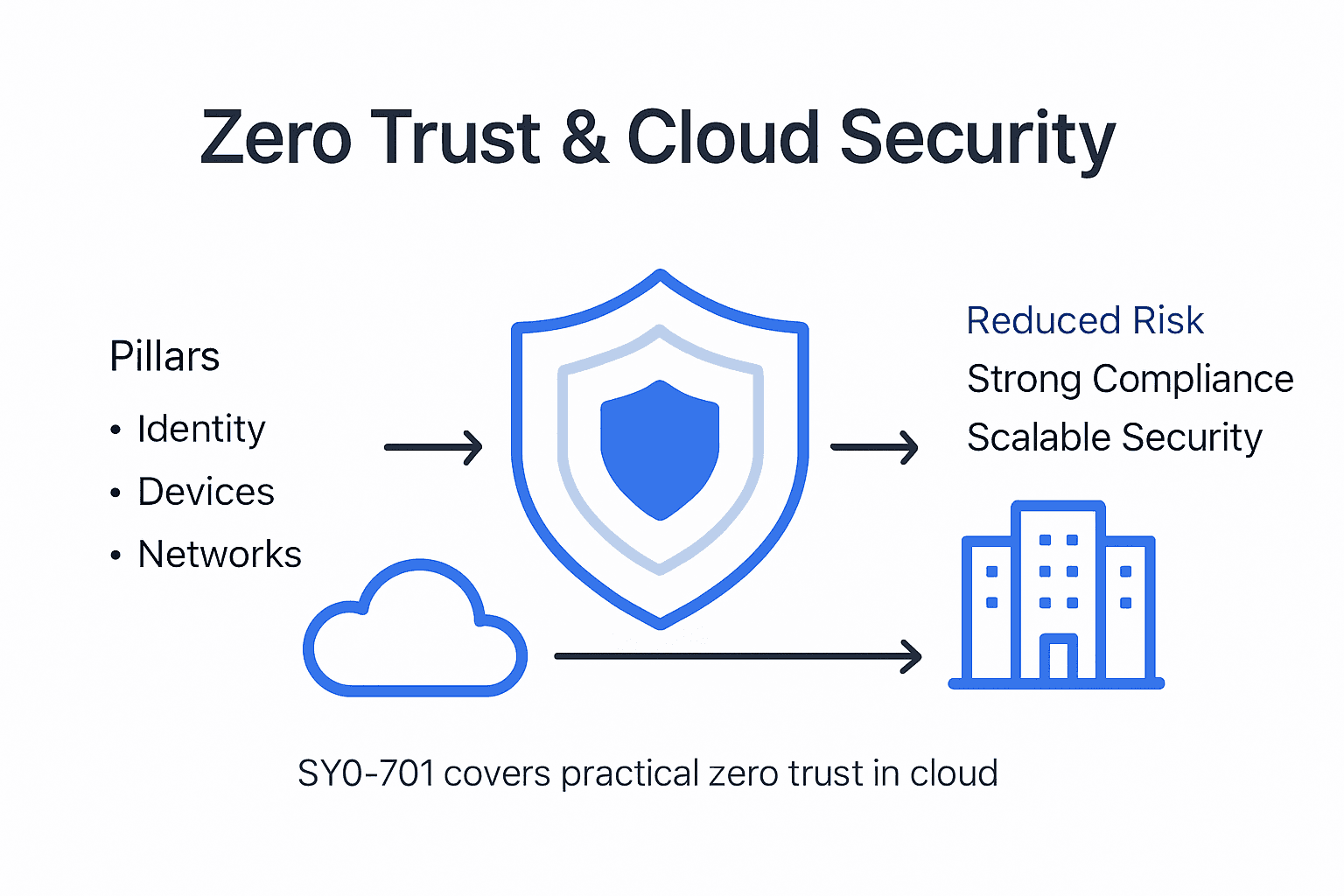
Zero Trust Architecture (ZTA) represents a fundamental paradigm shift in cybersecurity, moving beyond traditional network perimeter defenses to a more dynamic and granular approach to protecting organizational resources. According to NIST’s comprehensive guidelines, zero trust eliminates implicit trust based on network location, requiring continuous authentication and authorization for every user and device attempting to access enterprise systems.
The core principles of Zero Trust Architecture encompass several critical security domains:
- Continuous Verification: Implementing persistent authentication mechanisms that validate user identity and device integrity in real-time
- Least Privilege Access: Restricting user permissions to the minimum necessary for completing specific tasks
- Micro-Segmentation: Dividing network resources into smaller, isolated segments to minimize potential breach impacts
- Dynamic Policy Enforcement: Adapting security controls based on contextual factors like user behavior, device health, and network conditions
- Comprehensive Monitoring: Maintaining continuous visibility into all network interactions and potential security events
Implementing Zero Trust requires a holistic approach that transcends traditional security models. Organizations must develop sophisticated strategies that integrate advanced authentication technologies, robust identity management systems, and intelligent monitoring tools. The transition demands not just technological upgrades, but fundamental shifts in security thinking, treating every access attempt as potentially suspicious and requiring verification.
Pro Tip: Develop a comprehensive zero trust implementation roadmap that prioritizes incremental improvements and focuses on cultural transformation alongside technological changes.
Cloud Security, AI Threats, and Hybrid Work
The intersection of cloud security, artificial intelligence, and hybrid work environments represents a complex and rapidly evolving cybersecurity landscape that demands sophisticated protective strategies. As outlined in comprehensive cloud security training resources, modern organizations must develop robust approaches to secure distributed technological ecosystems that span multiple environments and leverage advanced technologies.
Key challenges in this emerging security domain include:
- Multi-Cloud Complexity: Managing security across diverse cloud platforms with unique architectural requirements
- AI-Powered Threat Vectors: Addressing sophisticated machine learning-driven cyberattacks that can rapidly adapt and evade traditional detection mechanisms
- Endpoint Vulnerability: Protecting distributed workforce devices operating outside traditional network perimeters
- Dynamic Authentication: Implementing adaptive access controls that validate user identity and device integrity in real-time
- Continuous Monitoring: Maintaining comprehensive visibility across decentralized technological infrastructures
Hybrid work environments introduce unprecedented security complexity, requiring cybersecurity professionals to reimagine traditional defensive strategies. The convergence of cloud technologies, artificial intelligence, and distributed workforce models demands a proactive, adaptive approach that emphasizes resilience, continuous verification, and intelligent threat detection mechanisms. Security teams must develop comprehensive strategies that integrate advanced monitoring tools, machine learning-powered threat detection, and flexible authentication protocols.
Pro Tip: Develop a dynamic security framework that treats every network connection as potentially untrusted, implementing granular access controls and continuous validation processes.
Preparing for Success: Study Strategies and Resources
Successful preparation for the CompTIA Security+ SY0-701 exam requires a strategic, multifaceted approach that goes beyond traditional study methods. According to comprehensive exam preparation strategies, candidates must develop a comprehensive study plan that addresses the exam’s complex and diverse content domains.
Key strategies for effective exam preparation include:
- Domain-Specific Focus: Break down the exam objectives into five distinct domains, allocating study time proportionally
- Diverse Learning Resources: Utilize multiple study tools such as:
- Video courses
- Practice tests
- Interactive flashcards
- Hands-on cybersecurity labs
- Acronym Mastery: Create dedicated study techniques for understanding and memorizing critical industry acronyms
- Practical Skill Development: Supplement theoretical knowledge with real-world cybersecurity scenario practice
- Consistent Study Schedule: Develop a structured study routine with clear milestones and progress tracking
The most successful candidates approach the Security+ SY0-701 exam with a holistic preparation strategy that balances theoretical knowledge, practical skills, and strategic test-taking techniques. This involves not just memorizing information, but developing a deep understanding of cybersecurity principles, zero trust architectures, cloud security dynamics, and emerging technological threats. Candidates should focus on building comprehensive skill sets that extend beyond exam requirements and align with real-world cybersecurity challenges.
Pro Tip: Schedule your exam date early in your study process to create a concrete deadline and maintain consistent motivation throughout your preparation journey.
Master Zero Trust and Cloud Security with Confidence
The Security+ SY0-701 exam challenges you to fully understand complex concepts like zero trust architecture, multi-cloud protection, and AI-driven threat defense. These are not just theoretical topics but critical skills that shape the future of cybersecurity in hybrid work environments. If you want to move beyond memorization and build practical expertise, you need trusted, high-quality study resources tailored to these evolving domains.
Take control of your exam preparation today by accessing proven practice tests and real exam questions designed specifically for the SY0-701 on PlanetCert.com. Our comprehensive study guides and online exam simulators help you sharpen your skills in network security, identity management, cryptography, and the dynamic challenges of cloud security. Start transforming your knowledge into career-ready strengths now and join thousands of professionals who have succeeded on their first attempt with our resources. Explore more about Security+ practice tests and elevate your study plan at PlanetCert.
Frequently Asked Questions
What is the focus of the CompTIA Security+ SY0-701 exam?
The CompTIA Security+ SY0-701 exam emphasizes modern cybersecurity trends, including zero trust architecture, cloud security, and advanced threat protection mechanisms, reflecting the evolving threat landscape.
How does Zero Trust Architecture enhance cybersecurity?
Zero Trust Architecture enhances cybersecurity by requiring continuous authentication and authorization for every user and device, minimizing implicit trust, and enforcing least privilege access controls.
What are the major changes from the Security+ SY0-601 to SY0-701 exam?
The main changes include a greater emphasis on zero trust principles, expanded cloud security coverage, integration of AI and machine learning in threat management, and a more comprehensive examination of emerging cybersecurity risks.
What study strategies are effective for preparing for the Security+ SY0-701 exam?
Effective study strategies include breaking down the exam objectives into specific domains, utilizing diverse learning resources like video courses and practice tests, focusing on practical skill development, and establishing a consistent study schedule.
Recommended
- SY0-701 Comptia… Free Certification Sample Questions (2026)
- PCCP Palo Alto N… Free Certification Sample Questions (2026)
- 700-760 Cisco Se… Free Certification Sample Questions (2026)
- 700-765 Cisco Se… Free Certification Sample Questions (2026)
- Inteligencia artificial y seguridad: Impacto en empresas - Bit2Brain
Discussion
Community Discussion
Sign in to leave a comment and access more free questions.