


Study Planning Guide for First-Time IT Exam Success
Most American IT professionals face stiff competition when taking certification exams on their first try. With each year, thousands rely on structured study plans to boost their Cisco and CompTIA success rates. Knowing how to assess your skills and define precise goals can make the difference between passing and retaking costly tests. This guide lays out proven strategies and practical steps to help you confidently maximize your exam readiness from start to finish.
Table of Contents
- Step 1: Assess Certification Requirements And Current Knowledge
- Step 2: Define Realistic Study Goals And Timeline
- Step 3: Organize Resources And Schedule Dedicated Study Blocks
- Step 4: Implement Active Learning And Practice Tests
- Step 5: Verify Knowledge Through Simulated Exams And Feedback
Quick Summary
| Key Insight | Explanation |
|---|---|
| 1. Assess your current skills | Conduct a self-assessment to understand your strengths and areas needing improvement for certification. |
| 2. Set achievable goals | Use the SMART framework to define clear, measurable objectives for your study plan. |
| 3. Organize your resources | Create a centralized digital workspace to easily access materials and tools for studying. |
| 4. Engage in active learning | Incorporate hands-on practice and problem-solving to deepen understanding and retention. |
| 5. Use simulated exams | Take practice exams under realistic conditions to gauge your knowledge and identify gaps. |
Step 1: Assess certification requirements and current knowledge
Successfully navigating your first IT certification exam starts with a comprehensive self assessment of your current skills and the specific certification requirements. This critical first step helps you create a targeted and efficient study strategy that maximizes your preparation efforts.
Begin by thoroughly researching the precise requirements for your chosen certification. Most professional IT credentials like Cisco and CompTIA exams have detailed documentation outlining the exact knowledge domains, prerequisite skills, and recommended experience levels. Review the official exam blueprint carefully, noting the percentage weight assigned to each technical area. This allows you to understand which topics demand more of your study time and which skills you already possess.
Next, conduct an honest skills inventory by comparing the exam blueprint against your current technical knowledge. Create a spreadsheet or structured document mapping each exam domain and rate your proficiency using a simple scale like beginner, intermediate, or advanced. This approach transforms abstract certification goals into a concrete roadmap for targeted learning. Pay special attention to areas where you have minimal experience, as these will require more intensive study and practice.
Pro tip: Request practice exams or diagnostic assessments that can provide an objective measurement of your current knowledge gaps and help you prioritize your study plan effectively.
Step 2: Define realistic study goals and timeline
Establishing clear, achievable goals is fundamental to successfully preparing for your IT certification exam. By creating a structured and realistic study timeline, you transform your certification journey from an overwhelming challenge into a manageable process with measurable progress.
Start by implementing strategic goal setting techniques that break down your certification preparation into specific, measurable objectives. Use the SMART framework precise goal setting identify exactly what you want to achieve. For instance, instead of a vague goal like “pass the certification,” create a specific target such as “score 850 or higher on the CompTIA Security+ exam by completing 20 practice tests and studying 15 hours per week for the next three months.”
Develop a comprehensive study schedule that considers your personal and professional commitments. Calculate the total study hours required for your exam preparation, then distribute these hours across weeks or months. Factor in your current work schedule, personal responsibilities, and learning pace. Allocate more time to complex technical domains and create buffer periods for unexpected challenges. Digital calendars or specialized study planning apps can help you track progress and maintain accountability.
Pro tip: Schedule periodic self assessment checkpoints to evaluate your progress and adjust your study plan dynamically, ensuring you remain on track while maintaining flexibility.
Step 3: Organize resources and schedule dedicated study blocks
Successful IT certification preparation requires a strategic approach to resource management and time allocation. By creating a well structured study environment and intentional learning schedule, you can maximize your preparation efficiency and minimize potential distractions.
Leverage digital tools designed for professional certification planning to streamline your study organization. Create a centralized digital workspace that consolidates all your learning materials including practice exams, technical documentation, video tutorials, and reference guides. Organize these resources by exam domain or difficulty level, ensuring quick and easy access during your dedicated study sessions. Utilize cloud storage solutions or specialized productivity apps that allow tagging, categorization, and quick retrieval of study materials.
Design a structured study schedule that aligns with your personal energy levels and commitments. Identify consistent time blocks where you can study without interruptions typically early mornings, late evenings, or weekend periods. Aim for focused 90 minute study sessions with short 15 minute breaks to maintain mental sharpness and prevent burnout. Consider using time blocking techniques that assign specific subjects or exam domains to designated study periods, creating a predictable and systematic approach to your certification preparation.

Pro tip: Create a dedicated physical and digital study environment that signals your brain it is time to focus by removing potential distractions and setting up a consistent learning space.
The following table summarizes essential digital resources for IT certification prep:
| Resource Type | Example Tools | Main Advantage |
|---|---|---|
| Practice Exam Apps | MeasureUp, ExamCompass | Simulates real exam settings |
| Study Planning Apps | Notion, Trello | Organizes study schedule |
| Reference Guides | Official Cert Docs, Wikis | Provides authoritative material |
| Cloud Storage | Google Drive, Dropbox | Centralizes study resources |
Step 4: Implement active learning and practice tests
Mastering an IT certification requires more than passive reading or memorization. Active learning techniques and strategic practice testing transform theoretical knowledge into practical exam readiness, helping you build confidence and identify critical knowledge gaps before the actual certification exam.
Utilize comprehensive practice assessments designed to simulate actual certification conditions and provide immediate performance feedback. These diagnostic tools go beyond simple multiple choice questions by offering detailed explanations for correct and incorrect answers. Approach each practice test as a learning opportunity rather than just a score tracking exercise. After completing a practice exam, thoroughly review every question you missed understanding the underlying concept, researching the correct answer, and documenting your learning gaps.
Develop an active learning strategy that engages multiple cognitive skills. This means supplementing practice tests with hands on lab exercises, technical demonstrations, and scenario based problem solving. Create your own practice scenarios that mirror real world IT challenges. Record your problem solving process, explain your reasoning out loud, and seek feedback from peers or online technical communities. By transforming passive study into an interactive experience, you will develop deeper technical understanding and build the critical thinking skills necessary for certification success.
Pro tip: Rotate between different types of practice assessments and learning methods to prevent mental fatigue and maintain high engagement levels during your exam preparation.
Here’s a quick comparison of active and passive learning methods for IT certification:
| Learning Method | Description | Key Benefit |
|---|---|---|
| Active Learning | Hands-on labs, practice tests | Enhances practical skills |
| Passive Learning | Reading books or watching tutorials | Builds foundational knowledge |
| Scenario-Based Work | Realistic IT problem solving | Develops critical thinking |
| Peer Discussion | Explaining concepts to others | Improves retention |
Step 5: Verify knowledge through simulated exams and feedback
The final stage of certification preparation involves rigorously testing your knowledge under realistic exam conditions. This critical step transforms your studied information into genuine exam readiness by providing an authentic assessment of your technical capabilities and identifying any remaining knowledge gaps.
Certification exam simulation platforms offer sophisticated tools to validate your technical understanding through comprehensive performance tracking and detailed analytics. These advanced systems go beyond traditional practice tests by generating personalized insights into your strengths and weaknesses. Approach each simulated exam as a diagnostic opportunity analyze your performance metrics carefully, paying close attention to areas where your score falls below the expected proficiency level. Systematically document each incorrect answer, research the underlying technical concepts, and develop targeted study strategies to address specific knowledge deficiencies.
Create a structured feedback loop that transforms exam simulation results into actionable learning strategies. After completing each practice assessment, spend dedicated time reviewing your performance thoroughly. Break down your results by exam domain, identifying patterns in your knowledge gaps. Develop a remediation plan that focuses on your weakest areas while maintaining your existing strengths. Consider recording your problem solving process creating video explanations of complex technical challenges to reinforce your understanding and expose potential blind spots in your knowledge.
Pro tip: Schedule your final practice exams strategically one week before the actual certification test to provide sufficient time for targeted review without creating last minute performance anxiety.
Boost Your First-Time IT Exam Success with Proven Tools
Facing the challenge of creating a targeted study plan and identifying your knowledge gaps can feel overwhelming when preparing for your first IT certification. This article highlights critical concepts such as self-assessment, strategic goal setting, and active learning — all essential elements to master your exam preparation journey with confidence. If you want to eliminate guesswork and focus on the right resources, access real exam questions, practice tests, and online simulators tailored specifically to certifications like Cisco, CompTIA Security+, AWS, and more.
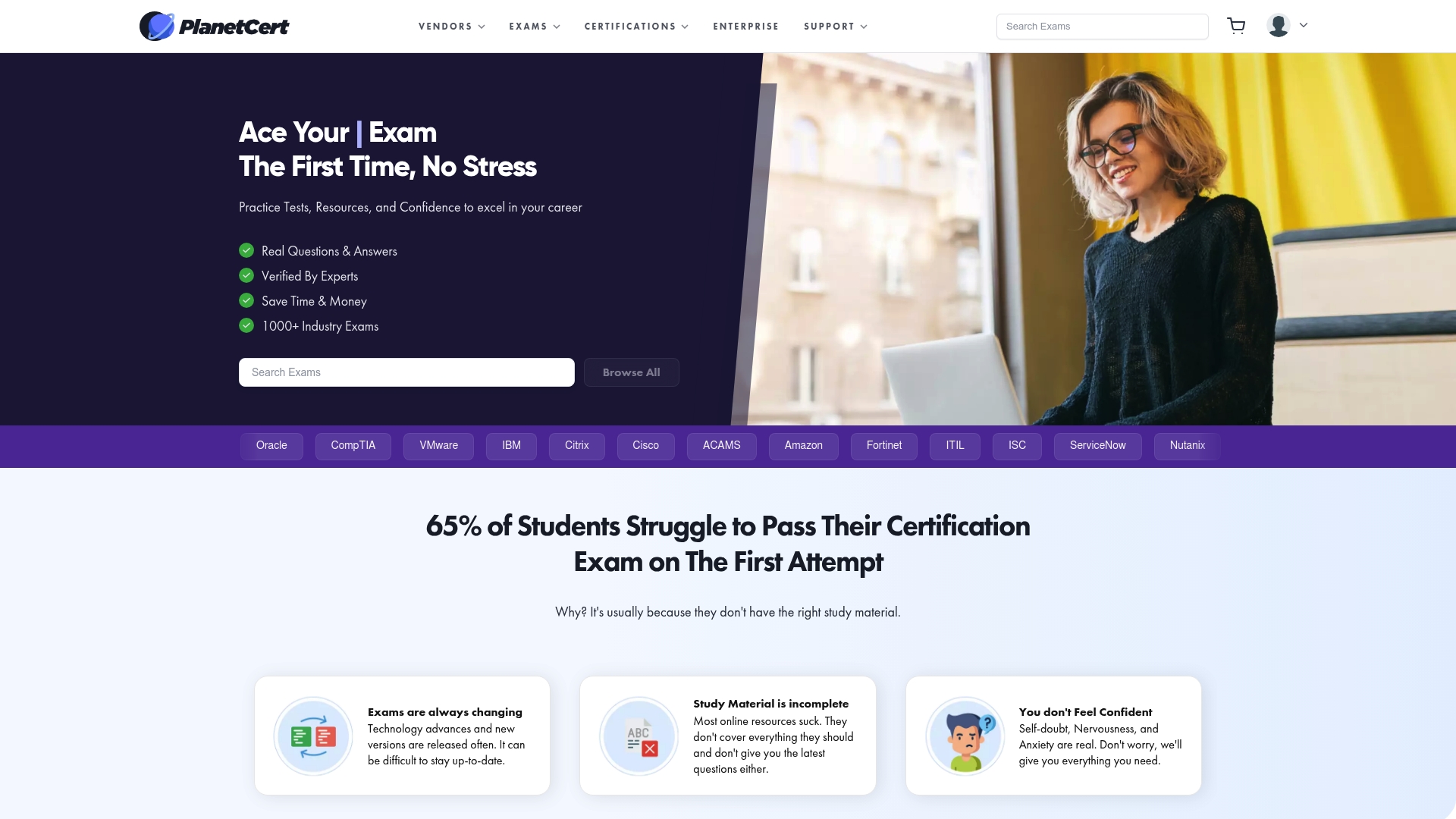
Start your preparation today on PlanetCert.com where you can leverage a comprehensive library of updated study guides and verified practice exams designed to increase your success rate on the first attempt. Do not leave your certification outcome to chance when expert-backed tools are just a click away. Take control of your learning path right now by exploring our practice tests and real exam questions, and turn your study planning into exam success.
Frequently Asked Questions
How should I assess my current skills for IT certification?
Begin by comparing your existing knowledge with the exam blueprint for your chosen certification. Create a skills inventory using a simple scale to identify your proficiency and focus on areas that need improvement.
What are effective study goals for first-time IT exam preparation?
Set SMART goals to guide your study efforts. For instance, aim to score a specific target, such as 850 or higher on your exam, by dedicating a certain number of hours each week over a set period.
How can I organize my study resources for IT certification?
Consolidate all your learning materials into a single digital workspace. Organize resources by exam domain or difficulty, ensuring quick access during your study sessions.
What strategies can I use for active learning in my certification prep?
Incorporate hands-on lab exercises and practice tests along with reading. For example, after each practice test, review missed questions and create your own scenarios to deepen your understanding.
How should I evaluate my knowledge before the actual exam?
Use simulated exams to replicate the certification experience. After each simulation, analyze your results and develop a targeted study plan to focus on any weak areas identified.
When should I take my final practice exams before the certification?
Schedule your final practice exams one week prior to the actual test. This timing allows you sufficient opportunity to review and address any remaining knowledge gaps without causing last-minute anxiety.
Discussion
Community Discussion
Sign in to leave a comment and access more free questions.