CCNA Cybersecurity (CyberOps Associate) Free Sample Questions

20 free sample questions313 in the full practice test Other versions: 210-250(220),210-255(207)

Try simulator

200-201 Sample Questions

  1. Question 1

    Which type of algorithm encrypts data bit by bit?

    Answer and explanation

    Correct answer: C

    Stream ciphers encrypt data bit by bit, processing one bit at a time continuously. This is in contrast to block ciphers which process fixed-size blocks of data. Stream ciphers use a keystream that is combined with plaintext bit by bit, making them ideal for real-time applications. Block ciphers process chunks of data, asymmetric algorithms use different keys for encryption/decryption, and symmetric is a broader category that includes both stream and block ciphers.

  2. Question 2

    Which of the following is true of privilege escalation?

    Answer and explanation

    Correct answer: C

    Privilege escalation occurs when someone obtains, without authorization, the rights and privileges of a different user or system. This typically happens when an attacker exploits vulnerabilities or misconfigurations to gain higher-level access than originally granted. Vertical movement refers to gaining higher privileges (like admin rights), while horizontal movement involves accessing resources at the same privilege level but in different contexts. The key aspect is that escalation happens without proper authorization.

  3. Question 3

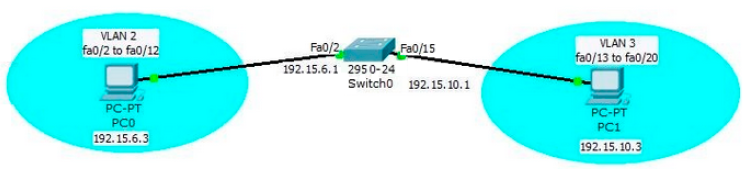
    Examine the diagram below, which contains all devices currently connected to Switch0.

    Which of the following statements is true of this scenario?

    Question 3 image
    Answer and explanation

    Correct answer: D

    Based on the network diagram shown in the image, the PCs are currently on different VLANs (VLAN 2 and VLAN 3) with different IP subnets, which prevents communication. To enable connectivity, both PCs must be on the same VLAN and same IP subnet. Changing Fa0/2 to VLAN 3 puts both PCs on the same VLAN, and changing PC1 IP to 192.168.6.5 puts them on the same subnet (192.168.6.0/24), allowing communication. Simply changing IP addresses without VLAN alignment or only changing VLANs without IP subnet alignment would not work.

  4. Question 4

    Which of the following is deployed on an endpoint as an agent or standalone application?

    Answer and explanation

    Correct answer: C

    A Host-based Intrusion Detection System (HIDS) is deployed directly on endpoints as an agent or standalone application to monitor individual workstations. HIDS monitors system calls, file integrity, registry changes, and local network activity on the specific host. Network-based IDS (NIDS) operates at the network level, NIPS (Network Intrusion Prevention System) is network-based, and NGFW (Next Generation Firewall) is a network perimeter device. Only HIDS is specifically designed for endpoint deployment.

  5. Question 5

    Which of the following represents an exploitable, unpatched, and unmitigated weakness in software?

    Answer and explanation

    Correct answer: A

    A vulnerability is an exploitable weakness in software or systems that has not been patched or mitigated. It represents a potential entry point for attackers but is not yet being actively exploited. An exploit is the actual method or code used to take advantage of a vulnerability, a threat is a potential danger, and a breach occurs when an attack successfully compromises a system. Vulnerabilities become dangerous when they remain unpatched and unmitigated, creating opportunities for exploitation.

  6. Question 6

    Which of the following describes a TCP injection attack?

    Answer and explanation

    Correct answer: A

    A TCP injection attack occurs when an attacker injects malicious data into legitimate TCP packets. The key indicator is multiple TCP SYN packets captured with identical sequence numbers, source and destination IP addresses, but different payloads - this shows someone is manipulating the packet contents. High volume scanning indicates reconnaissance activity, different IP addresses would suggest packet spoofing rather than injection, and slower actions indicate stealth techniques rather than injection attacks.

  7. Question 7

    How are attributes of ownership and control of an object managed in Linux?

    Answer and explanation

    Correct answer: A

    Linux manages ownership and control of objects through a comprehensive permissions system. This includes file permissions (read, write, execute), ownership (user and group), and access control mechanisms. The permission system controls who can access files, directories, and system resources, and what actions they can perform. Rights is too general a term, while permissions specifically refers to the Linux access control framework that governs object ownership and control.

  8. Question 8

    What is the standard for digital certificates?

    Answer and explanation

    Correct answer: C

    Explanation: The standard for digital certificates is X.509. These text documents include identifying information of the holder, the most important being the public key of the holder.

    X.500 is the standards for directory services.

    Power over Ethernet (PoE) is defined by the IEEE 802.3af and 802.3at standards. PoE allows an Ethernet switch to provide power to an attached device by applying power to the same wires in a UTP cable that are used to transmit and receive data. PoE+ is an enhanced version of PoE that provides more power and better reliability. PoE+ is most commonly deployed in enterprise networks, while PoE is usually sufficient for small business or home networks.

    The IEEE 802.11 standard, which is the main standard for wireless LANs (WLANs), specifies using Carrier Sense Multiple Access/Collision Avoidance (CSMA/CA) for its media access method. Like an Ethernet network, which uses Carrier Sense Multiple Access/Collision Detection (CSMA/CD), wireless adapter cards “sense', or listen, for network traffic before transmitting. If the network is free of traffic, the station will send its data. The 802.22 standard also refers to CSMA/CA as Distributed Coordination Function (DCF).However, unlike an Ethernet network, wireless network cards cannot send and receive transmissions at the same time, which means that they cannot detect a collision. Instead, the sending station will wait for an acknowledgement packet (ACK) to be sent by the destination computer, verifying that the data was received. If, after a random amount of time, an acknowledgement has not been received, the sending station will retransmit the data.

    Objective: CryptographySub-Objective: Describe these items in regards to SSL/TLS: Cipher-suite, X.509 certificates, Key exchange, Protocol version, PKCS -- Reference: https://searchsecurity.techtarget.com/definition/X509-certificate

  9. Question 9

    Which of the following is used to validate and in some cases revoke certificates?

    Answer and explanation

    Correct answer: A

    Explanation: A public key infrastructure (PKI) contains software hardware and policies that allow digital certificates to be created, validated, or revoked. A digital signature provides integrity, authentication, and non-repudiation in electronic mail. A PKI typically consists of the following components: certificates, a key repository, a method for revoking certificates, and a method to evaluate a certificate chain, which security professionals can use to follow the possession of keys.

    Pretty Good Privacy (PGP) is an email encryption system. PGP uses a web of trust to validate public key pairs. In a web of trust model, users sign their own key pairs. If a user wants to receive a file encrypted with PGP, the user must first supply the public key.

    Post Office Protocol (POP) is a client email program. It is used to retrieve email from the email server.

    Dynamic Host Configuration (DHCP) is a protocol that allows network administrators to centrally manage and automate the assignment of Internet Protocol (IP) addresses in an organization’s network. DHCP can automatically assign a new IP address when a computer is plugged into a different location on the network.

    Objective: Cryptography

    Sub-Objective: Describe the operation of a PKI

    -- Reference: https://searchsecurity.techtarget.com/definition/PKI

  10. Question 10

    Which of the following describes a timing attack?

    Answer and explanation

    Correct answer: C

    Explanation: Timing attacks are those in which operations carried out are done much slower than normal to keep the IPS or IDS from assembling the operation into a recognizable attack.

    Performing actions faster than normal might even make it easier for the IPS or IDS to assemble the parts of the operation into a recognizable attack.

    Delaying the attack will have no bearing how easily the IPS may or may not recognize the attack.

    Attackers really have no way of recognizing or acting upon an opportune moment.

    Objective: Attack MethodsSub-Objective: Describe these evasion methods: Encryption and tunneling, Resource exhaustion, Traffic fragmentation, Protocol-level misinterpretation, Traffic substitution and insertion, Pivot.

Register free to unlock 10 more sample questions

Lifetime One

Own this practice test forever.

$79.99
$75.99
one-time
  • Full access to 740 questions
  • Study, Timed & Flashcard Modes
  • All past and future versions i
  • Detailed Explanations
  • Study Tracking & Past Attempts
  • Brainy AI Assistant
  • Lifetime updates

Two

Any 2 exams per month.

$20.00/exam
$39.99
/month
  • 2 active exam slots
  • Study, Timed & Flashcard Modes
  • All past and future versions i
  • Detailed Explanations
  • Study Tracking & Past Attempts
  • 1,000 Brainy AI Credits
  • Cancel anytime

Premium Twelve

Any 12 exams over 3 months.

$15.00/exam
$179.99
/3 months
  • 4 active exam slots
  • Study, Timed & Flashcard Modes
  • All past and future versions i
  • Detailed Explanations
  • Study Tracking & Past Attempts
  • 15,000 Brainy AI Credits
  • Dedicated support
  • Friend seat included — full access

Trusted by professionals at

NvidiaSupabaseGitHubOpenAITursoClerkClaude AIAmazon