Triage Process · Triage priority based on acuity and resources
A 21-day-old infant is brought to the emergency department triage desk with a rectal temperature of 38.3°C (101.0°F). The infant is sleeping peacefully, easily consolable, feeds adequately, and displays clear breath sounds without retractions. Using the Emergency Severity Index (ESI) algorithm, which triage acuity level must the emergency nurse assign?
Answer and explanation
Correct answer: A
Neonates under 28 days with a temperature above 38°C (100.4°F) require high-risk ESI Level 2 placement due to severe neonatal bacteremia risk, regardless of a superficially well visual appearance.
Q2Question 2
Advanced
Triage Process · Visual assessment / Pediatric Assessment Triangle (PAT)
A 3-year-old child presents to the pediatric emergency department accompanied by a foster parent. The caregiver notes that two hours ago, the child experienced sudden choking while eating raw carrots, followed by persistent coughing and new noisy breathing.
Upon entering the triage bay, the triage nurse performs an initial assessment across the room using the Pediatric Assessment Triangle (PAT). The child demonstrates normal tone and actively tracks a colorful toy (Appearance), but exhibits audible inspiratory stridor with intercostal retractions (Work of Breathing), while the skin is warm, pink, and well-perfused (Circulation to Skin).
Based on this specific PAT configuration, which clinical physiological category does the nurse identify, and what is the immediate priority?
Answer and explanation
Correct answer: D
Abnormal work of breathing with normal appearance and circulation indicates respiratory distress. Maintaining comfort prevents complete obstruction from a foreign body; agitation could precipitate failure.
Q3Question 3
Intermediate
Triage Process · Triage priority based on acuity and resources
A 10-month-old infant is evaluated in triage with a 2-day history of rhinorrhea and low-grade fever. Initial vital signs include: HR 196 beats/min, RR 42 breaths/min, SpO2 97% on room air, and rectal temperature 38.1°C (100.6°F). After 15 minutes of comforting by the parent and antipyretic administration, a repeat assessment reveals a persistent HR of 192 beats/min and RR of 44 breaths/min with mild subcostal retractions.
According to the Emergency Severity Index (ESI) pediatric high-risk vital sign criteria, what action is required?
flowchart TD
A[Evaluate Acuity & Resources] --> B{HR > 180 or RR > 55 in Infant?}
B -->|Persistent Abnormality| C[Uptriage to ESI Level 2]
B -->|Normalizes with Care| D[Retain Resource Level]
Answer and explanation
Correct answer: C
For infants 1-12 months, an HR > 180 beats/min exceeds the high-risk vital sign threshold. When high-risk vitals persist upon reassessment, the nurse must uptriage the patient to ESI Level 2.
Q4Question 4
Beginner
Triage Process · Mass casualty
True or False: According to emergency preparedness benchmarks for pediatric facilities, active participation in disaster management is best demonstrated when healthcare systems conduct a dedicated pediatric mass casualty incident exercise at least once every two years.
Answer and explanation
Correct answer: B
True. Conducting a dedicated pediatric mass casualty incident exercise at least every two years is a recognized standard to ensure clinical preparedness and staff readiness for surge events.
Q5Question 5
Intermediate
Triage Process · Decontamination
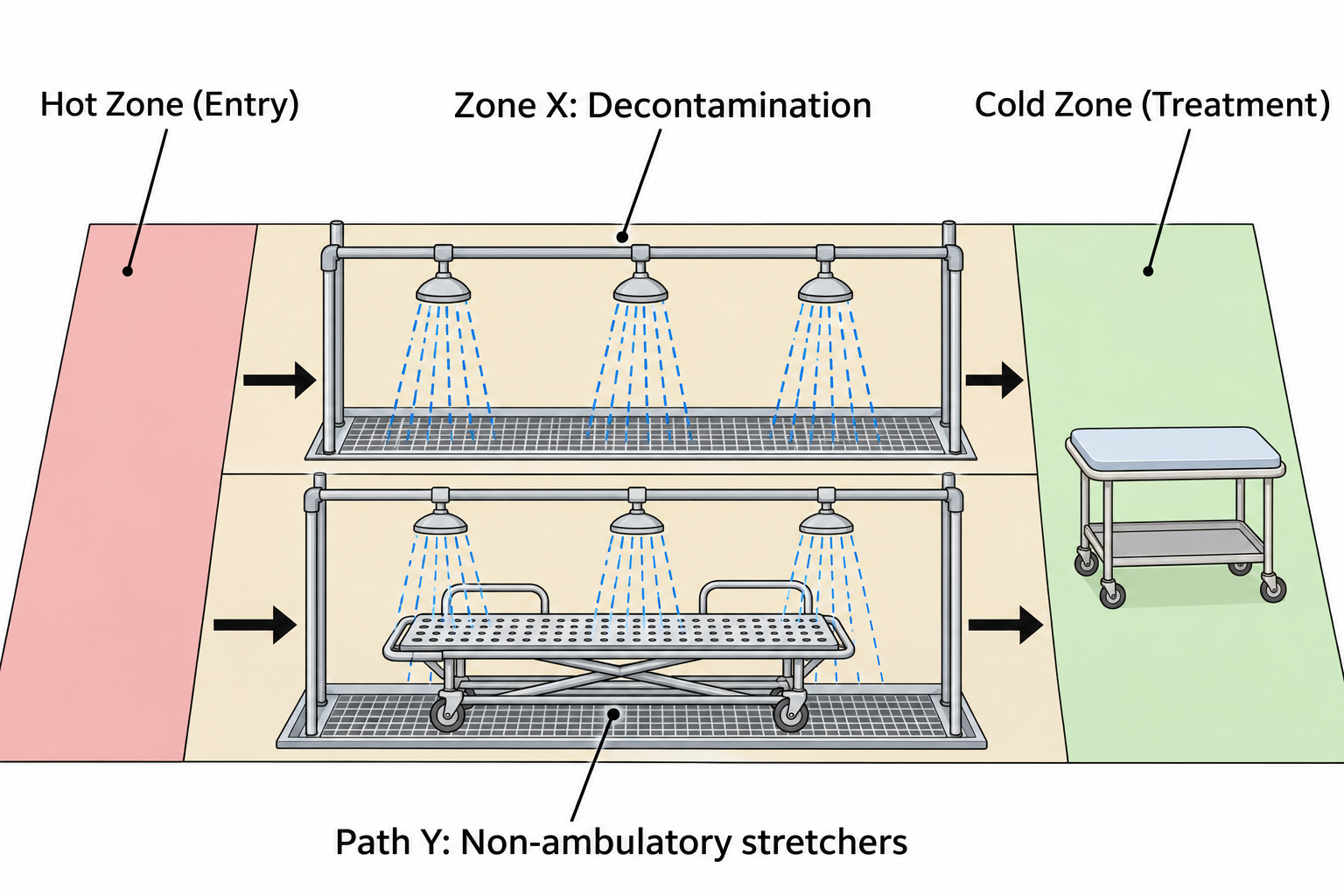
Multiple pediatric casualties arrive at the emergency department following an industrial toxic organophosphate spill. When staging the emergency decontamination corridor shown in the figure, which protocol modification is essential for pediatric casualties compared to adult protocols?
Answer and explanation
Correct answer: D
Children have a high body surface area-to-mass ratio and thin skin, making them prone to rapid hypothermia. Using warmed water during decontamination prevents hypothermic crisis and preserves stability.
Q6Question 6
Advanced
Assessment · Primary and secondary survey
A 4-year-old child with severe blunt polysystemic trauma is intubated, ventilated, and undergoing primary survey in the trauma resuscitation bay. Five minutes after arrival, the pulse oximeter suddenly alarms with an SpO2 dropping from 99% to 74%, while the blood pressure rapidly falls from 92/58 mm Hg to 54/30 mm Hg. Heart rate drops from 120 to 62 beats/min.
Which action must the emergency nurse prioritize first?
Answer and explanation
Correct answer: A
In an intubated trauma patient with sudden acute desaturation and cardiovascular collapse, assessing the airway and breathing (DOPE mnemonic) takes immediate priority over initiating fluid resuscitation.
Register free for 6 more questions
Or unlock all 148 CPEN questions with explanations, timed mode and flashcards.