

Psychiatric-Mental Health Nurse Practitioner (Across the Lifespan) Certification Free Sample Questions

12 free sample questions158 in the full practice test

Try simulator

PMHNP-BC Sample Questions

  1. Question 1

    Intermediate

    Scientific Foundation · Advanced psychopharmacology (e.g., pharmacokinetics, pharmacodynamics, extrapyramidal symptoms [EPS], neuroleptic malignant syndrome [NMS])

    A 38-year-old male with schizophrenia treated with intramuscular haloperidol decanoate is brought to the emergency department with severe diaphoresis, autonomic instability (blood pressure 178/104 mmHg, heart rate 124 bpm), a temperature of 103.8°F (39.9°C), generalized "lead-pipe" rigidity, and a serum creatine kinase level of 24,000 U/L. Antipsychotic therapy is stopped immediately. Which medication is most appropriate to administer specifically to relieve peripheral skeletal muscle rigidity and reduce hyperthermia?

    Answer and explanation

    Correct answer: C

    Dantrolene acts directly on skeletal muscle sarcoplasmic reticulum to inhibit calcium release, reversing hyperrigidity and hyperthermia in NMS. Benztropine is contraindicated as anticholinergic effects worsen hyperthermia.
  2. Question 2

    Beginner

    Scientific Foundation · Advanced psychopharmacology (e.g., pharmacokinetics, pharmacodynamics, extrapyramidal symptoms [EPS], neuroleptic malignant syndrome [NMS])

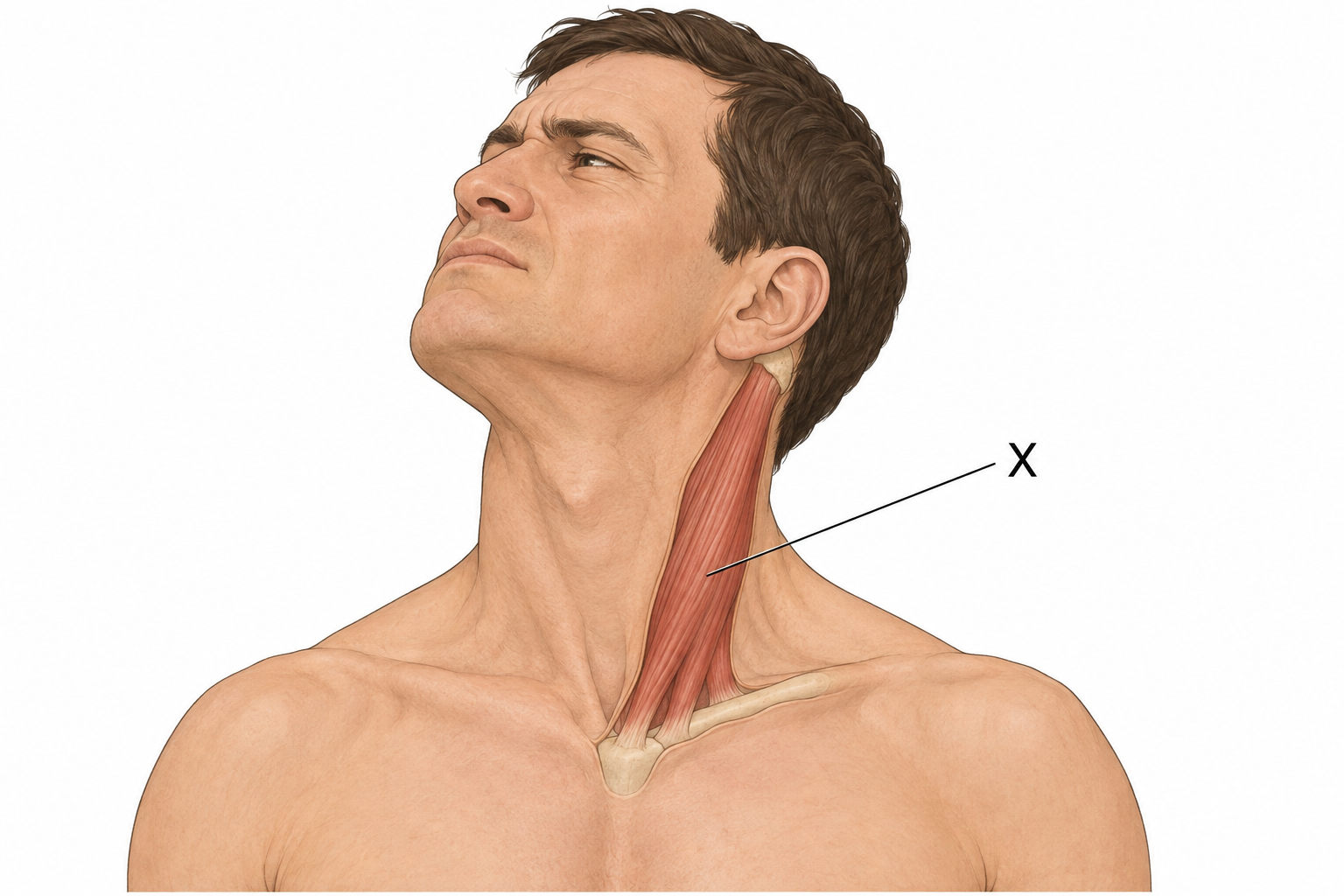
    A 21-year-old male receives his first dose of intramuscular haloperidol for acute agitation. Two hours later, he experiences acute involuntary muscular contraction of the neck, as illustrated with muscle X in the figure. Which intervention is the most appropriate first-line treatment for this condition?

    Question 2 image
    Answer and explanation

    Correct answer: D

    Acute dystonia responds rapidly to anticholinergics or antihistamines with central anticholinergic properties like diphenhydramine or benztropine. Propranolol treats akathisia, while dantrolene treats NMS.

  3. Question 3

    Intermediate

    Scientific Foundation · Advanced psychopharmacology (e.g., pharmacokinetics, pharmacodynamics, extrapyramidal symptoms [EPS], neuroleptic malignant syndrome [NMS])

    Five days after starting aripiprazole 15 mg daily for bipolar depression, a 29-year-old female reports intense subjective motor restlessness, an irresistible urge to keep moving her legs, and inability to sit still during her session. Physical examination reveals repetitive pacing and shifting weight while standing, without muscular rigidity or fever. Which medication is considered first-line pharmacotherapy for this condition?

    Answer and explanation

    Correct answer: C

    Akathisia is primarily treated with centrally active lipophilic beta-blockers such as propranolol, or second-line benzodiazepines. Anticholinergics like benztropine are less effective, and valbenazine treats tardive dyskinesia.

  4. Question 4

    Advanced

    Scientific Foundation · Psychopharmacogenomics (e.g., gene-drug interactions, heritability)

    A 44-year-old female with recurrent major depressive disorder undergoes pharmacogenomic testing, which reveals that she is a CYP2D6 poor metabolizer (*4/*4 genotype). The psychiatric-mental health nurse practitioner is evaluating pharmacotherapy options. If this patient is prescribed standard therapeutic doses of nortriptyline, which clinical and pharmacokinetic outcome is most expected?

    Answer and explanation

    Correct answer: C

    CYP2D6 poor metabolizers have absent enzyme activity, leading to drastically decreased nortriptyline clearance, elevated plasma concentrations, and toxicity risks including QTc prolongation and anticholinergic crisis.

    flowchart TD A[CYP2D6 *4/*4 Poor Metabolizer] --> B[Near Zero CYP2D6 Activity] B --> C[Markedly Reduced Nortriptyline Clearance] C --> D[Substantial Drug Accumulation] D --> E[Elevated Risk of Toxicity / Arrhythmias]
  5. Question 5

    Intermediate

    Scientific Foundation · Psychopharmacogenomics (e.g., gene-drug interactions, heritability)

    A psychiatric-mental health nurse practitioner evaluates a 32-year-old male of Han Chinese ancestry presenting with acute bipolar mania. Prior to initiating carbamazepine therapy, which pharmacogenetic screening test is mandated by FDA boxed warning labeling to prevent life-threatening cutaneous adverse reactions?

    Answer and explanation

    Correct answer: A

    The HLA-B1502 allele is strongly associated with carbamazepine-induced Stevens-Johnson syndrome and toxic epidermal necrolysis in patients of Asian descent. HLA-B5701 screens for abacavir hypersensitivity.

  6. Question 6

    Advanced

    Scientific Foundation · Psychopharmacogenomics (e.g., gene-drug interactions, heritability)

    In clinical psychopharmacogenomics, when a patient whose genotype predicts normal (extensive) enzymatic metabolism at CYP2D6 exhibits the drug clearance and toxicity profile of a poor metabolizer due to co-prescription of a potent CYP2D6 inhibitor like fluoxetine or paroxetine, this clinical phenomenon is defined as _____

    Answer and explanation

    Correct answer: A

    Phenoconversion occurs when nongenetic factors, such as potent CYP enzyme inhibitors (e.g., fluoxetine inhibiting CYP2D6), alter a genotypically normal metabolizer into a clinically observed poor metabolizer phenotype.

Register free for 6 more questions

Or unlock all 158 PMHNP-BC questions with explanations, timed mode and flashcards.