Assessment and Diagnosis · Fluids and electrolytes (eg, imbalances, disease-related, blood products)
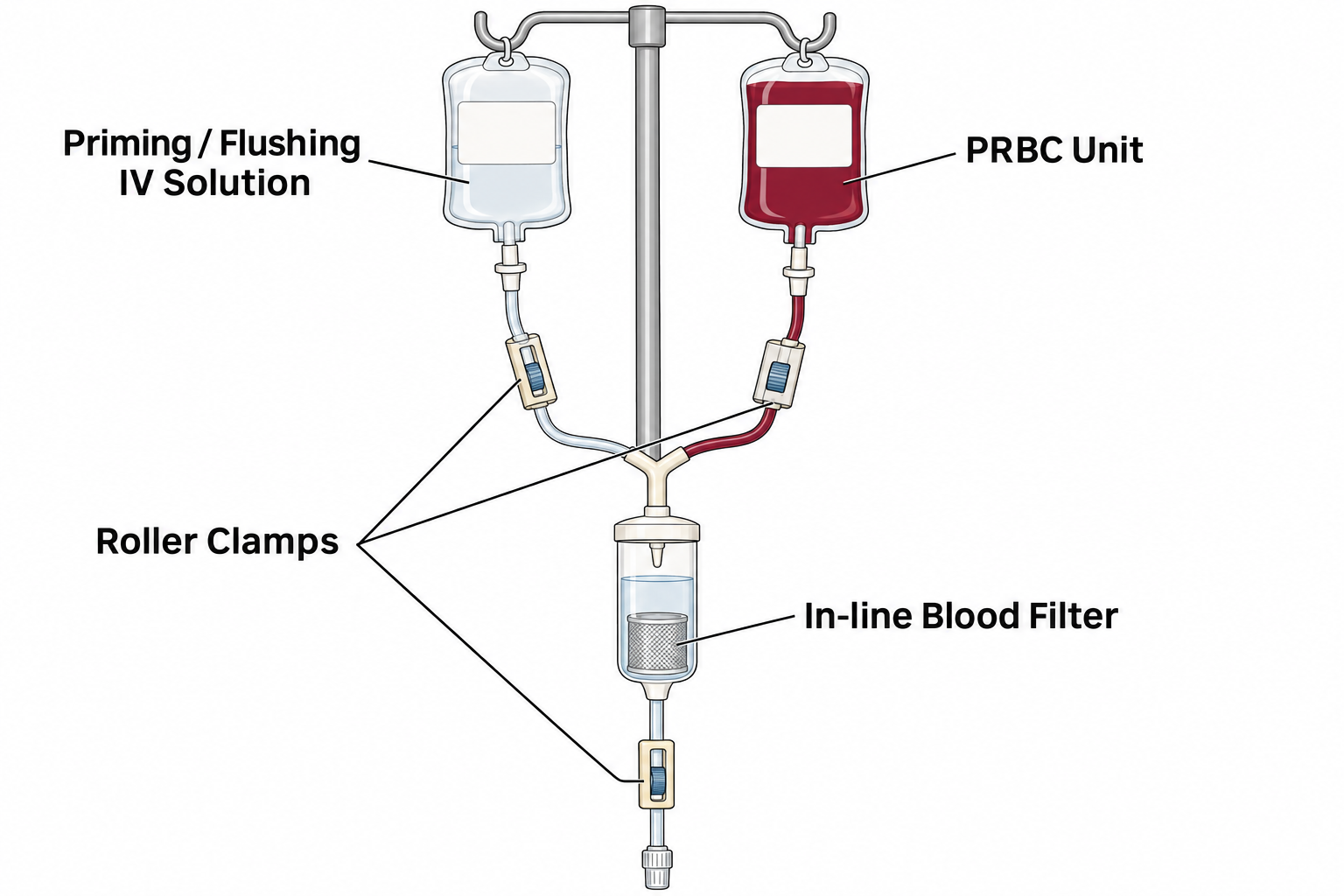
A medical-surgical nurse is preparing to infuse one unit of packed red blood cells (PRBCs) for a patient with acute gastrointestinal bleeding. Which intravenous solution is exclusively approved to prime the administration tubing and flush the line during this transfusion?
Answer and explanation
Correct answer: C
0.9% Sodium Chloride Injection USP is the only IV fluid compatible with blood components. Calcium-containing fluids like Lactated Ringer's cause clotting in the tubing, while hypotonic solutions cause hemolysis.
Q2Question 2
Advanced
Assessment and Diagnosis · Fluids and electrolytes (eg, imbalances, disease-related, blood products)
A patient admitted with severe traumatic brain injury develops cerebral edema. The provider orders intravenous maintenance fluids. Why is the administration of 0.45% sodium chloride strictly contraindicated in this clinical scenario?
flowchart TD
A[0.45% NaCl Infusion] --> B[Decreased Plasma Osmolality]
B --> C[Water Shifts Down Osmotic Gradient]
C --> D[Intracellular Swelling of Astrocytes]
D --> E[Elevated Intracranial Pressure]
Answer and explanation
Correct answer: B
Hypotonic solutions like 0.45% NaCl lower serum osmolarity, driving water into intracellular space by osmosis. In cerebral edema, this cellular swelling increases intracranial pressure.
Q3Question 3
Advanced
Assessment and Diagnosis · Fluids and electrolytes (eg, imbalances, disease-related, blood products)
A 68-year-old patient with small cell lung cancer is admitted to the medical-surgical unit after experiencing two days of worsening lethargy, headache, and confusion. The patient has a medical history of hypertension treated with hydrochlorothiazide. On examination, the patient is disoriented to time and place, mucous membranes appear moist, and there is no peripheral edema or jugular venous distention.
Initial laboratory investigations reveal a serum sodium level of 118 mEq/L (reference range: 135–145 mEq/L), serum potassium of 3.8 mEq/L, serum osmolality of 245 mOsm/kg, and elevated urine sodium and osmolality. The provider diagnoses the syndrome of inappropriate antidiuretic hormone secretion (SIADH).
The primary nurse notes that the patient begins twitching and exhibits coarse tremors. Which complication is this patient at highest immediate risk of developing if the sodium level is not corrected cautiously?
Answer and explanation
Correct answer: A
Severe hyponatremia (<125 mEq/L) causes cerebral edema as water shifts into brain cells, leading to altered mental status, seizures, coma, and herniation. Rapid overcorrection must also be avoided to prevent osmotic demyelination.
Q4Question 4
Beginner
Assessment and Diagnosis · Physical assessment (eg, vital signs, disease process, review of systems, activities of daily living)
When conducting a standard bedside physical examination of a medical-surgical patient, the nurse assesses the head, eyes, ears, nose, and throat (HEENT). Which finding documented as 'PERRLA' confirms normal ocular physiological function?
Answer and explanation
Correct answer: D
PERRLA is the standard documentation acronym indicating pupils are equal in diameter, round in shape, and constrict appropriately to direct light, consensual light, and accommodation.
Q5Question 5
Intermediate
Assessment and Diagnosis · Physical assessment (eg, vital signs, disease process, review of systems, activities of daily living)
A 52-year-old patient presents to the medical-surgical unit complaining of severe, sharp right lower quadrant abdominal pain accompanied by nausea and fever. In applying clinical assessment principles, how should the nurse sequence the physical examination?
Answer and explanation
Correct answer: D
When a patient presents with an acute localized symptom, the nurse conducts a focused assessment targeting the chief complaint first to identify emergent changes before completing broader routine reviews.
Q6Question 6
Intermediate
Assessment and Diagnosis · Physical assessment (eg, vital signs, disease process, review of systems, activities of daily living)
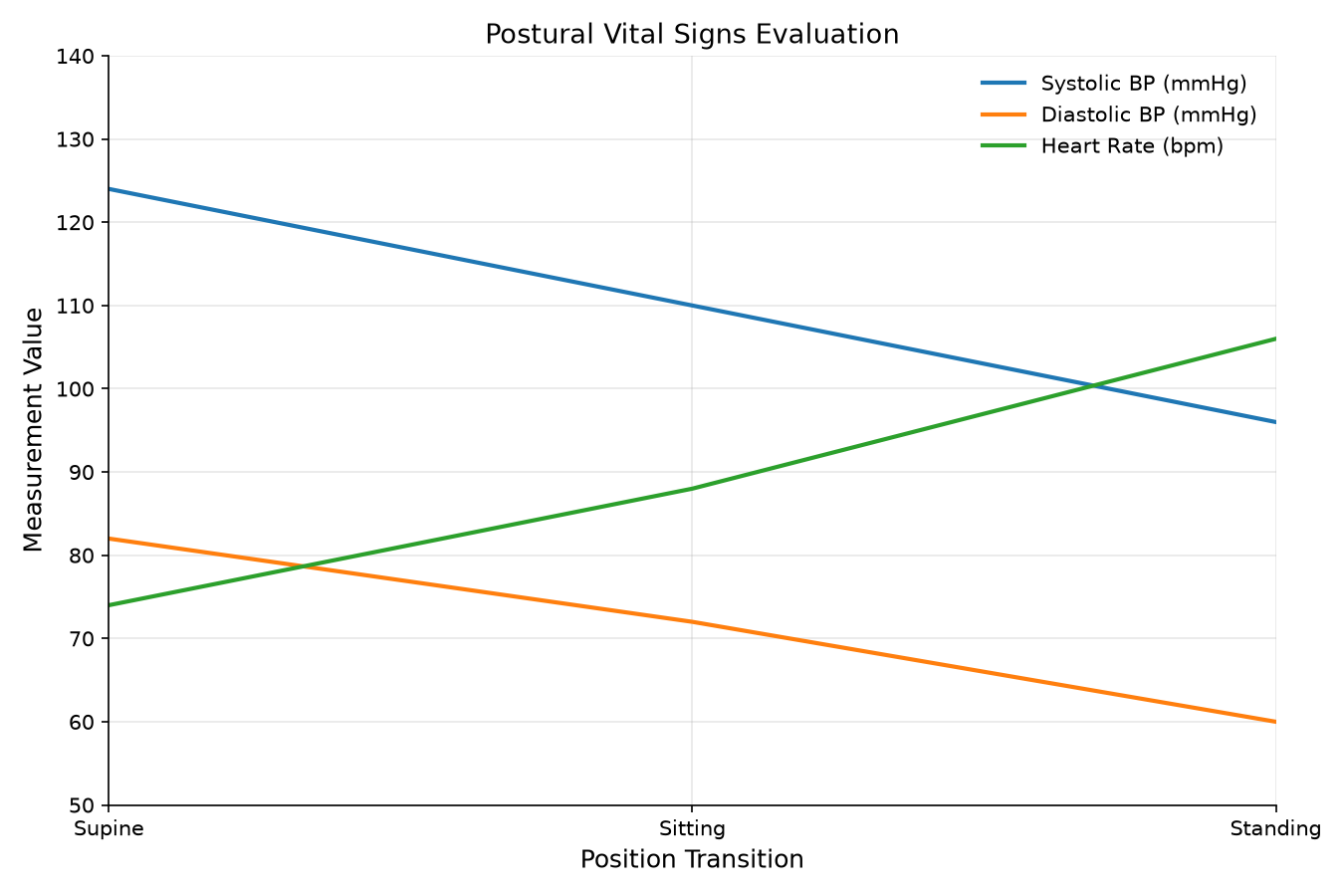
An adult patient admitted for acute gastroenteritis with protracted vomiting undergoes orthostatic vital sign evaluation. The recorded vital signs across positions are shown in the figure. What physiological alteration do these assessment findings indicate?
Answer and explanation
Correct answer: D
Orthostatic hypotension is defined by a drop in systolic BP ≥20 mmHg or diastolic BP ≥10 mmHg with a compensatory pulse rise ≥20 bpm within 3 minutes of standing, signifying intravascular dehydration.
Register free for 6 more questions
Or unlock all 159 MEDSURG-BC questions with explanations, timed mode and flashcards.