


Master GMAT Practice Test Techniques for Top MBA Scores
More than two thirds of American and international GMAT takers do not reach their target score on their first attempt. For ambitious graduate business students and early-career professionals, mastering authentic practice test strategies is the foundation for gaining admission to competitive MBA programs in 2025. This guide breaks down a practical, step-by-step process to help you build test confidence, analyze your results with precision, and improve your performance—no matter where you start.
Quick Summary
| Key Point | Explanation |
|---|---|
| 1. Create a Distraction-Free Environment | Choose a quiet space with minimal distractions to replicate the testing center atmosphere for effective practice. |
| 2. Use Verified GMAT Resources | Invest in official GMAT materials and high-quality practice tests to ensure authentic preparation aligned with exam standards. |
| 3. Consistently Simulate Test Conditions | Regularly practice under strict timing and real exam conditions to build familiarity and confidence in the test format. |
| 4. Analyze Performance Metrics | Carefully review your practice test results to identify skill gaps and develop a targeted study plan for improvement. |
| 5. Refine Strategies Based on Insights | Continuously adapt your study techniques by analyzing test performance patterns and focusing on areas needing enhancement. |
Step 1: Set Up Your GMAT Practice Test Environment
Creating an optimal practice environment is crucial for simulating real GMAT testing conditions and maximizing your performance. Your goal is to design a controlled setting that closely mirrors the official exam atmosphere, helping you build confidence and reduce test day anxiety.
Begin by selecting a quiet, distraction-free space that mimics testing center conditions. This means choosing a room with minimal background noise, good lighting, and a comfortable chair and desk setup. Invest time in preparing your practice environment as if you were taking the actual exam. Remove potential interruptions like smartphones, unnecessary papers, or electronic devices that could disrupt your concentration. Ensure your workspace has a stable internet connection if you are taking an online practice test, and keep water and permitted snacks nearby.
Set up your computer or testing device exactly as you would on exam day. This includes adjusting screen brightness, positioning your chair at the right height, and having scratch paper and approved writing tools within reach. Practice using the computer interface and familiarize yourself with the navigation tools to minimize technical distractions during the actual test.
Pro tip: Create a pre test ritual that helps you mentally prepare and transition into focused test mode, such as a short breathing exercise or consistent workspace setup routine.
Step 2: Select Verified GMAT Practice Test Resources
Navigating the world of GMAT practice materials requires strategic selection to ensure you are preparing with the most authentic and effective resources. Your primary objective is to identify and utilize practice tests and study materials that closely mirror the actual GMAT exam format and difficulty level.
Start by investing in comprehensive official GMAT preparation guides, which provide genuine test questions directly from the exam creators. The Official Guide for GMAT Review is considered the gold standard, offering over 800 real GMAT questions with detailed explanations that help you understand not just the answers but the underlying reasoning. Supplement these official resources with high-quality practice tests from reputable test preparation companies that have a track record of accuracy and alignment with GMAT standards.
When selecting practice resources, prioritize materials that offer full length practice exams, comprehensive answer explanations, and diagnostic tools to help you identify your strengths and weaknesses. Look for resources that provide adaptive testing technology, which adjusts question difficulty based on your performance, simulating the computer adaptive testing environment of the actual GMAT. Diversify your practice materials to include both official GMAT resources and well regarded third party practice tests to get a comprehensive preparation experience.
Pro tip: Rotate between different practice test providers to expose yourself to varied question styles and prevent becoming too comfortable with a single resource approach.
Step 3: Simulate Real Exam Conditions Consistently
Successfully preparing for the GMAT requires more than just studying content you must systematically train yourself to perform under authentic test conditions. Your primary goal is to create a practice environment that perfectly mirrors the actual exam experience, reducing anxiety and building test taking confidence.
Start by rigorously simulating official test conditions. This means practicing under strict time constraints, using the same computer interface you will encounter during the actual exam, and maintaining the same intense focus you will need on test day. Set up a dedicated practice space that mimics the testing center environment complete with noise canceling headphones if available, minimal distractions, and a professional mindset. Use a timer that matches the GMAT exam sections exactly and practice taking the entire test in one sitting to build the mental stamina required for a four hour comprehensive exam.
Consider recording your practice test performance metrics to track your progress and identify areas needing improvement. Pay close attention to your time management skills during each section, noting how quickly you answer questions and where you might be losing precious minutes. Practice strategies like strategic guessing, question prioritization, and maintaining emotional composure when encountering challenging problems. The more consistently you simulate real exam conditions, the more comfortable and confident you will become with the actual test format.
Pro tip: Schedule your practice tests at the same time of day as your actual exam to help your body and mind acclimate to peak performance during those specific hours.
Here’s a summary of elements to simulate authentic GMAT test conditions:
| Simulation Element | Why It Matters | How to Implement |
|---|---|---|
| Distraction-free space | Reduces interruptions | Quiet room, close doors/windows |
| Strict timing | Builds pacing skills | Use GMAT-official timers |
| Computer interface | Familiarizes with test format | Practice with actual software |
| Focused mindset | Enhances performance | Pre-test rituals, deep breaths |
Step 4: Review and Analyze Practice Test Results
Analyzing your GMAT practice test results is a critical step in transforming raw performance data into a strategic study roadmap. Your goal is to move beyond simply reviewing right and wrong answers to developing a comprehensive understanding of your test taking patterns and skill gaps.
Begin by systematically dissecting your practice test performance. Create a detailed error log that categorizes mistakes by question type, content area, and underlying skill deficiency. Track not just the questions you missed but the reasoning behind your errors. Pay special attention to patterns such as consistently struggling with certain math concepts, losing time in specific sections, or making repeated errors in logical reasoning questions. Quantify your performance metrics including accuracy rates, time spent per question, and section specific scores to identify precise areas requiring focused improvement.
Transform your analysis into an actionable study plan by prioritizing your weakest areas. If your quantitative reasoning section shows consistent challenges with geometry problems, dedicate more practice time to that specific skill. For verbal section weaknesses, drill down into reading comprehension strategies or sentence correction techniques that challenge you most. Remember that effective test preparation is not about endless studying but strategic targeted improvement based on your unique performance profile.
Pro tip: Create a visual tracking dashboard for your practice test results to help you see progress and maintain motivation through clear graphical representation of your skill development.
Below is a quick reference on interpreting practice test performance for targeted improvement:
| Performance Data | What It Reveals | Next Study Step |
|---|---|---|
| Accuracy by section | Weakest test areas | Prioritize those sections |
| Time per question | Efficiency and pacing issues | Practice with time goals |
| Error patterns | Specific skill gaps | Review error log closely |
| Score changes over time | Progress consistency | Adjust strategy as needed |
Step 5: Refine Strategies Using Performance Insights
Transforming your GMAT practice test results into actionable improvement strategies requires a systematic and nuanced approach. Your ultimate objective is to convert raw performance data into targeted skill enhancement techniques that will progressively elevate your test taking capabilities.
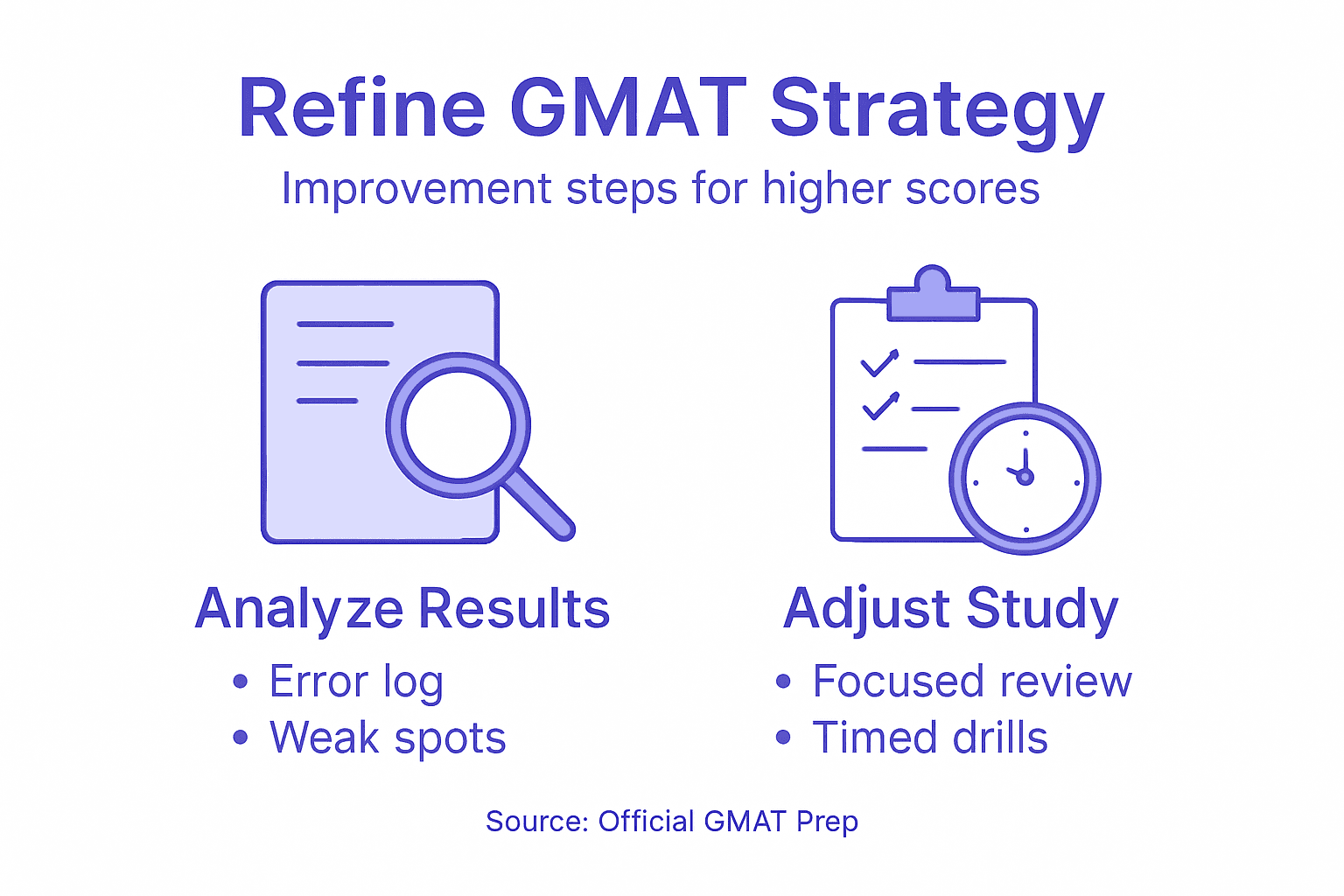
Develop a comprehensive strategy by adapting your test preparation approach based on detailed performance analytics. Analyze your practice test results to identify specific patterns in your performance such as time management challenges, consistent errors in particular question types, or recurring conceptual misunderstandings. Focus on granular insights that reveal not just what you got wrong but why you struggled. For instance, if your quantitative section shows repeated errors in data sufficiency problems, break down the underlying reasoning gaps and develop targeted practice modules to address those specific skill deficiencies.
Improve your strategy through deliberate practice and continuous refinement. Create a dynamic study plan that adapts as you progress, incorporating increasingly challenging practice questions that target your weakest areas. Experiment with different problem solving approaches, time management techniques, and mental strategies to find what works best for your individual learning style. Track your progress meticulously and be prepared to pivot your approach based on ongoing performance data.
Pro tip: Develop a personal performance dashboard that visualizes your progress across different skill areas, allowing you to quickly identify and prioritize improvement zones.
Boost Your GMAT Success with Proven Practice Tests and Strategies
Mastering the GMAT requires more than just hard work. The challenges of accurately simulating real exam conditions, managing strict timing, and analyzing your performance to build targeted improvement strategies can feel overwhelming. This article highlights crucial steps like creating a distraction-free environment, selecting verified practice resources, and refining techniques through detailed result analysis — all aiming for top MBA scores.
At PlanetCert.com, we understand these pain points and are dedicated to helping you overcome them with our extensive library of authentic practice tests and realistic exam simulators. Whether you want to hone your pacing, familiarize yourself with official question formats, or systematically track weaknesses for targeted study, our platform delivers everything needed for a confident test day performance. Our carefully curated resources extend beyond GMAT to vital certifications like PMP, AWS, and CompTIA Security+, ensuring professional growth in 2025 and beyond.

Take control of your GMAT preparation now. Visit PlanetCert.com to access verified practice tests and comprehensive study materials that replicate the real exam experience. Don’t leave your MBA aspirations to chance. Start transforming your preparation strategy today to secure the scores you deserve.
Frequently Asked Questions
What type of environment should I set up for GMAT practice tests?
Creating a distraction-free environment that mimics the official GMAT test setting is essential. Choose a quiet room with good lighting and remove potential interruptions, such as smartphones and unrelated materials, to ensure focused practice.
How can I select the best GMAT practice resources?
Invest in comprehensive official GMAT preparation guides and high-quality practice tests from reputable sources. Focus on materials that offer full-length exams and detailed answer explanations to enhance your understanding of the test format and question styles.
How frequently should I simulate real exam conditions during my practice?
Aim to simulate official test conditions at least once every two weeks. This consistent practice helps build stamina and allows you to refine your pacing and focus under timed conditions.
What should I do with my practice test results to improve my GMAT score?
Analyze your practice test results to identify specific weaknesses and error patterns. Create an action plan to prioritize improvement in your weakest areas, ensuring each study session directly addresses your performance gaps.
How can I refine my GMAT test-taking strategies based on my practice results?
Adapt your study plan by focusing on detailed performance insights revealed in your analysis. Implement targeted practice sessions that concentrate on the question types and concepts where you struggle most, making adjustments every few weeks based on progress.
Recommended
- GMAT Academic Testing GMAT Test Practice Questions (2026)
- GMAT-SECTION-2 Academic Testing Gmat Section… Practice Tests
- GMAT-SECTION-3 Academic Testing G… Practice Questions (2026)
- NMAT GMAC Narsee Monjee Management Aptitude… Practice Tests
- “Don’t Cram” Week: Free AI Study Plan Generator (High School & College Tool)
Discussion
Community Discussion
Sign in to leave a comment and access more free questions.