

Advanced Engine Performance Specialist Free Sample Questions

12 free sample questions160 in the full practice test

Try simulator

L1 Sample Questions

  1. Question 1

    Intermediate

    General Powertrain Diagnosis · A.7 Differentiate between powertrain mechanical and electrical/electronic problems, including variable valve timing (VVT) and variable valve lift (VVL) systems.

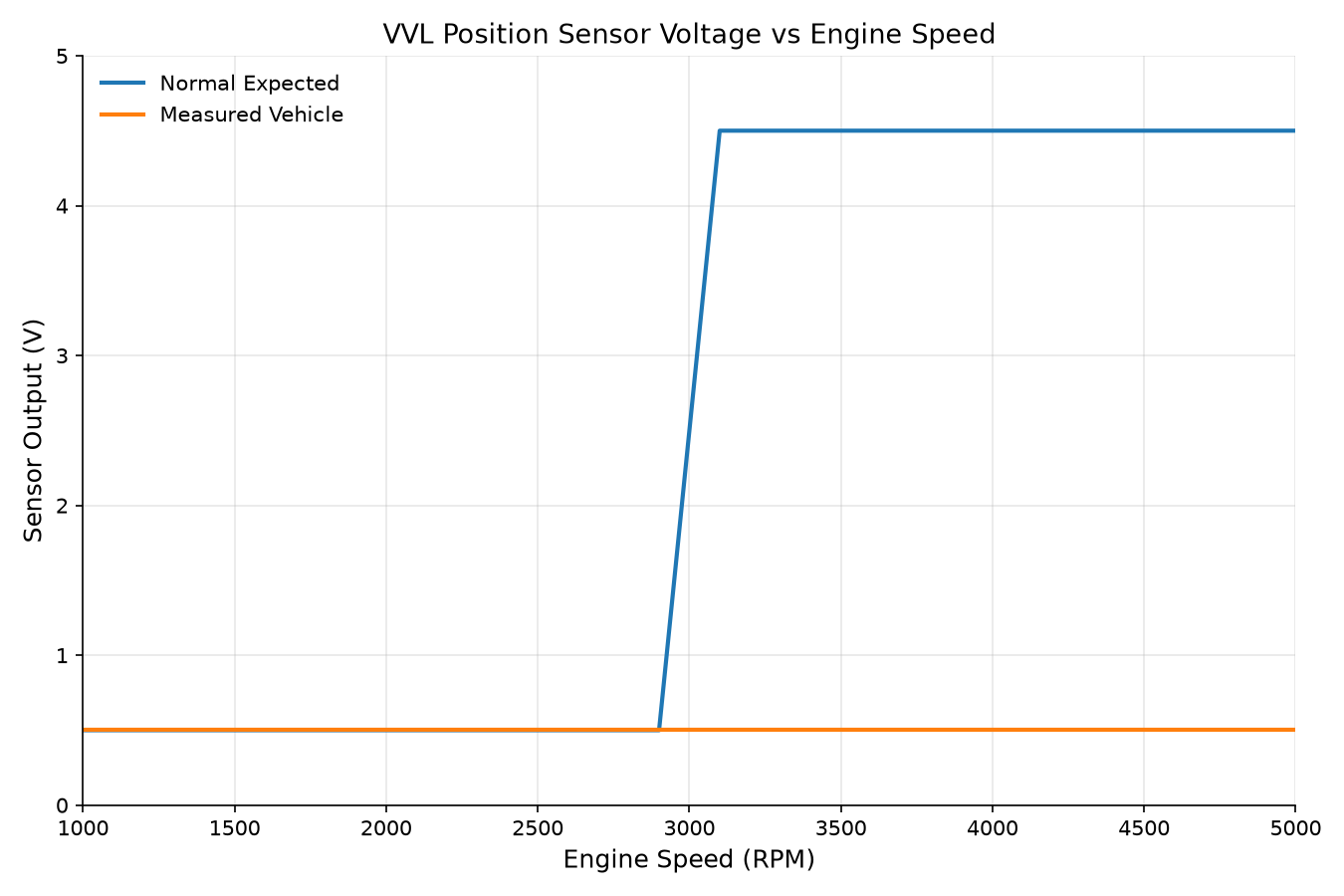
    A technician is diagnosing a Composite Vehicle Type 4 with a customer complaint of poor high-speed engine performance above 3500 rpm. During a road test at 4200 rpm under wide-open throttle, scan tool data shows the ECM is commanding 100% variable valve lift, but Valve Lift Position Bank 1 and Bank 2 both indicate 0.50 V (0%). A digital multimeter connected directly across the terminals of the Bank 1 VVL motor measures 12.4 V. What is the most likely cause of this condition?
    Question 1 image
    Answer and explanation

    Correct answer: C

    Measuring 12.4 V across motor terminals confirms power and ground. The 0.5 V (0%) position reading proves mechanical binding in the fulcrum mechanism.

  2. Question 2

    Advanced

    General Powertrain Diagnosis · A.7 Differentiate between powertrain mechanical and electrical/electronic problems, including variable valve timing (VVT) and variable valve lift (VVL) systems.

    A vehicle with variable valve timing exhibits a rough idle and poor low-end engine performance. The technician connects a scan tool and finds DTC P0011 (Intake Camshaft Position Timing - Over-Advanced Bank 1) stored in memory. At warm idle (650 rpm), Bank 1 intake camshaft actual position reads 18 degrees advanced, while Bank 2 reads 0 degrees (fully retarded).

    The technician notes that the ECM is commanding 0% duty cycle to the Bank 1 Camshaft Position Actuator Solenoid to bring timing back to base retard. To isolate the failure, the technician disconnects the electrical harness connector from the Bank 1 VVT oil control solenoid. The engine continues to idle roughly, and the scan tool displays the camshaft timing remaining fixed at 18 degrees advance.

    Which of the following faults is the root cause of this condition?

    Answer and explanation

    Correct answer: B

    Disconnecting the solenoid eliminates electrical control. Remaining advanced at 0% command proves the spool valve is mechanically stuck or oil is trapped.

  3. Question 3

    Beginner

    General Powertrain Diagnosis · A.7 Differentiate between powertrain mechanical and electrical/electronic problems, including variable valve timing (VVT) and variable valve lift (VVL) systems.

    True or False: On the Composite Vehicle Type 4, if a single intake camshaft position (CMP) sensor signal is lost while the engine is running, the ECM will immediately shut down the engine by disabling all fuel injection pulses.

    Answer and explanation

    Correct answer: B

    False. Loss of one CMP signal causes the ECM to default that camshaft to fully retarded. The ECM only disables injectors if both CMP signals are missing at cranking.

  4. Question 4

    Intermediate

    Computerized Powertrain Controls Diagnosis (including OBD II) · B.7 Research OBD II system operation to determine the enable criteria for setting and clearing diagnostic trouble codes (DTCs) (including permanent DTCs) and malfunction indicator lamp (MIL) operation

    A vehicle evaluated with an OBD II scan tool displays a pending DTC for fuel system control after completing trip 1. According to standardized OBD II criteria and Composite Vehicle Type 4 guidelines, under what conditions will this DTC become confirmed and illuminate the Malfunction Indicator Lamp (MIL) on trip 2?

    Answer and explanation

    Correct answer: D

    Continuous monitors (fuel trim and misfire) require the fault to recur on the next trip under similar conditions (within 375 rpm, 20% load, matching engine warm-up).

  5. Question 5

    Beginner

    Computerized Powertrain Controls Diagnosis (including OBD II) · B.7 Research OBD II system operation to determine the enable criteria for setting and clearing diagnostic trouble codes (DTCs) (including permanent DTCs) and malfunction indicator lamp (MIL) operation

    What specific operating conditions define a standardized "warm-up cycle" as specified by OBD II regulations and the Composite Vehicle Type 4 Reference Booklet for automatically clearing DTCs and freeze frame records?

    Answer and explanation

    Correct answer: A

    OBD II standard specifies a warm-up cycle as a coolant rise of at least 40° F (22° C) after engine start and reaching at least 160° F (71° C).

  6. Question 6

    Intermediate

    Computerized Powertrain Controls Diagnosis (including OBD II) · B.8 Interpret OBD II scan tool data stream, diagnostic trouble codes (DTCs), freeze frame data, system monitors, monitor readiness indicators, and trip and drive cycle information to determine system

    An ECM currently contains stored freeze frame data associated with DTC P0442 (EVAP System - Small Leak Detected). On a subsequent drive cycle, the engine develops an ignition misfire, and DTC P0303 (Cylinder 3 Misfire Detected) is stored. How will the ECM handle the freeze frame data?

    Answer and explanation

    Correct answer: C

    OBD II rules dictate that misfire and fuel trim DTCs hold highest priority and will overwrite any previously captured freeze frame data from non-priority DTCs.

Register free for 6 more questions

Or unlock all 160 L1 questions with explanations, timed mode and flashcards.