SECTION A – PURPOSE AND DEFINITIONS · Notice and Disclaimers (Topic A0.1)
In the ASE Electrified Propulsion Vehicles (xEV) High-Voltage Electrical Safety Standards, what is the specific regulatory distinction between the terms 'SHALL' and 'MAY'?
Answer and explanation
Correct answer: C
Under standard definitions, SHALL identifies mandatory conditions that must be met, whereas MAY indicates recommended, optional conditions.
Q2Question 2
Beginner
SECTION A – PURPOSE AND DEFINITIONS · Purpose and Dangerous Voltage Thresholds (Topic A0.2)
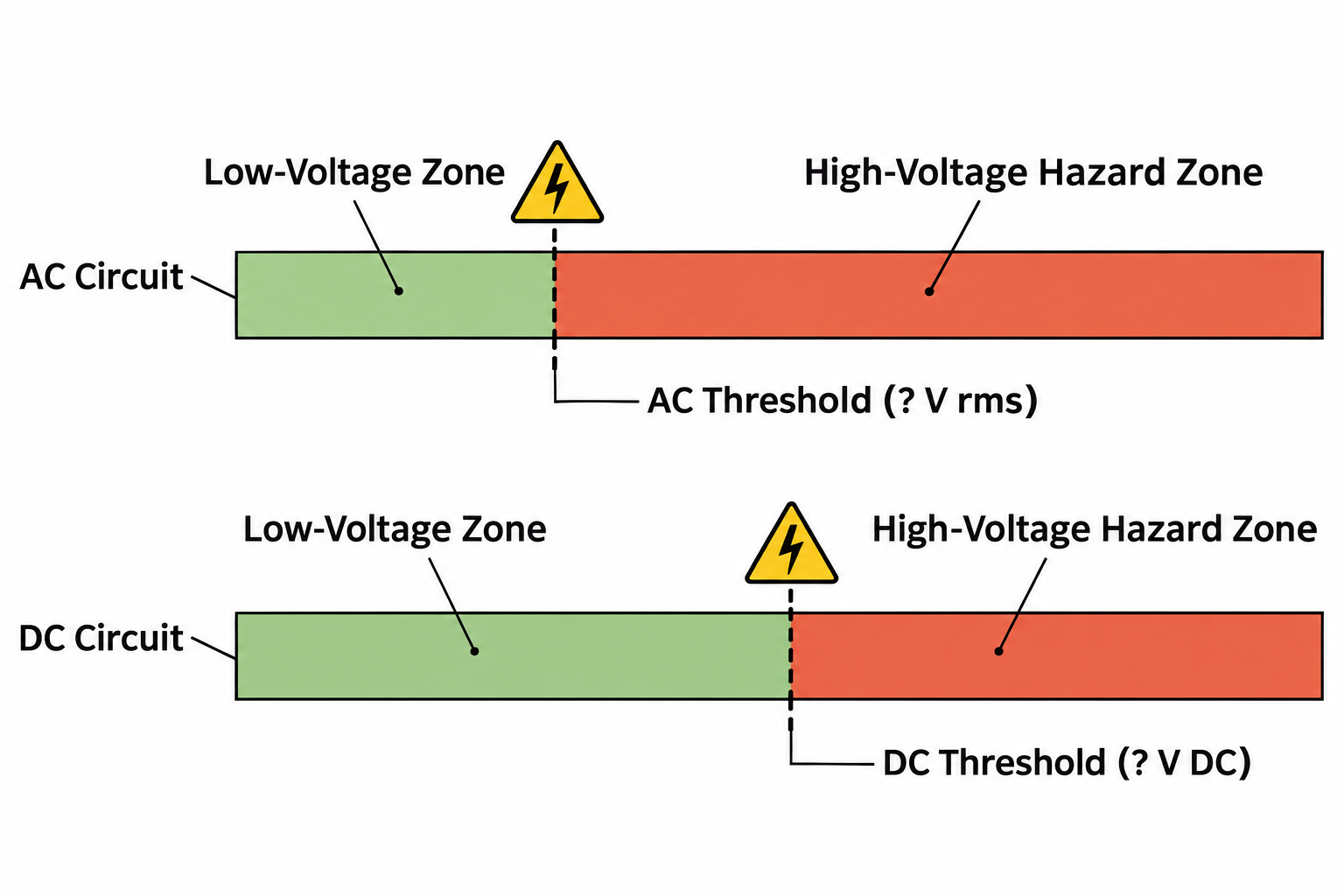
Under the ASE xEV High-Voltage Electrical Safety Standards, what are the minimum electrical voltage thresholds above which alternating current (AC) and direct current (DC) circuits are classified as dangerous high-voltage sources?
Answer and explanation
Correct answer: D
FMVSS 305 and the standard designate alternating voltages above 30 V AC rms and direct voltages above 60 V DC as hazardous high-voltage thresholds.
Q3Question 3
IntermediateMultiple answers
SECTION A – PURPOSE AND DEFINITIONS · High-Voltage Components Identification (Topic A0.2)
Potentially dangerous electrical currents in an electrified propulsion vehicle (xEV) can be generated or carried by multiple dedicated assemblies. Which of the following components are recognized high-voltage components capable of producing or carrying dangerous currents? (Select THREE)
Answer and explanation
Correct answers: B, D, E
The high-voltage battery pack stores and supplies dangerous traction voltage.
The electric A/C compressor is powered directly by the high-voltage bus.
Inverter-rectifier capacitors store lethal high-voltage energy even after shut-off.
Q4Question 4
Intermediate
SECTION A – PURPOSE AND DEFINITIONS · LEVEL ONE – Electrically Aware Person Definition (Topic A1.1)
A dealership service department hires an automotive detailer who will wash, vacuum, and maneuver electric vehicles around the facility. What is the scope of responsibilities and permitted actions defined for this LEVEL ONE – Electrically Aware Person?
Answer and explanation
Correct answer: D
Level 1 personnel may operate vehicles and perform non-HV maintenance, but are strictly prohibited from touching the MSD or high-voltage parts.
Q5Question 5
Advanced
SECTION A – PURPOSE AND DEFINITIONS · LEVEL ONE Scope and Limitations (Topic A1.1)
A commercial tire and wheel retail facility regularly receives hybrid electric vehicles (HEVs) and battery electric vehicles (BEVs) for tire rotation, wheel balancing, and suspension alignment. The shop manager has ensured that all tire technicians are trained and certified as LEVEL ONE Electrically Aware Persons under the ASE standards.
During a four-wheel alignment inspection on an all-wheel-drive BEV, a tire technician notices an orange high-voltage cable routed near the rear lower control arm that appears unclipped and sagging slightly below its chassis bracket. The technician needs to adjust the toe cam bolt located 3 inches away from this cable.
Which course of action aligns precisely with the role and safety limitations of a LEVEL ONE Electrically Aware Person?
Answer and explanation
Correct answer: D
Level 1 personnel must not touch high-voltage cables or components. Suspected loose cables must be evaluated and secured by Level 2 or 3 technicians.
Q6Question 6
Intermediate
SECTION B – GENERAL REQUIREMENTS FOR ELECTRICAL SAFETY-RELATED WORK PRACTICES · Risks Associated with Electric Vehicle Repair (Topic B2)
Which physiological reaction occurs when the human body is subjected to an electric shock current within the 'let-go' threshold range of 6 to 16 milliamperes (mA)?
Answer and explanation
Correct answer: B
Current between 6 and 16 mA triggers involuntary muscle contraction, causing freezing where the person cannot let go of the energized conductor.
Register free for 6 more questions
Or unlock all 159 XEV-1 questions with explanations, timed mode and flashcards.