

Become an Azure Security Engineer: The SC-200 Path From Zero
You want to become an Azure security engineer, but the certification landscape keeps shifting and the starting line is not obvious. Microsoft has retired the old AZ-500 path and replaced it with SC-200 and the newer SC-500 track. If you are starting from zero — no Azure background, no security specialization — you need a clear sequence that builds the right skills without wasting months on dead-end credentials.
This guide walks you through the exact path from no prior Azure knowledge to the Microsoft Certified: Azure Security Engineer Associate credential. I will cover the prerequisite decisions, how long each stage takes, what the exams actually test, and how to use practice assessments to stay on track. By the end, you will have a concrete timeline and know where to focus your study hours.
Where the SC-200 Fits in Microsoft's Security Track
Microsoft restructured its security certifications in 2026. The old AZ-500 exam and the Azure Security Engineer Associate certification retired on August 31, 2026. You can no longer earn or renew that credential. The replacement depends on your experience level.
For most people starting from zero, SC-200: Microsoft Security Operations Analyst is now the practical entry point. It validates skills in threat detection, response, and security operations using Microsoft Sentinel, Microsoft Defender for Cloud, and Microsoft Defender XDR. The newer SC-500: Implementing End-to-End Security Controls for Cloud and AI Workloads targets engineers who already have cloud security experience and adds AI-specific security domains that did not exist on AZ-500.
"This certification, related exam, and renewal assessments will retire on August 31, 2026. You will no longer be able to earn or renew this certification after this date." — Microsoft Learn, Azure Security Engineer Associate page
If you are reading this in late 2026 or beyond, check whether SC-500 has gone generally available in your region. As of July 2026, SC-500 was live but the transition period meant many training resources still referenced AZ-500 objectives. The safest path for newcomers is still AZ-900 fundamentals, then SC-200 for security operations skills, then SC-500 once you have that foundation.
The Prerequisite Decision: AZ-900 or Jump Straight In?
Microsoft does not enforce formal prerequisites for SC-200, but the exam assumes you understand core Azure services, resource management, and basic networking. Without that context, the security-specific content will feel abstract and the lab scenarios will trip you up.
AZ-900: Microsoft Azure Fundamentals is the standard starting point. It covers cloud concepts, core Azure services, pricing, and governance. Most candidates with no Azure background need two to four weeks of part-time study to pass. The AZ-900 exam details page shows the current objective domains if you want to see what you are signing up for.
If you already work with Azure daily — deploying VMs, configuring VNets, managing storage accounts — you might skip AZ-900 and start with SC-200 directly. Be honest about your gaps though. The SC-200 exam tests security operations in depth, and weak fundamentals slow you down more than a quick AZ-900 pass would.
For career switchers from traditional IT or networking, AZ-900 also signals to hiring managers that you understand cloud basics even if your resume leans on-premise. The Azure certification path overview explains how these credentials stack toward higher-level security roles.
Mapping the SC-200 Exam Domains
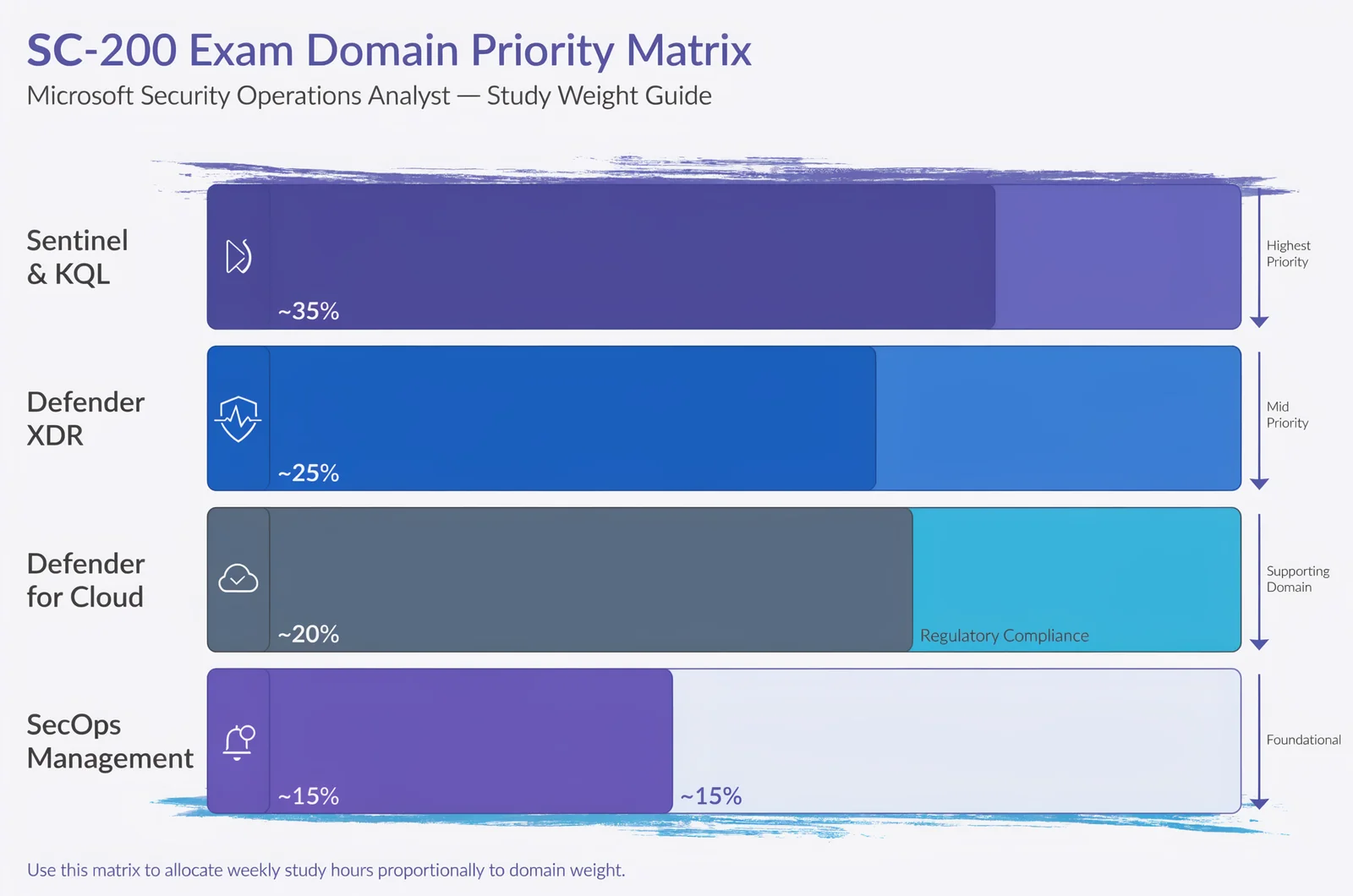
SC-200 tests four major skill areas. Microsoft publishes the exact weightings, and you should shape your study time to match them.
| Domain | Focus Area | What You Actually Do |
|---|---|---|
| Mitigate threats using Microsoft Defender XDR | Endpoint and identity protection | Configure Defender for Endpoint, investigate alerts, automate response with custom detection rules |
| Mitigate threats using Microsoft Defender for Cloud | Cloud security posture management | Implement secure score recommendations, configure workload protections, remediate compliance findings |
| Mitigate threats using Microsoft Sentinel | SIEM and SOAR operations | Build KQL queries, create analytics rules, design automation playbooks, investigate incidents |
| Manage security operations | Operational processes | Configure data connectors, manage user roles, optimize data ingestion costs, maintain detection coverage |
The Sentinel domain typically carries the highest weight and trips up the most candidates. Kusto Query Language (KQL) is not optional — you will write queries under exam pressure, not just recognize syntax. The Defender for Cloud domain expects hands-on familiarity with policy definitions, regulatory compliance dashboards, and workload-specific protections like container security.
Microsoft's official guidance notes that Azure security engineers "implement, manage, and monitor security for resources in Azure, multi-cloud, and hybrid environments as part of an end-to-end infrastructure." That multi-cloud and hybrid wording matters. The exam includes scenarios with AWS connectors and on-premises Active Directory, not pure Azure estates.
Building a Realistic Study Timeline
Your timeline depends on your starting point. These estimates assume 10 to 15 hours of study per week while working full time.
Complete beginner (no Azure, no security background): 4 to 5 months total
- AZ-900: 3 to 4 weeks
- Azure administration basics: 4 to 6 weeks
- SC-200 dedicated prep: 8 to 10 weeks
IT professional with Azure exposure: 2.5 to 3.5 months
- AZ-900 or skip assessment: 1 to 2 weeks if needed
- SC-200 dedicated prep: 8 to 10 weeks
Existing security analyst pivoting to Azure: 6 to 8 weeks
- Focus on Azure-specific tooling and KQL
- Map existing SIEM/SOAR knowledge to Sentinel and Defender
Break each week into three activities: concept study, hands-on lab work, and practice testing. A 60/30/10 split works for most people — 60 percent reading documentation or watching structured training, 30 percent in the Azure portal or Sentinel demo environment, 10 percent running timed practice questions to build exam rhythm.
The Microsoft role-based exam format explains how Microsoft structures its scenario-based questions. Understanding that format early prevents surprises on test day.
Hands-On Practice: The Non-Negotiable Part
SC-200 is not a memorization exam. Microsoft explicitly targets practitioners who configure tools, not just describe them. You need real interaction with Sentinel, Defender for Endpoint, and Defender for Cloud.
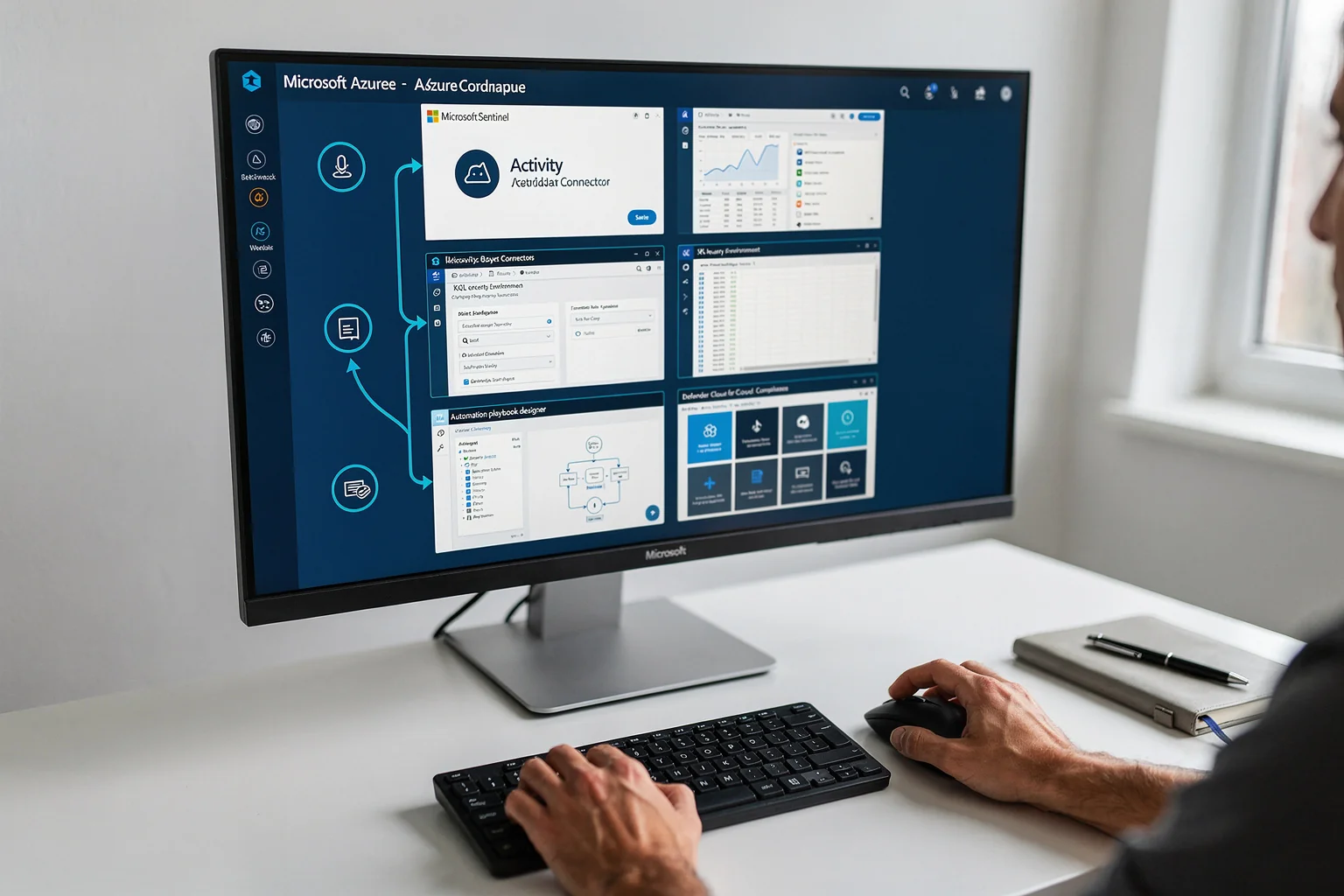
Microsoft provides free options:
- Azure free account: $200 credit for 30 days, enough to deploy a test Sentinel workspace and ingest sample data
- Microsoft Defender for Endpoint evaluation: 90-day trial with full feature access
- Microsoft Learn modules: Guided exercises with sandbox environments that do not require your own Azure subscription
Set up a dedicated practice tenant rather than experimenting in production. Build these specific configurations:
- Deploy Microsoft Sentinel and connect the Azure Activity data connector
- Write a KQL query that detects failed Azure AD sign-ins from multiple countries in one hour
- Create an analytics rule that generates an incident from that query
- Build a playbook that emails your team when the incident triggers
- Configure a Defender for Cloud regulatory compliance policy and remediate one finding
If you cannot explain why each step matters — not just what buttons to click — you are not ready for the exam.
Using Practice Tests Without Burning Out
Practice tests serve two purposes: identifying weak domains and building tolerance for the exam's time pressure. Used poorly, they become a crutch that inflates confidence without building skill.
Run your first full practice assessment after two weeks of concept study. Do not expect to pass. The goal is a diagnostic — which domains feel foreign, which question styles slow you down, where your KQL knowledge gaps show.
After that initial baseline, use practice tests in two modes:
Untimed review mode: For learning. Read every explanation, even for questions you answered correctly. The best practice tests explain why wrong answers are wrong, not just why the right one is right. This builds the reasoning pattern Microsoft rewards.
Timed simulator mode: For exam readiness. The real SC-200 allows roughly two minutes per question. If you consistently run out of time on case study scenarios, you need more hands-on practice, not more reading.
Space your full timed attempts at least five days apart. Cramming practice tests daily produces diminishing returns and increases anxiety. Most successful candidates use three to five full timed simulations across their study period, with shorter topical quizzes in between.
PlanetCert's SC-200 practice tests include scenario-based questions matched to the current objective domains, with explanations that reference official Microsoft documentation. The timed simulator mirrors the real exam interface so you are not adjusting to new layouts on test day.
The SC-200 to SC-500 Progression
Once you pass SC-200, you have a decision. SC-500 represents the next level — Cloud and AI Security Engineer Associate — but it is not a simple renumbering. The exam adds AI security controls, expanded hybrid and multi-cloud coverage, and deeper governance automation.
As of late 2026, SC-500 requires one existing Microsoft Associate-level certification as a prerequisite. SC-200 qualifies. The SC-401 advanced security exam page covers the expert-level track if you want to see the full progression from zero to senior security engineer.
Realistic timeline for SC-500 after SC-200: 8 to 12 weeks of additional study, assuming you maintain hands-on practice. The AI security domain is genuinely new — not recycled AZ-500 content — so even experienced security engineers need dedicated preparation there.
Scheduling and Test-Day Strategy
Book your exam when you consistently score 80 percent or higher on timed practice tests in all four domains. Microsoft exams use scaled scoring with a passing threshold around 700 out of 1000, but practice test percentages do not map directly. The 80 percent rule accounts for exam-day pressure and the occasional experimental question that does not count toward your score.
Choose your testing format based on your environment:
- Pearson VUE test center: Reliable internet and proctoring, but travel time and fixed schedules
- Online proctored: Convenient, but requires a clean, private room and stable connection. Run the system test 24 hours before your appointment.
On exam day, read case study scenarios once carefully, then answer the questions before reviewing the scenario again. Microsoft often includes more information than you need, and re-reading wastes time. For multiple-choice questions, eliminate obviously wrong answers first — the exam includes plausible distractors that target common misconfigurations.
If you fail, Microsoft requires a 24-hour waiting period before retake. Use that time to review your score report's domain breakdown rather than cramming randomly.
Common Study Traps to Avoid
Skipping KQL practice. You cannot pass SC-200 by memorizing Sentinel menu locations. The exam tests query construction, table joins, and time-series analysis. Practice KQL weekly from day one.
Ignoring Defender for Cloud regulatory compliance. Many candidates focus on threat detection and neglect the governance and compliance controls that make up a significant domain portion. Review the Microsoft Cloud Security Benchmark (MCSB) implementation guides.
Over-relying on video courses. Passive watching feels productive but does not build retrieval strength. For every hour of video, spend two hours in labs or practice questions.
Neglecting hybrid scenarios. The exam includes Active Directory Connect, AWS connectors, and on-premises sensor deployment. If your experience is purely cloud-native, study these integration patterns deliberately.
Questions About Starting Your Azure Security Path
Do I need a computer science degree to become an Azure security engineer?
No. Microsoft certifications are role-based and test practical skills, not academic background. Most successful candidates have IT operations or networking experience, but career switchers with dedicated study pass regularly.
Is SC-200 enough to get hired as a security engineer?
It helps, but hiring managers also want evidence of hands-on experience. Combine your certification with a home lab, GitHub portfolio of detection rules, or volunteer security operations work to strengthen your profile.
How does SC-200 compare to CompTIA Security+?
Security+ is vendor-neutral and broader, covering concepts across many platforms. SC-200 is Microsoft-specific and deeper on cloud security operations. Many professionals hold both — Security+ for foundational credibility, SC-200 for Azure-specific roles.
What if I already started studying for AZ-500?
If you are reading this before August 31, 2026, you can still sit AZ-500 and earn the credential. However, new candidates should pivot to SC-200 or wait for SC-500 depending on their timeline. The AZ-500 retirement is final — there is no grandfathered conversion path.
How much does the full path cost?
AZ-900 and SC-200 exams each cost roughly £100 to £120 depending on your region. Add training materials, lab subscriptions, and practice tests. Budget £400 to £600 total for a self-study approach, more if you choose instructor-led courses.
References
- Microsoft guidance — # Microsoft Certified: Azure Security Engineer Associate ... Demonstrate the skills needed to implement security controls, maintain an organization’s security posture, and
- Microsoft guidance — Microsoft Learn: Build with answers in reach # Build with answers in reach Dive into official documentation, practical answers, and expert guidance for working and troubleshooting
Keep Building Your Azure Security Credentials

Discussion
Question Comments
0 comments·0 participantsSign in to leave a comment and access more free questions.