

A useful 010 160 practice test review should help you decide which study tool deserves your time and money. For Linux Essentials preparation, that means checking objective coverage, explanations and timed practice before trusting a question count or a polished dashboard.
The five entries below rank simulator formats by study purpose. They are overlapping capabilities, so one platform may satisfy several entries. Named providers remain unrated because their current 010-160 coverage, explanation quality and simulator behaviour have not been verified here. Treat this as a conditional buying shortlist, with each recommendation dependent on the sample and package details you can check.
For a candidate balancing revision with work, I would prioritise useful explanations and visible objective coverage. Timed sessions become more useful once you can explain your answers without relying on recognition.
What a credible 010-160 rating needs
A simulator earns a place in your 010-160 preparation when its content matches your exam and its feedback tells you what to study next. Start with those two requirements before comparing convenience or subscription extras.
Check the exact exam code on the package page. Then compare its stated coverage with the official objectives applicable to your booking. A general Linux question bank needs closer inspection before you treat it as exam-specific preparation.
I would assess each candidate against these questions:
- Can you inspect representative questions and complete explanations?
- Is there a clear connection between questions and exam objectives?
- Can you separate learning sessions from timed attempts?
- Does the result help you identify a specific revision task?
- Are access duration, included materials and purchase terms clear?
These are assessment criteria, not claims that any particular provider meets them. An unavailable sample leaves explanation quality unknown. A general statement about regular updates leaves the package’s objective alignment unconfirmed.
The broader comparison of IT exam simulator options provides another framework for considering timed practice. For this exam, keep your decision tied to the 010-160 package itself.
Record missing information as unknown. Ask for clarification before paying for a capability you need.
Five simulator formats, ranked by study purpose
For 010-160 candidates who still have knowledge gaps, I would rank these formats in the order below. The order reflects a study sequence: understand an answer, check coverage, rehearse pacing, examine results and maintain regular practice.
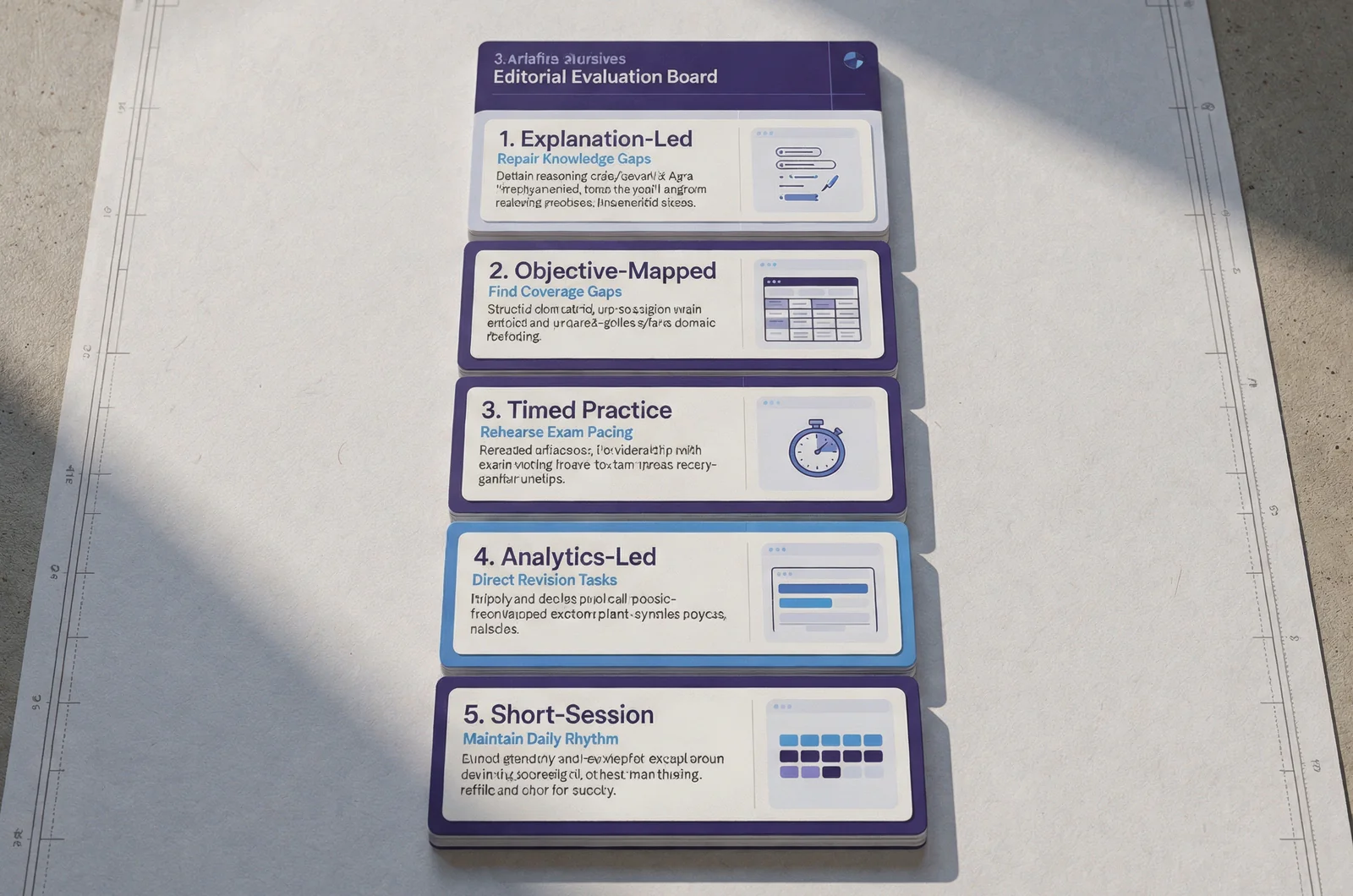
1. Explanation-led practice for repairing knowledge gaps
I put explanation-led practice first because it gives you something useful to do after an incorrect answer. Its value depends on the reasoning attached to each item.
Look for a study mode that lets you review the answer after committing to a choice. A useful explanation should connect the question’s wording to the answer and address plausible alternatives. Repeating the correct option in a longer sentence adds little.
For a hypothetical command-line question about displaying the current working directory, an explanation could distinguish pwd from ls. The first prints the working directory; the second lists directory contents. That distinction gives you a reason you can apply to a differently worded question.
This format fits candidates who understand parts of the material but struggle to explain why one answer is preferable. It also suits shorter revision sessions, where you want to resolve a specific uncertainty.
Its limitation is familiarity. Repeatedly reading an explanation can make the answer feel obvious without showing whether you can recall the reasoning independently.
My rating is first choice for learning. Choose it when the sample explanations help you explain an unfamiliar variant. After reviewing an item, close the explanation and write the reasoning in your own words.
2. Objective-mapped practice for finding coverage gaps
Objective-mapped practice takes second place because it makes the scope of your preparation easier to inspect. A large question bank is difficult to judge when its contents have no visible relationship to the exam objectives.
Look for question categories that you can compare with the applicable 010-160 objectives. Check whether those categories appear in the sample, study mode and results. Consistent labels make it easier to follow a weak area from diagnosis through revision.
This format fits candidates who have already worked through a course or study guide. You can use it to check whether your practice has reached beyond your most comfortable topics.
The drawback is that a category label proves little about depth. Several questions might test the same narrow fact. A broad topic score may also conceal an untouched subtopic.
I rate this second for coverage control. Before choosing it, inspect several questions from different categories and compare their scope with the objective wording.
If the platform’s reporting is limited, keep a separate objective list. Mark each area as reviewed, practised or still uncertain. Leave an objective uncertain when you have only recognised familiar answers.
3. Timed practice for rehearsing exam pacing
Timed practice ranks third for candidates who can already explain most of their answers. Its purpose is to rehearse working under a time limit and review how you used that time.
Check whether the simulator lets you attempt a session without immediate answer feedback. Inspect its timer, submission controls and review process. Where it claims to reproduce exam conditions, compare that claim with the official instructions applicable to your booking.
A running clock alone does not establish simulator fidelity. The question set, answer behaviour and session rules also need checking.
This format fits candidates who tend to linger on uncertain questions or lose concentration during longer sessions. It gives you a setting in which to practise a consistent approach to answering and reviewing.
Its limitation is feedback delay. If your understanding is still patchy, a long timed attempt may leave you with a substantial review task. Schedule time for that review before starting.
My rating is third during learning and higher during final rehearsal. Choose it when you need pacing practice and can explain the material afterwards. Record whether each difficulty came from missing knowledge, misreading or running short of time.
4. Analytics-led practice for directing revision
Analytics-led practice comes fourth because reporting becomes useful when you can interpret what sits behind a score. The dashboard should help you select a revision task.
Look for results by objective or topic, access to missed questions and a visible history of attempts. If the platform records response time or confidence, check how those measures are presented.
The article on exam simulator analytics is relevant when considering how reporting can support this decision. In a sample dashboard, look beyond the overall percentage to the questions behind each result.
This format fits candidates with limited revision time who need help choosing where to focus. It can also help organise a larger collection of missed and uncertain items.
The drawback is interpretation. A strong result from a small or familiar set gives you limited evidence about the rest of an objective. Repeated attempts may measure recognition alongside understanding.
I rate this as a supporting capability. Choose it when the reporting leads to a clear action, such as reviewing a particular concept and then attempting fresh questions. Include correct guesses in your revision notes if the platform lets you identify them.
5. Short-session practice for keeping study moving
Short-session practice takes fifth place as a companion to deeper review. It suits candidates who have reliable access to brief study windows between other commitments.
Look for controls that let you choose a small set, revisit missed items and return to explanations later. If you expect to study on a phone, inspect a preview on that device. Check whether command output, answer choices and explanations remain readable.
This format fits a busy working week. You can use a short session to retrieve something studied earlier, inspect an uncertain answer or identify a topic for a longer evening session.
Its limitation is the evidence it gives you about sustained performance. Several brief quizzes do not show how you will manage one uninterrupted timed attempt. Convenience also loses value if the small sets repeatedly draw on familiar material.
I rate it fifth as a main purchase criterion, with a stronger role as a companion capability. Choose it when the sample works on your device and supports proper answer review. Keep separate sessions for checking coverage and practising under a timer.
Before buying, complete a preview without enlarging every screen or switching devices to read the explanations.
Make the sample earn your confidence
A 010-160 sample should give you enough detail to assess how the provider writes questions and explains answers. Use the same review process for every candidate.
First, answer several items without looking at the explanation. Note any ambiguous wording or assumptions you had to make. An unfamiliar question can still be fair; a question with missing context needs closer examination.
Then review the reasoning. Can you explain why the answer follows from the wording? Does the explanation resolve the uncertainty that made you hesitate? If it includes a command, inspect the command and its output in a suitable practice environment.
Finally, compare the item’s category with the relevant objective. Keep question quality and coverage as separate judgements. A well-written item establishes little about topics outside its scope.
For any provider, including PlanetCert, assess the specific 010-160 package independently of general platform descriptions. Confirm which modes, explanations and materials are included in that purchase.
Be cautious about claims concerning access to confidential exam content. Keep your shortlist focused on legitimate practice material and checkable explanations.
A practical purchase note needs only four columns: requirement, available evidence, unresolved question and decision. Leave the decision open when the sample cannot establish something essential to your preparation.
Fit the purchase to your study window
The right 010-160 purchase depends partly on how long you expect to use it and what you need during that period. Compare access terms against your revision calendar before weighing extra materials.
For a two-week study block, I would first check whether the package supports focused review, fresh mixed practice and a later timed attempt. Make room for reviewing mistakes between attempts. Filling every available session with another test leaves little time to address the results.
For a longer preparation period, check when access begins and when it expires. Clarify whether explanations, results history and other included materials remain available throughout that period.
A wider subscription deserves closer attention if you have another certification planned. The discussion of unlimited exam prep access can help frame that cost decision. Compare the materials you expect to use within the access period.
A useful interactive selector could ask for your study window, need for explanations, need for timed practice and expected use of other exam packages. It could return a list of requirements to verify before purchase.
Treat that output as a shortlist aid. Enter the actual price and access terms for each candidate, then remove any package whose unresolved limitations affect your study plan.
Questions to settle before booking 010-160
Practice results can inform your 010-160 preparation, but the useful questions concern what those results demonstrate. Resolve these points before using a simulator score to guide your booking decision.
What practice score should I aim for?
There is no justified universal percentage to recommend across unverified practice banks. Their difficulty, coverage and repeated questions may differ, so a score needs context.
I would look for consistent performance on unfamiliar mixed questions, clear reasoning and coverage across the applicable objectives. Review correct guesses alongside wrong answers.
If a provider publishes a readiness recommendation, inspect how it defines that recommendation. Keep it separate from the official exam’s scoring rules. Before relying on your result, record which questions were fresh and which answers you recognised.
Is a paid simulator worth buying?
A paid simulator deserves consideration when its verified capabilities solve a problem in your preparation. Useful explanations, organised objective coverage or a suitable timed mode may justify the cost for you.
Payment alone establishes nothing about question quality. Compare a representative sample with your requirements before considering the size of the package.
If a free resource already meets those requirements, identify the specific benefit the paid option adds. Check the total purchase price, access duration and applicable terms before making the comparison.
How can I tell whether I am memorising answers?
Try explaining an answer before revealing the options, where the format permits it. Then change one detail in the situation and consider whether your reasoning still holds.
Keep a note of answers you recognised immediately but could not explain. Review the underlying concept before attempting another set.
My preference is the smallest package that verifies your required capabilities and fits your study window. Explanation quality and objective alignment come first during learning; timed practice follows when you can reason through unfamiliar items.
Keep your 010-160 materials aligned


Discussion
Question Comments
0 comments·0 participantsSign in to leave a comment and access more free questions.