

Best Wireshark Training and Certification Paths for IT Pros
Most network professionals open Wireshark every day. But when it comes to proving that skill on a résumé or in a job interview, the path gets fuzzy. Should you chase the new Wireshark Certified Analyst (WCA) certification? Stick with the older WCNA? Or let a broader networking cert—like CompTIA Network+ or CCNA—demonstrate your packet analysis ability? The right answer almost always depends on your day-to-day role and the kind of work you want next.
The Wireshark Certified Analyst certification turned one year old in June 2026, and the Wireshark Foundation has been steadily building the curriculum. At the same time, the broader certification industry is pivoting toward hands‑on, practical skills assessments rather than pure memorisation—something Wireshark exams have always required. So now is a good time to pick a path that balances foundational networking knowledge with real‑world packet analysis.
This roundup compares the Wireshark training and certification options available in 2026, from official foundation programmes to intensive bootcamps and alternative cert tracks. Each path earns its place with a clear best‑fit use case, what it demands in time and money, and what exam it prepares you for. By the end you’ll know which route aligns with your current skill level and career goals—and where to practise the skills that seal the deal.
The new official cert: Wireshark Certified Analyst (WCA-101)
The WCA‑101 replaced the fragmented third‑party WCNA ecosystem in 2025, and it’s now the only credential backed directly by the Wireshark Foundation. The exam runs 50–60 questions over 120 minutes and uses a mix of multiple‑choice, matching, and fill‑in‑the‑blank formats—no simulation lab, but the question bank demands deep understanding of real packet behavior.
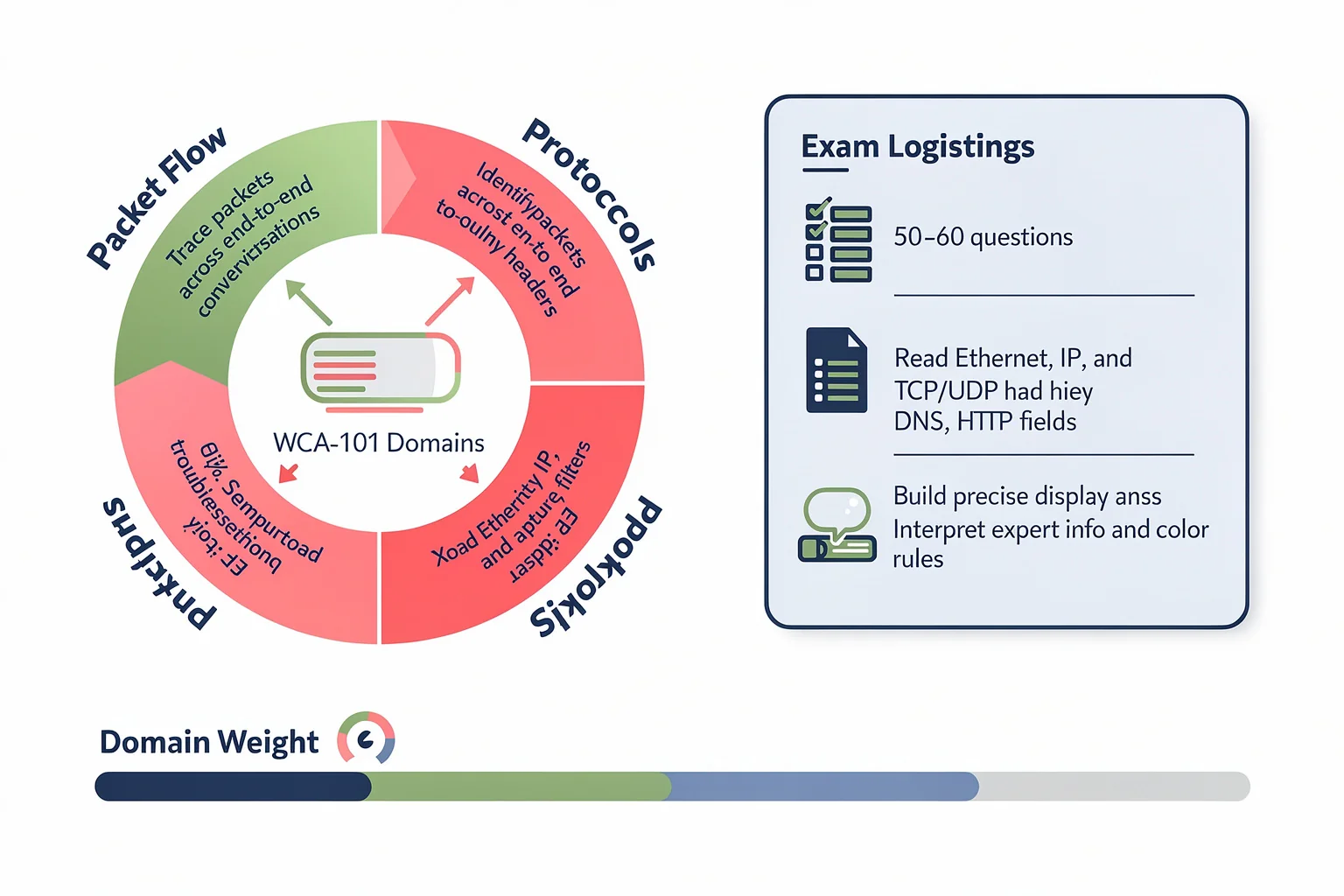
The five domain areas, straight from the WCA-101 exam objectives, are:
- Describe packet flow through a data network.
- Explain the purpose of common network protocols.
- Identify packet header structures and the relevant fields in each.
- Use Wireshark filters to isolate relevant packets for analysis.
- Troubleshoot network issues related to Ethernet, IP, TCP, and common application‑layer protocols.
To put those domains into practice, the exam expects you to follow a packet through a full TCP conversation, distinguish DNS query types from the UDP payload, and pinpoint the exact field in an IPv4 header that suggests fragmentation. Filter construction appears in both the display and capture contexts—knowing the difference between ip.src==192.168.1.1 and host 192.168.1.1 matters. The troubleshooting domain draws heavily on Wireshark’s expert messages and colour rules; you need to recognise a retransmission or duplicate ACK and suggest a root cause.
Notice there is no configuration domain. The WCA tests analysis, not setup. That makes it a pure skills signal for roles in network operations, security analysis, and development support. The exam is delivered online with a live proctor, so you can sit it from home without a test‑centre trip.
Training for WCA scales from free self‑study to instructor‑led workshops. The official Wireshark documentation remains the primary study source—it houses the User’s Guide, security advisories, and developer reference. Many candidates pair that with the CBT Nuggets WCA‑101 course (updated November 2025), which includes virtual labs built by working IT pros. If you can travel, SharkFest’26 US (Nashville, July 18‑19) runs a two‑day pre‑conference class called “Practical Wireshark Skills for IT professionals,” taught by Chris Greer and Ross Bagurdes. The exam itself is still new enough that community materials are thinner than for older certs, so treat a structured course or a study group as a force multiplier. After a few weeks of hands‑on lab work, benchmark yourself with a timed practice set—WCA-101 sample questions that include explanations turn assessment into another study pass.
Best for: engineers and analysts who live in packet captures daily and want a vendor‑neutral credential that says exactly that.
The legacy trail: WCNA still appears
Before the WCA launched, the Wireshark Certified Network Analyst (WCNA) exam was the de facto packet analysis cert, administered by third‑party training organisations such as Test Pass Academy and IT Dojo. Those providers still offer bootcamps—Test Pass Academy’s version runs four days, split between lecture, drill sessions, and mentoring—and the NICCS training catalogue continues to list them.
The WCNA objectives cover similar ground to the WCA, but the exam format differs slightly (typically more‑focused multiple choice) and the underlying question pool has not been refreshed to align with the foundation’s current vision. If you already hold WCNA, the Wireshark Foundation hasn’t announced a direct upgrade path yet, but the knowledge maps cleanly to the new exam. For everyone else, the WCA is the better long‑term bet. The foundation has signalled that WCNA will not receive updates going forward, so its currency will erode.
Best for: anyone who already owns WCNA materials or needs a recognised badge this quarter and can catch a bootcamp on sale.
Network certifications that build Wireshark muscle
Sometimes the smartest move is not a standalone Wireshark cert. Two of the most‑taken networking exams embed packet analysis and require you to demonstrate it under exam conditions.
CompTIA Network+ (N10‑009) now includes performance‑based questions where you interpret a capture or apply a filter to troubleshoot a scenario. CompTIA’s performance‑based questions (PBQs) might drop you into a simulated capture window and ask you to apply a display filter, then interpret the resulting packet list to answer a question about a connection timeout. That’s a lot closer to a real troubleshooting session than a multiple‑choice quiz. You don’t need to memorise every menu item in Wireshark, but you must be able to answer why a three‑way handshake failed or which filter isolates a specific MAC address. If you’re early‑career and your goal is a help desk or junior admin role, investing in Network+ gives you a broader foundation plus enough Wireshark competence to stand out. The packet analysis skills that pass the Network+ exam are specific; skip the generic video courses and drill the exact filters and header interpretations that appear in the objectives.
Cisco CCNA (200‑301) assumes you’ll use Wireshark to verify configurations and troubleshoot. Lab simulations in the exam may show a topology and ask you to diagnose a routing issue—which you’d do with the same workflow you’d use in a real capture. For instance, verifying OSPF adjacencies or NAT translation tables by inspecting packet flows directly sharpens the same analysis muscle. If you’re already on a Cisco track, adding a separate Wireshark cert adds marginal value; instead, fortify your CCNA study with hands‑on packet labs.
Both of these exams change subtly with every Wireshark release. Even the UI difference between Wireshark 4.4 and 4.2 trips up candidates who practise on an old version. The Wireshark 4.4 changes in profile handling and filter bar behaviour mean your practice environment must match what you’ll see on test day.
Best for: candidates who need a foundational networking credential first, with packet analysis as a strong sub‑skill rather than the entire job.
Self‑study, docs, and the practice‑test loop
The generous path is free: the Wireshark User’s Guide runs hundreds of pages of official reference, walking through every menu, capture option, and analysis tool. Combine it with the larger documentation site and you have a curriculum that never expires. The downside is the lack of a curated sequence—you must build your own syllabus.
Here’s a typical weekly plan if you’re starting from scratch. Weeks one and two: install Wireshark 4.4, read the User’s Guide chapters on “Getting Started” and “Capturing Live Network Data,” and capture traffic from your own machine. Weeks three and four: master display and capture filters. Bookmark the key Wireshark filters that appear in certification exams and run ten‑minute drill sessions daily—typing (tcp.flags.syn == 1) && (tcp.flags.ack == 0) repeatedly builds the muscle memory you’ll need under time pressure. Weeks five and six: study protocol headers intensively, focusing on Ethernet, IP, TCP, UDP, HTTP, and DNS. Use a virtual lab with two or three VMs (VMware Workstation works well for this) to generate predictable traffic patterns. Weeks seven and eight: tackle full troubleshooting scenarios—corrupt frames, retransmissions, slow handshakes—and practise interpreting Wireshark’s expert info messages.
That’s where practice tests earn their place. After you’ve read the guide, run captures on your home lab, and memorised the filter dialogue, sit down with a timed exam simulator. It exposes exactly which domain sections you thought you understood. A set of WCA-101 sample questions with full explanations turns assessment into another study pass. If you plan to sit Network+ instead, the same approach applies: work through the objectives, then validate with a practice test that includes Wireshark‑heavy scenarios.
Best for: independent learners who control their own schedule and budget, and who can commit to a weekly lab cadence.
Comparing the paths at a glance
| Path | Credential | Best for | Typical preparation | Cost spectrum | Key training sources |
|---|---|---|---|---|---|
| WCA-101 | Wireshark Certified Analyst | Network analysts, security engineers | 6–12 weeks self‑study or a 4‑day course | £0 (docs) to £1,000+ (course + exam) | Wireshark Foundation docs, CBT Nuggets, SharkFest |
| WCNA | Wireshark Certified Network Analyst | Candidates with existing WCNA materials or employer mandate | Bootcamp‑style 4‑day class | £1,200–£2,000 typical bootcamp fee | Test Pass Academy, IT Dojo |
| CompTIA Network+ | Network+ | Early‑career help desk, admins who need breadth | 8–12 weeks with labs and practice tests | £250–£800 (materials + exam voucher) | CompTIA official study guides, PlanetCert practice tests |
| Cisco CCNA | CCNA | Network admins on Cisco track | 12–16 weeks with lab kit | £250–£1,000 (materials + exam) | Cisco Press, CBT Nuggets, PlanetCert CCNA tests |
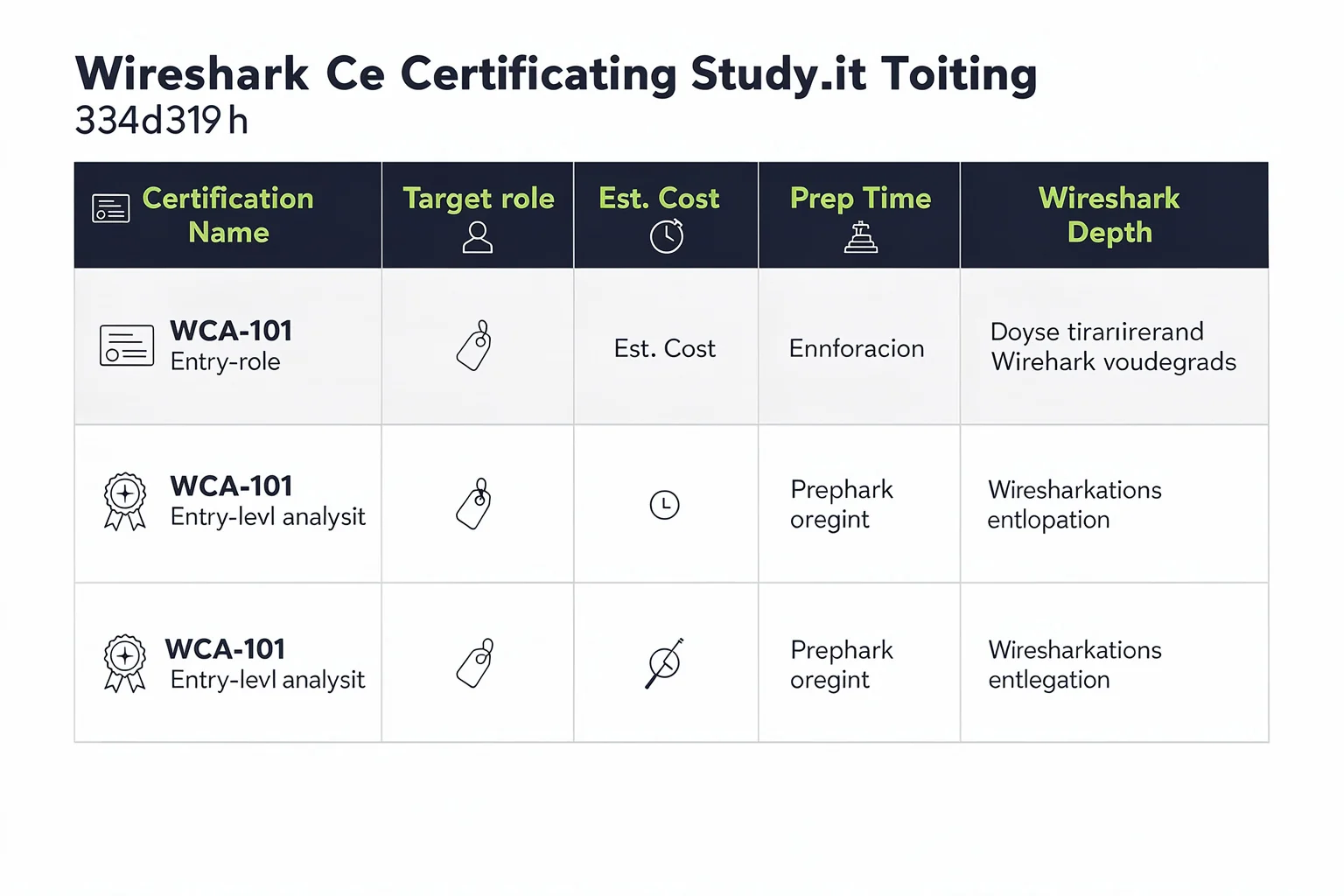
Cost estimates are approximate and based on public pricing available in mid‑2026. Always check the vendor’s current exam fee before budgeting, because they shift without warning.
Choosing the right Wireshark training for your next career step
I’m a junior network admin. Should I go for WCA or Network+ first? Network+ almost always makes better sense at the start. It opens doors across IT support roles and employers recognise it instantly. You can add the WCA later to sharpen your specialist skills when you’ve settled into a particular operations or security team.
Is WCNA still worth studying in 2026? Only if you already have the materials or an employer who specifically lists WCNA in a job requirement. The WCA is the foundation’s current programme and all new development will focus there. WCNA knowledge overlaps heavily, so pivoting from WCNA study to WCA is straightforward if you decide to switch.
How long does WCA-101 prep take? Most people need six to twelve weeks of consistent, hands‑on lab work. If you’ve used Wireshark professionally for a year or more, you can compress that to three or four weeks of focused exam‑style practice. The critical point is that reading slides won’t cut it; you need to open real capture files and solve actual troubleshooting puzzles.
Can I learn only from Wireshark’s documentation and skip a course? Absolutely. The official User’s Guide and the core documentation are the primary source materials for the exam. Many successful candidates never pay for a course. The trade‑off is you must supply your own structure and accountability—a practice test platform becomes especially valuable when you’re studying solo. The timed simulator format helps you build the pacing you’ll need on exam day.
Does the WCA certification expire? The Wireshark Foundation hasn’t published a fixed validity period yet. Early indications suggest the credential will remain current for at least three years, but check the official certification page before you start studying. Even if a renewal policy appears later, the underlying packet analysis skills won’t lose value—protocols don’t retire on a schedule.
Is Wireshark training worth it if I don’t take the exam? Yes. The hands‑on experience of building filter fluency, reading packet structures, and diagnosing bottlenecks carries directly into daily work. Many IT professionals follow the training syllabus without sitting the exam, and they still report better troubleshooting speed and more confident conversations during incident bridges.
The landscape has settled nicely: one modern foundation cert, a few solid training vehicles, and a couple of adjacent networking certs that make packet analysis part of a bigger story. Pick the path that matches the job you want next, not the one that happens to have the loudest marketing. Then go build the hands‑on time—because Wireshark certification is ultimately a record of what you can do, not just what you can recall.
Keep building your packet analysis toolkit
- Wireshark certification paths that actually boost your salary
- Best Wireshark practice tests for passing Network+ exams
- Wireshark skills that predict exam success: 2026 evidence report
browse the relevant exam page and purchase a practice test

Discussion
Question Comments
0 comments·0 participantsSign in to leave a comment and access more free questions.